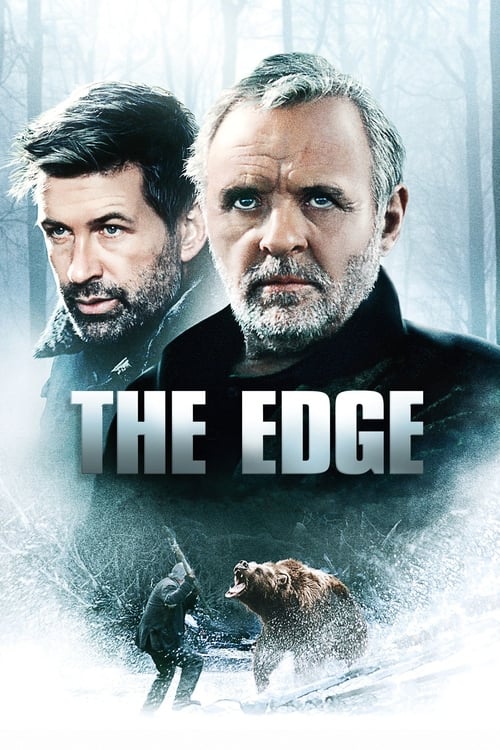
The Edge
The plane carrying wealthy Charles Morse crashes down in the Alaskan wilderness. Together with the two other passengers, photographer Robert and assistant Stephen, Charles devises a plan to help them reach civilization. However, his biggest obstacle might not be the elements, or even the Kodiak bear stalking them -- it could be Robert, whom Charles suspects is having an affair with his wife and would not mind seeing him dead.
Working with a mid-range budget of $30.0M, the film achieved a modest success with $43.3M in global revenue (+44% profit margin).


Plot Structure
Story beats plotted across runtime


Narrative Arc
Emotional journey through the story's key moments
Story Circle
Blueprint 15-beat structure
Arcplot Score Breakdown
Weighted: Precision (70%) + Arc (15%) + Theme (15%)
The Edge (1997) exemplifies carefully calibrated plot construction, characteristic of Lee Tamahori's storytelling approach. This structural analysis examines how the film's 15-point plot structure maps to proven narrative frameworks across 1 hour and 57 minutes. With an Arcplot score of 7.2, the film balances conventional beats with creative variation.
Structural Analysis
The Status Quo at 1 minutes (1% through the runtime) establishes Charles Morse arrives at the Alaskan lodge with his supermodel wife Mickey for a photoshoot. He displays encyclopedic knowledge yet seems emotionally isolated, a wealthy intellectual surrounded by people but fundamentally alone.. The analysis reveals that this early placement immediately immerses viewers in the story world.
The inciting incident occurs at 14 minutes when The seaplane strikes a flock of birds and crashes into a remote lake. Charles, Bob, and assistant Stephen survive but are stranded in the Alaskan wilderness with minimal supplies, miles from civilization.. At 12% through the film, this Disruption aligns precisely with traditional story structure. This beat shifts the emotional landscape, launching the protagonist into the central conflict.
The First Threshold at 29 minutes marks the transition into Act II, occurring at 25% of the runtime. This shows the protagonist's commitment to Charles makes the decision to walk south toward civilization rather than wait for rescue that may never come. This active choice commits them to the wilderness journey and the survival ordeal ahead., moving from reaction to action.
At 59 minutes, the Midpoint arrives at 50% of the runtime—precisely centered, creating perfect narrative symmetry. Structural examination shows that this crucial beat The Kodiak bear attacks and kills Stephen in a brutal mauling. The stakes escalate to pure survival. Charles and Bob are now alone, hunted by a predator, with the veneer of civilization completely stripped away. False defeat., fundamentally raising what's at risk. The emotional intensity shifts, dividing the narrative into clear before-and-after phases.
The Collapse moment at 88 minutes (75% through) represents the emotional nadir. Here, Bob attempts to kill Charles, revealing his plan to return as the sole survivor and claim Mickey. Charles is wounded and betrayed, facing death from both the man he tried to save and the bear still hunting them. The whiff of death is overwhelming., illustrates the protagonist at their lowest point. This beat's placement in the final quarter sets up the climactic reversal.
The Second Threshold at 94 minutes initiates the final act resolution at 80% of the runtime. Charles internalizes "What one man can do, another can do." He chooses to confront the bear rather than flee, synthesizing his book knowledge with newfound primal resolve. He will face both threats head-on as a transformed man., demonstrating the transformation achieved throughout the journey.
Emotional Journey
The Edge's emotional architecture traces a deliberate progression across 15 carefully calibrated beats.
Narrative Framework
This structural analysis employs structural analysis methodology used to understand storytelling architecture. By mapping The Edge against these established plot points, we can identify how Lee Tamahori utilizes or subverts traditional narrative conventions. The plot point approach reveals not only adherence to structural principles but also creative choices that distinguish The Edge within the action genre.
Lee Tamahori's Structural Approach
Among the 9 Lee Tamahori films analyzed on Arcplot, the average structural score is 7.2, reflecting strong command of classical structure. The Edge takes a more unconventional approach compared to the director's typical style. For comparative analysis, explore the complete Lee Tamahori filmography.
Comparative Analysis
Additional action films include The Bad Guys, Puss in Boots and Venom: The Last Dance. For more Lee Tamahori analyses, see The Devil's Double, Once Were Warriors and The Convert.
Plot Points by Act
Act I
SetupStatus Quo
Charles Morse arrives at the Alaskan lodge with his supermodel wife Mickey for a photoshoot. He displays encyclopedic knowledge yet seems emotionally isolated, a wealthy intellectual surrounded by people but fundamentally alone.
Theme
Charles reads from a survival book: "What one man can do, another can do." This mantra will become the thematic spine of the film, questioning whether intellectual knowledge can translate into survival action.
Worldbuilding
The lodge setting establishes Charles's world of privilege and his relationship dynamics. We meet Bob the photographer, sense his attraction to Mickey, and see Charles's unspoken awareness. The Alaskan wilderness looms as both backdrop and foreshadowing.
Disruption
The seaplane strikes a flock of birds and crashes into a remote lake. Charles, Bob, and assistant Stephen survive but are stranded in the Alaskan wilderness with minimal supplies, miles from civilization.
Resistance
The survivors debate their options while dealing with shock and injuries. Charles's book knowledge begins emerging as potentially useful. Tension grows as they assess their dire situation and the men wrestle with fear and doubt about what to do.
Act II
ConfrontationFirst Threshold
Charles makes the decision to walk south toward civilization rather than wait for rescue that may never come. This active choice commits them to the wilderness journey and the survival ordeal ahead.
Mirror World
The dynamic between Charles and Bob deepens as they must rely on each other. Their relationship becomes the thematic mirror exploring trust, masculinity, and class. Charles begins applying survival knowledge while Bob's hidden agenda simmers beneath cooperation.
Premise
The survival adventure delivers on its premise. Charles crafts tools, builds fires, and navigates using the stars. The men encounter the Kodiak bear stalking them. The tension between book knowledge and practical application plays out against the relentless wilderness.
Midpoint
The Kodiak bear attacks and kills Stephen in a brutal mauling. The stakes escalate to pure survival. Charles and Bob are now alone, hunted by a predator, with the veneer of civilization completely stripped away. False defeat.
Opposition
The bear continues stalking them as Charles and Bob grow more desperate. Bob's darker intentions surface as he contemplates eliminating Charles. The dual threats of nature and human betrayal converge. Charles confronts Bob about the affair with Mickey.
Collapse
Bob attempts to kill Charles, revealing his plan to return as the sole survivor and claim Mickey. Charles is wounded and betrayed, facing death from both the man he tried to save and the bear still hunting them. The whiff of death is overwhelming.
Crisis
Charles processes the full scope of betrayal. Everything he feared about Bob and Mickey is confirmed. Wounded physically and emotionally, he must decide whether to give up or fight. The dark night tests whether his intellectual knowledge can become visceral action.
Act III
ResolutionSecond Threshold
Charles internalizes "What one man can do, another can do." He chooses to confront the bear rather than flee, synthesizing his book knowledge with newfound primal resolve. He will face both threats head-on as a transformed man.
Synthesis
Charles kills the Kodiak bear with a makeshift spear in an iconic confrontation. Bob is fatally wounded in the struggle. Before dying, Bob asks if Charles will tell Mickey the truth. Charles finds rescue but carries the weight of everything that transpired.
Transformation
Charles returns to civilization, reunited with Mickey. When asked what happened, he lies to protect her, saying Bob died a hero. The intellectual who began isolated by knowledge ends transformed by action, choosing mercy over truth. His silence is his final act of strength.