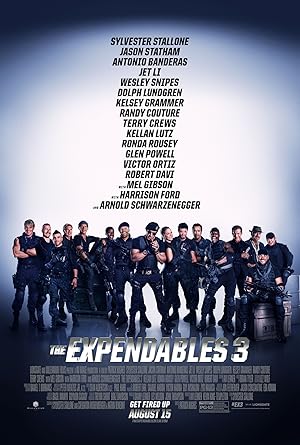
The Expendables 3
Barney (Stallone), Christmas (Statham) and the rest of the team comes face-to-face with Conrad Stonebanks (Gibson), who years ago co-founded The Expendables with Barney. Stonebanks subsequently became a ruthless arms trader and someone who Barney was forced to kill - or so he thought. Stonebanks, who eluded death once before, now is making it his mission to end The Expendables -- but Barney has other plans. Barney decides that he has to fight old blood with new blood, and brings in a new era of Expendables team members, recruiting individuals who are younger, faster and more tech-savvy. The latest mission becomes a clash of classic old-school style versus high-tech expertise in the Expendables' most personal battle yet.
Despite a considerable budget of $95.0M, The Expendables 3 became a box office success, earning $214.7M worldwide—a 126% return.
2 wins & 5 nominations


Plot Structure
Story beats plotted across runtime


Narrative Arc
Emotional journey through the story's key moments
Story Circle
Blueprint 15-beat structure
Arcplot Score Breakdown
Weighted: Precision (70%) + Arc (15%) + Theme (15%)
The Expendables 3 (2014) exhibits meticulously timed story structure, characteristic of Patrick Hughes's storytelling approach. This structural analysis examines how the film's 15-point plot structure maps to proven narrative frameworks across 2 hours and 6 minutes. With an Arcplot score of 7.7, the film showcases strong structural fundamentals.
Structural Analysis
The Status Quo at 2 minutes (1% through the runtime) establishes The Expendables team executes a high-octane train rescue mission to extract Doc from a prison transport, showcasing their established brotherhood and combat expertise.. Notably, this early placement immediately immerses viewers in the story world.
The inciting incident occurs at 14 minutes when Barney recognizes Stonebanks is alive - the man he thought he killed years ago, who betrayed the Expendables and became an arms dealer. This ghost from the past forces confrontation.. At 11% through the film, this Disruption aligns precisely with traditional story structure. This beat shifts the emotional landscape, launching the protagonist into the central conflict.
The First Threshold at 31 minutes marks the transition into Act II, occurring at 25% of the runtime. This demonstrates the protagonist's commitment to Barney makes the painful decision to disband the Expendables, firing his old team to protect them. He chooses to recruit young blood instead, actively entering a new approach., moving from reaction to action.
At 63 minutes, the Midpoint arrives at 50% of the runtime—precisely centered, creating perfect narrative symmetry. Structural examination shows that this crucial beat False defeat: The young team successfully captures Stonebanks, but it's a trap. Stonebanks turns the tables, captures the entire young team and Barney barely escapes. Stakes raised - youth alone isn't enough., fundamentally raising what's at risk. The emotional intensity shifts, dividing the narrative into clear before-and-after phases.
The Collapse moment at 93 minutes (74% through) represents the emotional nadir. Here, Barney faces his darkest moment: his attempt to protect both teams has failed. The young recruits will die, and he's pushed away his brothers. His pride and fear of loss has cost him everything., illustrates the protagonist at their lowest point. This beat's placement in the final quarter sets up the climactic reversal.
The Second Threshold at 99 minutes initiates the final act resolution at 79% of the runtime. Barney accepts help from his old team and embraces the synthesis: combining the experience of the old guard with the skills of the new generation. United mission to Azmenistan., demonstrating the transformation achieved throughout the journey.
Emotional Journey
The Expendables 3's emotional architecture traces a deliberate progression across 15 carefully calibrated beats.
Narrative Framework
This structural analysis employs proven narrative structure principles that track dramatic progression. By mapping The Expendables 3 against these established plot points, we can identify how Patrick Hughes utilizes or subverts traditional narrative conventions. The plot point approach reveals not only adherence to structural principles but also creative choices that distinguish The Expendables 3 within the action genre.
Patrick Hughes's Structural Approach
Among the 3 Patrick Hughes films analyzed on Arcplot, the average structural score is 7.3, reflecting strong command of classical structure. The Expendables 3 represents one of the director's most structurally precise works. For comparative analysis, explore the complete Patrick Hughes filmography.
Comparative Analysis
Additional action films include The Bad Guys, Puss in Boots and Venom: The Last Dance. For more Patrick Hughes analyses, see The Hitman's Bodyguard, Hitman's Wife's Bodyguard.
Plot Points by Act
Act I
SetupStatus Quo
The Expendables team executes a high-octane train rescue mission to extract Doc from a prison transport, showcasing their established brotherhood and combat expertise.
Theme
Doc tells Barney: "We're not the young guys anymore" - establishing the theme of aging warriors facing their mortality and the need to pass the torch to a new generation.
Worldbuilding
Introduction of team dynamics, Barney's leadership, and the arms-dealing mission in Somalia where they discover their target is Conrad Stonebanks, Barney's former co-founder of the Expendables.
Disruption
Barney recognizes Stonebanks is alive - the man he thought he killed years ago, who betrayed the Expendables and became an arms dealer. This ghost from the past forces confrontation.
Resistance
The team pursues Stonebanks in Somalia. During the mission, Hale Caesar is critically wounded. Barney debates whether to continue risking his aging team against this dangerous enemy.
Act II
ConfrontationFirst Threshold
Barney makes the painful decision to disband the Expendables, firing his old team to protect them. He chooses to recruit young blood instead, actively entering a new approach.
Mirror World
Bonaparte introduces Barney to a new generation of skilled young fighters. This new team represents what the theme questions: can youth replace experience and brotherhood?
Premise
Barney trains and deploys the young team to capture Stonebanks. The promise of the premise: watching the new generation take on the mission with tech, speed, and modern tactics versus old-school methods.
Midpoint
False defeat: The young team successfully captures Stonebanks, but it's a trap. Stonebanks turns the tables, captures the entire young team and Barney barely escapes. Stakes raised - youth alone isn't enough.
Opposition
Stonebanks uses the captured young team as bait, setting a trap. Barney realizes he can't do this alone. The old team finds out about the situation and rebels against being sidelined.
Collapse
Barney faces his darkest moment: his attempt to protect both teams has failed. The young recruits will die, and he's pushed away his brothers. His pride and fear of loss has cost him everything.
Crisis
Barney contemplates the impossible rescue mission. The old Expendables arrive, refusing to abandon him. Barney must accept he needs his brothers - experience AND youth working together.
Act III
ResolutionSecond Threshold
Barney accepts help from his old team and embraces the synthesis: combining the experience of the old guard with the skills of the new generation. United mission to Azmenistan.
Synthesis
The finale assault on Stonebanks' fortress. Old and young Expendables fight side by side, each generation complementing the other. Barney confronts and defeats Stonebanks in personal combat.
Transformation
The team celebrates together - old and new members united as one Expendables family. Barney has learned that legacy isn't about replacement but continuation, strength in unity across generations.