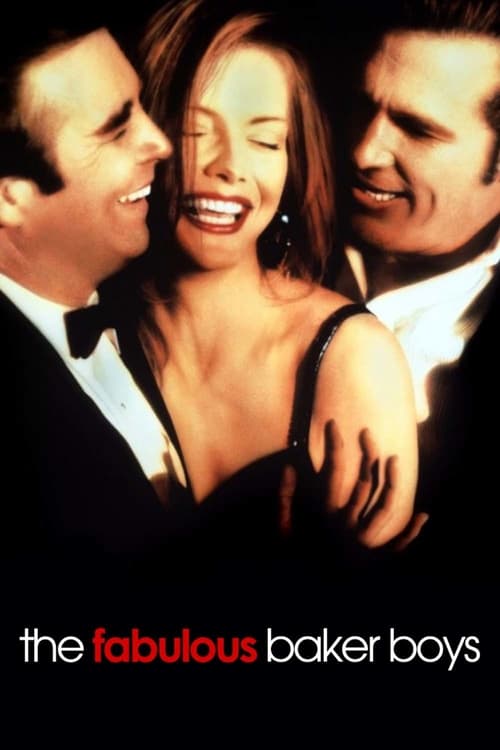
The Fabulous Baker Boys
The lives of two struggling musicians, who happen to be brothers, inevitably change when they team up with a beautiful, up-and-coming singer.
Working with a small-scale budget of $13.0M, the film achieved a steady performer with $18.4M in global revenue (+42% profit margin).
Nominated for 4 Oscars. 14 wins & 17 nominations
Plot Structure
Story beats plotted across runtime


Narrative Arc
Emotional journey through the story's key moments
Story Circle
Blueprint 15-beat structure
Arcplot Score Breakdown
Weighted: Precision (70%) + Arc (15%) + Theme (15%)
The Fabulous Baker Boys (1989) exhibits precise plot construction, characteristic of Steve Kloves's storytelling approach. This structural analysis examines how the film's 15-point plot structure maps to proven narrative frameworks across 1 hour and 54 minutes. With an Arcplot score of 6.6, the film balances conventional beats with creative variation.
Characters
Cast & narrative archetypes

Susie Diamond
Jack Baker
Frank Baker
Main Cast & Characters
Susie Diamond
Played by Michelle Pfeiffer
A cynical lounge singer who brings new energy to the struggling Baker Brothers piano act, awakening passion and disrupting the brothers' stagnant dynamic.
Jack Baker
Played by Jeff Bridges
The younger, more passionate Baker brother who feels creatively stifled by the act, drawn to Susie both romantically and artistically.
Frank Baker
Played by Beau Bridges
The older, controlling Baker brother who manages the act with rigid professionalism, resistant to change and emotionally repressed.
Structural Analysis
The Status Quo at 1 minutes (1% through the runtime) establishes The Baker brothers perform their tired lounge act at a hotel, showing their stale, mechanical routine. Jack plays piano with detachment while Frank handles the schmoozing - a partnership trapped in comfortable mediocrity.. Structural examination shows that this early placement immediately immerses viewers in the story world.
The inciting incident occurs at 14 minutes when Frank proposes adding a girl singer to revive their failing act. Jack resists the idea, wanting to maintain their status quo, but their desperation is undeniable - they're losing gigs and running out of options.. At 12% through the film, this Disruption aligns precisely with traditional story structure. This beat shifts the emotional landscape, launching the protagonist into the central conflict.
The First Threshold at 28 minutes marks the transition into Act II, occurring at 25% of the runtime. This shows the protagonist's commitment to Despite Jack's reservations, they hire Susie Diamond. She's rough, untrained, but has raw talent and charisma. The decision launches them into a new configuration - the safe duo becomes a volatile trio., moving from reaction to action.
At 58 minutes, the Midpoint arrives at 50% of the runtime—precisely centered, creating perfect narrative symmetry. Structural examination shows that this crucial beat Susie's iconic performance singing on top of Jack's piano. Their sexual and artistic chemistry peaks publicly - a false victory where success seems assured, but the performance exposes the unsustainable tension in the trio and between Jack's desire and his fear., fundamentally raising what's at risk. The emotional intensity shifts, dividing the narrative into clear before-and-after phases.
The Collapse moment at 85 minutes (74% through) represents the emotional nadir. Here, The trio implodes. A confrontation erupts where years of resentment surface - Frank and Jack's brotherly bond shatters, Susie walks out on both of them. The act dies, the partnership ends. Jack loses everything he was afraid to truly value., illustrates the protagonist at their lowest point. This beat's placement in the final quarter sets up the climactic reversal.
The Second Threshold at 91 minutes initiates the final act resolution at 80% of the runtime. Jack makes a choice. He goes to find Susie, ready to risk vulnerability and honesty. He understands that authentic connection requires him to break his pattern of emotional withdrawal and choose passion over protection., demonstrating the transformation achieved throughout the journey.
Emotional Journey
The Fabulous Baker Boys's emotional architecture traces a deliberate progression across 15 carefully calibrated beats.
Narrative Framework
This structural analysis employs structural analysis methodology used to understand storytelling architecture. By mapping The Fabulous Baker Boys against these established plot points, we can identify how Steve Kloves utilizes or subverts traditional narrative conventions. The plot point approach reveals not only adherence to structural principles but also creative choices that distinguish The Fabulous Baker Boys within the comedy genre.
Steve Kloves's Structural Approach
Among the 2 Steve Kloves films analyzed on Arcplot, the average structural score is 7.0, reflecting strong command of classical structure. The Fabulous Baker Boys takes a more unconventional approach compared to the director's typical style. For comparative analysis, explore the complete Steve Kloves filmography.
Comparative Analysis
Additional comedy films include The Bad Guys, Ella Enchanted and The Evening Star. For more Steve Kloves analyses, see Flesh and Bone.
Plot Points by Act
Act I
SetupStatus Quo
The Baker brothers perform their tired lounge act at a hotel, showing their stale, mechanical routine. Jack plays piano with detachment while Frank handles the schmoozing - a partnership trapped in comfortable mediocrity.
Theme
During their post-gig routine, tension reveals the underlying question: Is playing it safe worth the slow death of your soul? The brothers' stale arrangement mirrors their stagnant lives.
Worldbuilding
Establishment of the brothers' dying act, their codependent business relationship, Jack's isolated bachelor existence, and Frank's family obligations. Their bookings are drying up, forcing them to confront their decline.
Disruption
Frank proposes adding a girl singer to revive their failing act. Jack resists the idea, wanting to maintain their status quo, but their desperation is undeniable - they're losing gigs and running out of options.
Resistance
The brothers hold disastrous auditions for female singers. Jack cynically dismisses each candidate, resisting change. The parade of awful auditions reinforces his belief that this won't work, until Susie Diamond walks in last.
Act II
ConfrontationFirst Threshold
Despite Jack's reservations, they hire Susie Diamond. She's rough, untrained, but has raw talent and charisma. The decision launches them into a new configuration - the safe duo becomes a volatile trio.
Mirror World
Susie and Jack's first rehearsal crackles with tension and chemistry. She embodies everything he's suppressed - spontaneity, sensuality, risk. Their musical connection hints at deeper possibilities beyond the professional.
Premise
The act takes off. Susie's presence revitalizes their performances and bookings improve. Jack and Susie's attraction builds through rehearsals and gigs. Frank feels increasingly like a third wheel. The promise: passion reigniting a dead career and a dead heart.
Midpoint
Susie's iconic performance singing on top of Jack's piano. Their sexual and artistic chemistry peaks publicly - a false victory where success seems assured, but the performance exposes the unsustainable tension in the trio and between Jack's desire and his fear.
Opposition
Cracks deepen. Frank resents being overshadowed. Jack and Susie's relationship intensifies but Jack can't commit emotionally. Susie gets outside offers, highlighting that she's outgrowing them. The brothers' partnership strains as their lifelong dynamic unravels.
Collapse
The trio implodes. A confrontation erupts where years of resentment surface - Frank and Jack's brotherly bond shatters, Susie walks out on both of them. The act dies, the partnership ends. Jack loses everything he was afraid to truly value.
Crisis
Jack returns to his solitary existence, playing piano alone in his apartment. He faces what he's lost and what he's been running from - genuine connection, artistic integrity, emotional risk. The safety he clung to is revealed as a prison.
Act III
ResolutionSecond Threshold
Jack makes a choice. He goes to find Susie, ready to risk vulnerability and honesty. He understands that authentic connection requires him to break his pattern of emotional withdrawal and choose passion over protection.
Synthesis
Jack and Susie's final confrontation. He offers himself honestly for the first time - not a business proposal but emotional truth. Susie makes her own choice about her path. The resolution isn't about the act but about two people choosing authenticity.
Transformation
Jack plays piano alone, but transformed. Unlike the opening isolation, this solitude contains possibility rather than resignation. He's chosen risk over safety, authenticity over comfort - whether or not he gets the girl, he's no longer sleep-walking through life.