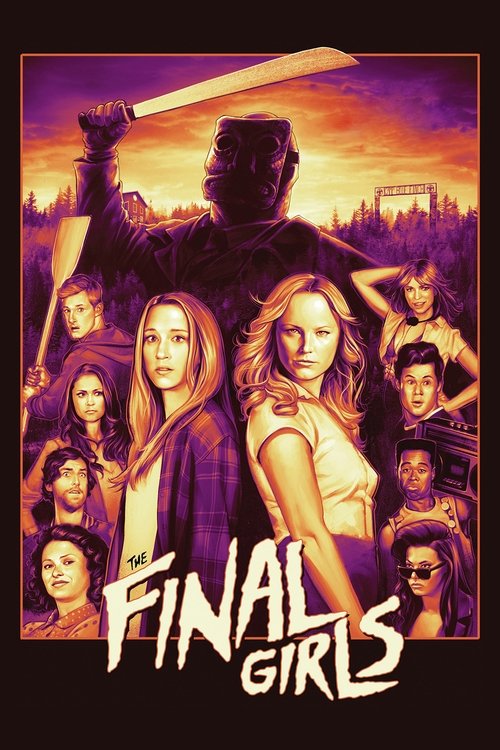
The Final Girls
A young woman grieving the loss of her mother, a famous scream queen from the 1980s, finds herself pulled into the world of her mom's most famous movie. Reunited, the women must fight off the film's maniacal killer.
The film earned $4.5M at the global box office.
7 wins & 13 nominations


Plot Structure
Story beats plotted across runtime


Narrative Arc
Emotional journey through the story's key moments
Story Circle
Blueprint 15-beat structure
Arcplot Score Breakdown
Weighted: Precision (70%) + Arc (15%) + Theme (15%)
The Final Girls (2015) exhibits strategically placed narrative design, characteristic of Todd Strauss-Schulson's storytelling approach. This structural analysis examines how the film's 15-point plot structure maps to proven narrative frameworks across 1 hour and 31 minutes. With an Arcplot score of 7.0, the film balances conventional beats with creative variation.
Characters
Cast & narrative archetypes

Max Cartwright
Amanda Cartwright / Nancy
Chris Briggs
Vicki Summers
Gertie Michaels
Duncan
Kurt
Main Cast & Characters
Max Cartwright
Played by Taissa Farmiga
A grieving daughter pulled into the slasher film her late mother starred in, who must survive while confronting her unresolved feelings.
Amanda Cartwright / Nancy
Played by Malin Akerman
Max's deceased mother and the protagonist of Camp Bloodbath, now alive within the film world.
Chris Briggs
Played by Alexander Ludwig
Max's best friend and horror film aficionado who uses his genre knowledge to help the group survive.
Vicki Summers
Played by Nina Dobrev
Max's former friend and popular mean girl who gets trapped in the slasher film with the group.
Gertie Michaels
Played by Alia Shawkat
Chris's enthusiastic younger stepsister who is a devoted fan of Camp Bloodbath and its tropes.
Duncan
Played by Thomas Middleditch
Vicki's boyfriend and a jock who finds himself out of his depth in the horror movie scenario.
Kurt
Played by Adam Devine
The hunky counselor character in Camp Bloodbath who embodies every 80s slasher hero cliché.
Structural Analysis
The Status Quo at 1 minutes (1% through the runtime) establishes Max and her mother Amanda (a former scream queen actress) sing together in the car before a fatal accident that kills Amanda, establishing their close bond and Max's ordinary world that is about to be shattered.. Of particular interest, this early placement immediately immerses viewers in the story world.
The inciting incident occurs at 10 minutes when A fire breaks out in the theater during the screening of "Camp Bloodbath." Max cuts through the movie screen to escape, and the group is suddenly transported inside the 1980s slasher film itself.. At 12% through the film, this Disruption aligns precisely with traditional story structure. This beat shifts the emotional landscape, launching the protagonist into the central conflict.
The First Threshold at 23 minutes marks the transition into Act II, occurring at 25% of the runtime. This indicates the protagonist's commitment to Max decides to actively engage with the movie world and protect Nancy (her mother's character) from being killed by the slasher Billy Murphy, choosing to stay and fight rather than passively accept their fate., moving from reaction to action.
At 46 minutes, the Midpoint arrives at 51% of the runtime—precisely centered, creating perfect narrative symmetry. Significantly, this crucial beat The group realizes they cannot simply skip to the end—they're trapped in a loop and must play out the movie's events. One of their friends is killed by Billy Murphy, raising the stakes and showing this is real danger, not just movie magic., fundamentally raising what's at risk. The emotional intensity shifts, dividing the narrative into clear before-and-after phases.
The Collapse moment at 68 minutes (75% through) represents the emotional nadir. Here, Nancy is killed by Billy Murphy despite all of Max's efforts to save her, forcing Max to experience losing her mother all over again. This represents the ultimate failure and the literal death that defines this beat., demonstrates the protagonist at their lowest point. This beat's placement in the final quarter sets up the climactic reversal.
The Second Threshold at 72 minutes initiates the final act resolution at 79% of the runtime. Max realizes that to escape the movie and defeat Billy Murphy, she must use her knowledge of horror tropes combined with acceptance of her grief. She formulates a plan to become the "final girl" and embraces her mother's legacy., demonstrating the transformation achieved throughout the journey.
Emotional Journey
The Final Girls's emotional architecture traces a deliberate progression across 15 carefully calibrated beats.
Narrative Framework
This structural analysis employs systematic plot point analysis that identifies crucial turning points. By mapping The Final Girls against these established plot points, we can identify how Todd Strauss-Schulson utilizes or subverts traditional narrative conventions. The plot point approach reveals not only adherence to structural principles but also creative choices that distinguish The Final Girls within the comedy genre.
Todd Strauss-Schulson's Structural Approach
Among the 3 Todd Strauss-Schulson films analyzed on Arcplot, the average structural score is 6.9, demonstrating varied approaches to story architecture. The Final Girls represents one of the director's most structurally precise works. For comparative analysis, explore the complete Todd Strauss-Schulson filmography.
Comparative Analysis
Additional comedy films include The Bad Guys, Ella Enchanted and The Evening Star. For more Todd Strauss-Schulson analyses, see Isn't It Romantic, A Very Harold & Kumar Christmas.
Plot Points by Act
Act I
SetupStatus Quo
Max and her mother Amanda (a former scream queen actress) sing together in the car before a fatal accident that kills Amanda, establishing their close bond and Max's ordinary world that is about to be shattered.
Theme
Chris (Max's friend) suggests watching Amanda's cult classic slasher film "Camp Bloodbath" to honor her memory, hinting at the theme of confronting grief and unfinished relationships through the metaphor of being trapped in a loop.
Worldbuilding
Introduction to Max's grief-stricken life three years after her mother's death, her strained friendship group, the upcoming screening of her mother's campy 1980s slasher film "Camp Bloodbath," and the rules of the horror genre that will govern their survival.
Disruption
A fire breaks out in the theater during the screening of "Camp Bloodbath." Max cuts through the movie screen to escape, and the group is suddenly transported inside the 1980s slasher film itself.
Resistance
The group debates what's happening as they realize they're stuck in the movie world. They encounter the film's characters including Nancy (played by Max's mother Amanda) and learn they must navigate the film's horror tropes and timeline to survive.
Act II
ConfrontationFirst Threshold
Max decides to actively engage with the movie world and protect Nancy (her mother's character) from being killed by the slasher Billy Murphy, choosing to stay and fight rather than passively accept their fate.
Mirror World
Max bonds with Nancy at Camp Bloodbath, experiencing the mother-daughter relationship she lost. Nancy embodies the film's theme about confronting unresolved feelings and represents Max's chance to say goodbye properly.
Premise
The "fun and games" of being trapped in a 1980s slasher film: the group tries to manipulate horror movie tropes, warning characters about the killer, attempting to skip to the end credits, and bonding with the film's campy characters while Billy Murphy begins his killing spree.
Midpoint
The group realizes they cannot simply skip to the end—they're trapped in a loop and must play out the movie's events. One of their friends is killed by Billy Murphy, raising the stakes and showing this is real danger, not just movie magic.
Opposition
Billy Murphy systematically hunts the group and film characters. Max's attempts to save everyone fail, more friends die, and Nancy begins to realize she's in a movie, creating existential complications. The body count rises and escape options dwindle.
Collapse
Nancy is killed by Billy Murphy despite all of Max's efforts to save her, forcing Max to experience losing her mother all over again. This represents the ultimate failure and the literal death that defines this beat.
Crisis
Max grieves Nancy's death and processes the impossibility of truly saving her mother. She faces the dark truth that she cannot change the past, only accept it and move forward.
Act III
ResolutionSecond Threshold
Max realizes that to escape the movie and defeat Billy Murphy, she must use her knowledge of horror tropes combined with acceptance of her grief. She formulates a plan to become the "final girl" and embraces her mother's legacy.
Synthesis
Max executes the final confrontation with Billy Murphy using horror movie rules, sacrificing herself to save her friends. She fights Billy, creates a resolution to the movie's narrative loop, and finds closure with her mother's memory before escaping back to reality.
Transformation
Max emerges from the movie screen back into the real world, forever changed. She has processed her grief, said goodbye to her mother, and learned to honor her memory while moving forward with her life.