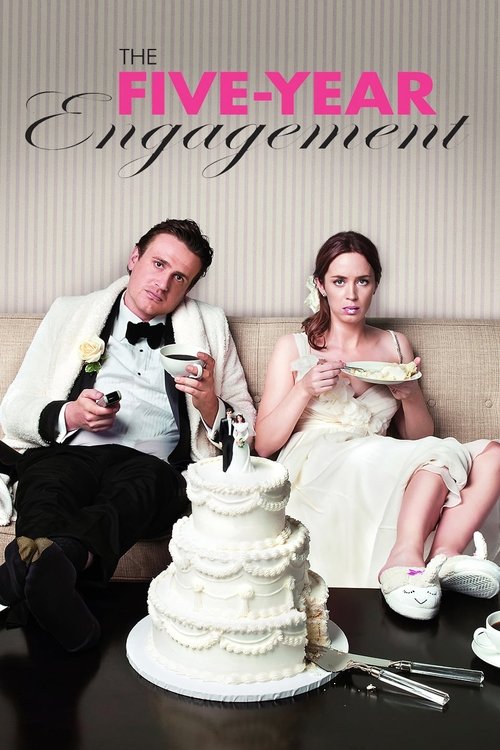
The Five-Year Engagement
Exactly one year after Tom meets Violet, he surprises her with a wedding ring. By all accounts, Tom and Violet are destined for their happily ever after. However, this engaged couple just keep getting tripped up on the long walk down the aisle.
Working with a mid-range budget of $30.0M, the film achieved a steady performer with $54.2M in global revenue (+81% profit margin).


Plot Structure
Story beats plotted across runtime


Narrative Arc
Emotional journey through the story's key moments
Story Circle
Blueprint 15-beat structure
Arcplot Score Breakdown
Weighted: Precision (70%) + Arc (15%) + Theme (15%)
The Five-Year Engagement (2012) showcases precise story structure, characteristic of Nicholas Stoller's storytelling approach. This structural analysis examines how the film's 15-point plot structure maps to proven narrative frameworks across 2 hours and 4 minutes. With an Arcplot score of 7.2, the film balances conventional beats with creative variation.
Characters
Cast & narrative archetypes

Tom Solomon
Violet Barnes
Alex Eilhauer
Suzie Barnes-Eilhauer
Winton Childs
Bill Barnes
Sylvia Dickerson-Barnes
Main Cast & Characters
Tom Solomon
Played by Jason Segel
A sous chef in San Francisco whose engagement is repeatedly postponed as his fiancée's career takes priority.
Violet Barnes
Played by Emily Blunt
A psychology post-doc student who receives a fellowship at University of Michigan, forcing her to relocate and delay the wedding.
Alex Eilhauer
Played by Chris Pratt
Tom's best friend and business partner who owns a successful deli in San Francisco.
Suzie Barnes-Eilhauer
Played by Alison Brie
Violet's younger sister who impulsively marries Alex and starts a family quickly.
Winton Childs
Played by Rhys Ifans
Violet's charismatic and manipulative psychology professor at University of Michigan.
Bill Barnes
Played by David Paymer
Violet's warm and supportive father who offers wisdom about relationships and marriage.
Sylvia Dickerson-Barnes
Played by Mimi Kennedy
Violet's mother who is concerned about her daughter's prolonged engagement.
Structural Analysis
The Status Quo at 1 minutes (1% through the runtime) establishes New Year's Eve party in San Francisco. Tom is a rising chef, Violet is a psychology grad student. They're deeply in love, successful, and living the dream together.. Significantly, this early placement immediately immerses viewers in the story world.
The inciting incident occurs at 15 minutes when Violet gets accepted to a prestigious psychology post-doc program at the University of Michigan, requiring a two-year move. Tom encourages her to take it, agreeing to postpone the wedding and move with her.. At 12% through the film, this Disruption aligns precisely with traditional story structure. This beat shifts the emotional landscape, launching the protagonist into the central conflict.
The First Threshold at 30 minutes marks the transition into Act II, occurring at 24% of the runtime. This illustrates the protagonist's commitment to Tom and Violet pack up and move to Michigan together. Tom actively chooses to sacrifice his culinary career in San Francisco to support Violet's academic dreams, entering a new world where he's no longer the successful one., moving from reaction to action.
At 61 minutes, the Midpoint arrives at 50% of the runtime—precisely centered, creating perfect narrative symmetry. Significantly, this crucial beat False defeat: Violet is offered an extended fellowship, meaning more years in Michigan. Tom pretends to be supportive but is devastated. The engagement that seemed temporary is now indefinite. They realize they're stuck., fundamentally raising what's at risk. The emotional intensity shifts, dividing the narrative into clear before-and-after phases.
The Collapse moment at 92 minutes (74% through) represents the emotional nadir. Here, Tom and Violet have a devastating fight about their future. The engagement dies - they break up. Tom moves out. The dream of their marriage and life together is dead. Five years of trying to make it work has ended in failure., reveals the protagonist at their lowest point. This beat's placement in the final quarter sets up the climactic reversal.
The Second Threshold at 98 minutes initiates the final act resolution at 79% of the runtime. Tom realizes that he needs to fight for their relationship, not just passively support. Violet realizes her career success means nothing without Tom. Both have the simultaneous realization that they need to actively choose each other, not just drift along., demonstrating the transformation achieved throughout the journey.
Emotional Journey
The Five-Year Engagement's emotional architecture traces a deliberate progression across 15 carefully calibrated beats.
Narrative Framework
This structural analysis employs structural analysis methodology used to understand storytelling architecture. By mapping The Five-Year Engagement against these established plot points, we can identify how Nicholas Stoller utilizes or subverts traditional narrative conventions. The plot point approach reveals not only adherence to structural principles but also creative choices that distinguish The Five-Year Engagement within the comedy genre.
Nicholas Stoller's Structural Approach
Among the 6 Nicholas Stoller films analyzed on Arcplot, the average structural score is 7.3, reflecting strong command of classical structure. The Five-Year Engagement takes a more unconventional approach compared to the director's typical style. For comparative analysis, explore the complete Nicholas Stoller filmography.
Comparative Analysis
Additional comedy films include The Bad Guys, Ella Enchanted and The Evening Star. For more Nicholas Stoller analyses, see Forgetting Sarah Marshall, Get Him to the Greek and Neighbors 2: Sorority Rising.
Plot Points by Act
Act I
SetupStatus Quo
New Year's Eve party in San Francisco. Tom is a rising chef, Violet is a psychology grad student. They're deeply in love, successful, and living the dream together.
Theme
During the engagement party, someone mentions that "timing is everything" in relationships - foreshadowing the central conflict about whether love is enough when life circumstances pull people in different directions.
Worldbuilding
Tom proposes on a romantic rooftop. They celebrate with friends and family. Wedding planning begins. We meet their support network: Tom's best friend Alex, Violet's sister Suzie, and their respective careers and dreams in San Francisco.
Disruption
Violet gets accepted to a prestigious psychology post-doc program at the University of Michigan, requiring a two-year move. Tom encourages her to take it, agreeing to postpone the wedding and move with her.
Resistance
Tom and Violet debate the move. Tom struggles with leaving his chef position. They rationalize it's only two years. Friends warn them about long-distance challenges. Tom tries to convince himself this sacrifice is temporary.
Act II
ConfrontationFirst Threshold
Tom and Violet pack up and move to Michigan together. Tom actively chooses to sacrifice his culinary career in San Francisco to support Violet's academic dreams, entering a new world where he's no longer the successful one.
Mirror World
Tom takes a job at a campus sandwich shop to make ends meet, working under a much younger manager. Meanwhile, Violet thrives in her academic program. The power dynamic in their relationship begins to shift.
Premise
The "fish out of water" premise plays out. Tom becomes increasingly depressed in Michigan, grows a beard, takes up hunting with coworkers. Violet excels professionally. They keep postponing the wedding. The two-year plan extends as Violet's career opportunities grow.
Midpoint
False defeat: Violet is offered an extended fellowship, meaning more years in Michigan. Tom pretends to be supportive but is devastated. The engagement that seemed temporary is now indefinite. They realize they're stuck.
Opposition
Their relationship deteriorates. Tom becomes passive-aggressive and resentful. Violet is torn between career and relationship. Tom has a drunken moment with a coworker. Violet forms a close bond with her professor Winton. They fight more, connect less.
Collapse
Tom and Violet have a devastating fight about their future. The engagement dies - they break up. Tom moves out. The dream of their marriage and life together is dead. Five years of trying to make it work has ended in failure.
Crisis
Both process the breakup separately. Tom returns to San Francisco, emotionally broken. Violet stays in Michigan, questioning everything. Each reflects on what went wrong and what they truly need versus want.
Act III
ResolutionSecond Threshold
Tom realizes that he needs to fight for their relationship, not just passively support. Violet realizes her career success means nothing without Tom. Both have the simultaneous realization that they need to actively choose each other, not just drift along.
Synthesis
Tom rushes to Michigan to find Violet. They have an honest conversation about their needs. Violet chooses to leave Michigan and return to San Francisco with Tom. They marry in an impromptu ceremony, choosing love over perfect timing.
Transformation
Tom and Violet are married in a simple, joyful ceremony surrounded by friends. Unlike the opening where they had elaborate plans, now they embrace imperfection and spontaneity. They've learned that commitment means active choice, not passive waiting.