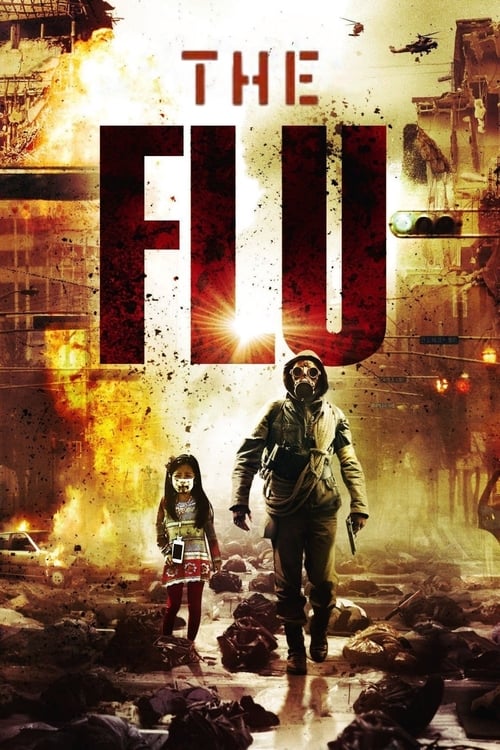
The Flu
A case of the flu quickly morphs into a pandemic. As the death toll mounts and the living panic, the government plans extreme measures to contain it.
The film earned $19.8M at the global box office.


Plot Structure
Story beats plotted across runtime


Narrative Arc
Emotional journey through the story's key moments
Story Circle
Blueprint 15-beat structure
Arcplot Score Breakdown
Weighted: Precision (70%) + Arc (15%) + Theme (15%)
The Flu (2013) showcases carefully calibrated plot construction, characteristic of Kim Sung-soo's storytelling approach. This structural analysis examines how the film's 15-point plot structure maps to proven narrative frameworks across 2 hours and 2 minutes. With an Arcplot score of 6.8, the film balances conventional beats with creative variation.
Characters
Cast & narrative archetypes

Kang Ji-goo
Kim In-hae
Kim Mi-reu
Bae Kyung-ub
President of South Korea
Jae-hyuk
Main Cast & Characters
Kang Ji-goo
Played by Jang Hyuk
A rescue worker who becomes a reluctant hero during a deadly viral outbreak in Bundang.
Kim In-hae
Played by Soo Ae
A dedicated doctor and single mother working to find a cure while searching for her infected daughter.
Kim Mi-reu
Played by Park Min-ha
In-hae's young daughter who becomes infected early in the outbreak.
Bae Kyung-ub
Played by Yoo Hae-jin
A government official who struggles with orders to contain the outbreak through extreme measures.
President of South Korea
Played by Park Hyo-joo
The nation's leader who must make impossible decisions about quarantine and containment.
Jae-hyuk
Played by Lee Hee-joon
Ji-goo's brother, a smuggler whose illegal activities inadvertently trigger the outbreak.
Structural Analysis
The Status Quo at 2 minutes (1% through the runtime) establishes Rescue worker Kang Ji-goo lives his ordinary life as a dedicated firefighter in Bundang, showing his competence and bravery but also his isolation and lack of deep personal connections.. Of particular interest, this early placement immediately immerses viewers in the story world.
The inciting incident occurs at 14 minutes when The first victim collapses at a bustling marketplace, coughing blood and triggering the rapid spread of a deadly H5N1 virus mutation throughout Bundang.. At 11% through the film, this Disruption aligns precisely with traditional story structure. This beat shifts the emotional landscape, launching the protagonist into the central conflict.
The First Threshold at 30 minutes marks the transition into Act II, occurring at 25% of the runtime. This shows the protagonist's commitment to The government declares a complete quarantine of Bundang, sealing the city with military force. Ji-goo, In-hae, and hundreds of thousands are now trapped in a deadly containment zone., moving from reaction to action.
At 61 minutes, the Midpoint arrives at 50% of the runtime—precisely centered, creating perfect narrative symmetry. The analysis reveals that this crucial beat Mirre becomes infected with the virus, raising personal stakes to the maximum. The government considers extreme measures including bombing the city to prevent nationwide spread., fundamentally raising what's at risk. The emotional intensity shifts, dividing the narrative into clear before-and-after phases.
The Collapse moment at 90 minutes (74% through) represents the emotional nadir. Here, The military prepares to execute the bombing of Bundang. Mirre's condition deteriorates critically. Ji-goo faces the death of the child he has come to love and the annihilation of everyone trapped inside., demonstrates the protagonist at their lowest point. This beat's placement in the final quarter sets up the climactic reversal.
The Second Threshold at 97 minutes initiates the final act resolution at 80% of the runtime. A breakthrough occurs: Mirre's antibodies show she is developing immunity. This discovery, combined with evidence that patient zero survived, provides hope for a cure and justification to stop the bombing., demonstrating the transformation achieved throughout the journey.
Emotional Journey
The Flu's emotional architecture traces a deliberate progression across 15 carefully calibrated beats.
Narrative Framework
This structural analysis employs proven narrative structure principles that track dramatic progression. By mapping The Flu against these established plot points, we can identify how Kim Sung-soo utilizes or subverts traditional narrative conventions. The plot point approach reveals not only adherence to structural principles but also creative choices that distinguish The Flu within the action genre.
Comparative Analysis
Additional action films include The Bad Guys, Puss in Boots and Venom: The Last Dance.
Plot Points by Act
Act I
SetupStatus Quo
Rescue worker Kang Ji-goo lives his ordinary life as a dedicated firefighter in Bundang, showing his competence and bravery but also his isolation and lack of deep personal connections.
Theme
A character comments on the value of human life and sacrifice, establishing the film's central question: what does it mean to save lives when the cost becomes unbearable?
Worldbuilding
Introduction to the world of Bundang, the rescue operations, Dr. Kim In-hae and her daughter Mirre, Ji-goo's relationship with his team, and the arrival of infected smuggled immigrants in a container.
Disruption
The first victim collapses at a bustling marketplace, coughing blood and triggering the rapid spread of a deadly H5N1 virus mutation throughout Bundang.
Resistance
Medical professionals and government officials debate the severity of the outbreak. Ji-goo and In-hae begin working together as the infection spreads rapidly. The authorities hesitate on extreme measures.
Act II
ConfrontationFirst Threshold
The government declares a complete quarantine of Bundang, sealing the city with military force. Ji-goo, In-hae, and hundreds of thousands are now trapped in a deadly containment zone.
Mirror World
Ji-goo's relationship with In-hae and her daughter Mirre deepens as they form a makeshift family unit within the chaos, representing hope and human connection amid catastrophe.
Premise
The disaster movie delivers on its promise: society collapses, resources dwindle, infected victims fill stadiums, Ji-goo and In-hae fight to save lives while searching for patient zero and a cure.
Midpoint
Mirre becomes infected with the virus, raising personal stakes to the maximum. The government considers extreme measures including bombing the city to prevent nationwide spread.
Opposition
Chaos intensifies as supplies run out, infected victims are forcibly separated, martial law fails, and the government moves forward with plans to sacrifice Bundang to save the nation.
Collapse
The military prepares to execute the bombing of Bundang. Mirre's condition deteriorates critically. Ji-goo faces the death of the child he has come to love and the annihilation of everyone trapped inside.
Crisis
Ji-goo and In-hae experience their darkest moment, holding Mirre as she fights for life, questioning whether their efforts to save people have any meaning in the face of governmental abandonment.
Act III
ResolutionSecond Threshold
A breakthrough occurs: Mirre's antibodies show she is developing immunity. This discovery, combined with evidence that patient zero survived, provides hope for a cure and justification to stop the bombing.
Synthesis
Ji-goo races against time to deliver proof of the cure to authorities, fighting through military blockades and chaos. In-hae stabilizes Mirre and other survivors. The bombing is called off at the last moment.
Transformation
Ji-goo, In-hae, and Mirre reunite as the quarantine lifts. What was once a solitary rescue worker is now a man with a family, having found human connection through the ultimate trial of sacrifice and survival.