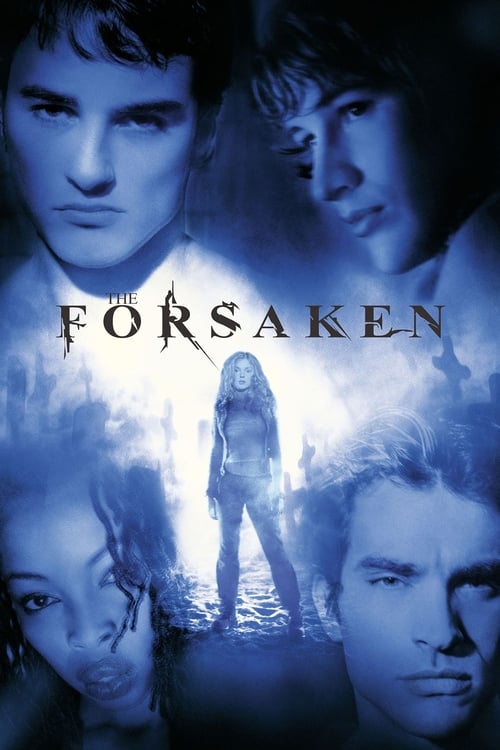
The Forsaken
A young man is in a race against time as he searches for a cure after becoming infected with a virus that will eventually turn him into a blood-sucking vampire.
The film disappointed at the box office against its respectable budget of $15.0M, earning $8.7M globally (-42% loss). While initial box office returns were modest, the film has gained appreciation for its distinctive approach within the horror genre.


Plot Structure
Story beats plotted across runtime


Narrative Arc
Emotional journey through the story's key moments
Story Circle
Blueprint 15-beat structure
Arcplot Score Breakdown
Weighted: Precision (70%) + Arc (15%) + Theme (15%)
The Forsaken (2001) showcases carefully calibrated dramatic framework, characteristic of J.S. Cardone's storytelling approach. This structural analysis examines how the film's 15-point plot structure maps to proven narrative frameworks across 1 hour and 31 minutes. With an Arcplot score of 7.1, the film balances conventional beats with creative variation.
Characters
Cast & narrative archetypes

Sean
Nick
Megan
Kit
Pen
Main Cast & Characters
Sean
Played by Kerr Smith
A young film editor transporting a car cross-country who gets pulled into a vampire hunt
Nick
Played by Brendan Fehr
A mysterious vampire hunter tracking a group of daywalkers across the Southwest
Megan
Played by Izabella Miko
A young woman infected by vampires, struggling between humanity and transformation
Kit
Played by Johnathon Schaech
The charismatic and dangerous leader of the vampire pack terrorizing the desert highways
Pen
Played by Phina Oruche
A vampire in Kit's group, seductive and predatory
Structural Analysis
The Status Quo at 1 minutes (1% through the runtime) establishes Sean is a film trailer editor driving cross-country to deliver a car and make his sister's wedding, living a mundane, isolated life focused on work and obligations.. Notably, this early placement immediately immerses viewers in the story world.
The inciting incident occurs at 11 minutes when Sean picks up hitchhiker Nick, who is bloodied and armed. A woman in distress appears on the road, and Sean witnesses supernatural violence, pulling him into a nightmare of vampires hunting in the desert.. At 12% through the film, this Disruption aligns precisely with traditional story structure. This beat shifts the emotional landscape, launching the protagonist into the central conflict.
The First Threshold at 24 minutes marks the transition into Act II, occurring at 26% of the runtime. This shows the protagonist's commitment to Sean makes the active choice to help Nick save Megan from the vampires rather than abandon them and continue to his wedding. He crosses into the world of vampire hunters, accepting the danger., moving from reaction to action.
At 46 minutes, the Midpoint arrives at 51% of the runtime—precisely centered, creating perfect narrative symmetry. Structural examination shows that this crucial beat The group discovers that Kit is the original vampire master who must be killed to save Megan. The stakes raise dramatically: they must hunt the hunter. What seemed like escape becomes an offensive mission. False victory of finding information becomes awareness of greater danger., fundamentally raising what's at risk. The emotional intensity shifts, dividing the narrative into clear before-and-after phases.
The Collapse moment at 69 minutes (75% through) represents the emotional nadir. Here, Nick is killed by the vampires. Sean loses his mentor and protector, leaving him alone to save Megan. The "whiff of death" is literal - the experienced hunter dies, and Sean must face the vampires without guidance., illustrates the protagonist at their lowest point. This beat's placement in the final quarter sets up the climactic reversal.
The Second Threshold at 74 minutes initiates the final act resolution at 81% of the runtime. Sean synthesizes what Nick taught him with his own courage. He chooses to confront Kit directly to save Megan, armed with knowledge of how to kill the master vampire. The realization that he can finish what Nick started., demonstrating the transformation achieved throughout the journey.
Emotional Journey
The Forsaken's emotional architecture traces a deliberate progression across 15 carefully calibrated beats.
Narrative Framework
This structural analysis employs a 15-point narrative structure framework that maps key story moments. By mapping The Forsaken against these established plot points, we can identify how J.S. Cardone utilizes or subverts traditional narrative conventions. The plot point approach reveals not only adherence to structural principles but also creative choices that distinguish The Forsaken within the horror genre.
Comparative Analysis
Additional horror films include Thinner, A Nightmare on Elm Street and Mary Reilly.
Plot Points by Act
Act I
SetupStatus Quo
Sean is a film trailer editor driving cross-country to deliver a car and make his sister's wedding, living a mundane, isolated life focused on work and obligations.
Theme
A trucker warns Sean about picking up hitchhikers in the desert: "You never know what you're gonna find out here." The theme of trust, survival, and what lurks beneath the surface is established.
Worldbuilding
Sean drives through the desert Southwest, establishing his solitary journey, his commitment to his sister, and the vast, empty landscape. The mundane road trip world before the horror begins.
Disruption
Sean picks up hitchhiker Nick, who is bloodied and armed. A woman in distress appears on the road, and Sean witnesses supernatural violence, pulling him into a nightmare of vampires hunting in the desert.
Resistance
Nick explains the vampire threat and reveals he's hunting them. Sean resists, wanting to continue to his sister's wedding, but becomes increasingly involved as he learns about the infected girl Megan and the vampire gang led by Kit.
Act II
ConfrontationFirst Threshold
Sean makes the active choice to help Nick save Megan from the vampires rather than abandon them and continue to his wedding. He crosses into the world of vampire hunters, accepting the danger.
Mirror World
Sean connects with Megan, the infected girl they're trying to save. She represents innocence being corrupted, mirroring Sean's own transformation from innocent bystander to active fighter. Their relationship carries the theme of fighting to preserve humanity.
Premise
The vampire hunt road movie: Sean, Nick, and Megan race across the desert, gathering weapons and information, while being pursued by Kit's vampire gang. Action, near-misses, and building the mythology of the day-walking vampires.
Midpoint
The group discovers that Kit is the original vampire master who must be killed to save Megan. The stakes raise dramatically: they must hunt the hunter. What seemed like escape becomes an offensive mission. False victory of finding information becomes awareness of greater danger.
Opposition
Kit and his vampire gang intensify their pursuit. The group is fractured, Megan's infection worsens, and the vampires close in. Trust issues emerge, resources dwindle, and the odds stack against them. Sean's inexperience becomes a liability.
Collapse
Nick is killed by the vampires. Sean loses his mentor and protector, leaving him alone to save Megan. The "whiff of death" is literal - the experienced hunter dies, and Sean must face the vampires without guidance.
Crisis
Sean mourns Nick and faces despair. Megan's transformation is nearly complete. Sean must decide whether to flee or fight, whether to risk everything for someone he barely knows. The darkness before the final choice.
Act III
ResolutionSecond Threshold
Sean synthesizes what Nick taught him with his own courage. He chooses to confront Kit directly to save Megan, armed with knowledge of how to kill the master vampire. The realization that he can finish what Nick started.
Synthesis
Sean confronts Kit and the vampire gang in a final showdown. He uses the weapons and tactics Nick taught him, fights through the vampire horde, and ultimately destroys Kit, breaking the vampiric bloodline and saving Megan.
Transformation
Sean and Megan drive away together, forever changed. Sean missed his sister's wedding but saved a life and became a warrior. The isolated, obligation-driven man is now connected, purposeful, and battle-tested. The open road now represents freedom, not loneliness.