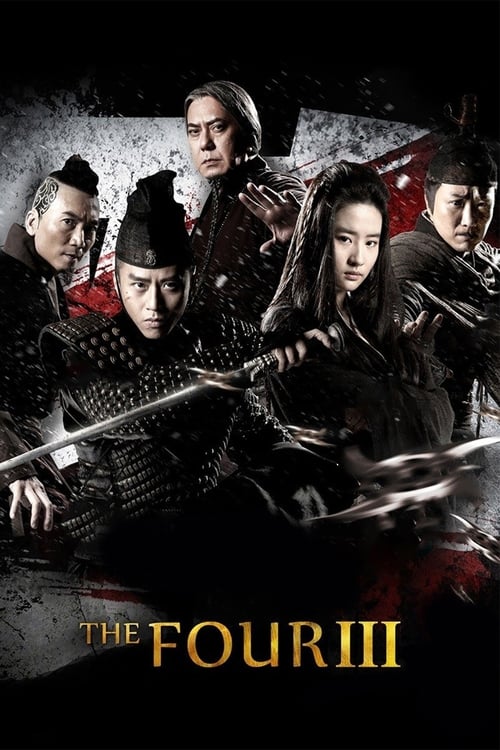
The Four 3
The reputation of the Four constables survives, but since Emotionless’s departure, there have been changes at the Divine Constabulary. The four Coldblood, Iron Hands, Life Snatcher, rescue Zhuge Zhengwo from An Yunshan’s mountain fortress, then with the Emperor and Di armies, they attack. But An Yunshan absorbs their power, which means the constables and their allies now face their most lethal opponent yet, a nearly invincible kung fu master who won’t stop until he has absolute power...
The film earned $32.0M at the global box office.


Plot Structure
Story beats plotted across runtime


Narrative Arc
Emotional journey through the story's key moments
Story Circle
Blueprint 15-beat structure
Arcplot Score Breakdown
Weighted: Precision (70%) + Arc (15%) + Theme (15%)
The Four 3 (2014) demonstrates carefully calibrated story structure, characteristic of Gordon Chan's storytelling approach. This structural analysis examines how the film's 15-point plot structure maps to proven narrative frameworks across 1 hour and 47 minutes. With an Arcplot score of 6.7, the film balances conventional beats with creative variation.
Characters
Cast & narrative archetypes

Emotionless (Wu Qing)
Iron Hands (Zhui Ming)
Cold Blood (Leng Xue)
Life Snatcher (Wu Qing)
Zhuge Zhengwo
Ji Yaohua
An Shigeng
Main Cast & Characters
Emotionless (Wu Qing)
Played by Deng Chao
A brilliant detective with paralyzed legs who uses a wheelchair, known for his cold logic and deductive skills.
Iron Hands (Zhui Ming)
Played by Liu Yifei
A master of qinggong and constable with iron prosthetic hands, driven by justice and loyalty.
Cold Blood (Leng Xue)
Played by Ronald Cheng
A stoic swordsman and former assassin seeking redemption, skilled in blade combat.
Life Snatcher (Wu Qing)
Played by Collin Chou
A beautiful courtesan and spy with exceptional martial arts skills, uses charm as a weapon.
Zhuge Zhengwo
Played by Anthony Wong
The head of the Divine Constabulary, a wise mentor figure who guides the Four.
Ji Yaohua
Played by Jiang Yiyan
A powerful and manipulative antagonist who seeks to destroy the Divine Constabulary.
An Shigeng
Played by Wu Xiubo
A formidable villain and master strategist with dark ambitions for the empire.
Structural Analysis
The Status Quo at 1 minutes (1% through the runtime) establishes The Divine Constabulary stands united following their previous victories. Emotionless, Coldblood, Iron Hands, and Life Snatcher work together under Zhuge Zhengwo's leadership, maintaining order in the capital while processing the aftermath of their last battle with An Shigeng.. Notably, this early placement immediately immerses viewers in the story world.
The inciting incident occurs at 13 minutes when An Shigeng returns from apparent death, more powerful than before. Having mastered dark resurrection techniques, he declares war on the Divine Constabulary and begins systematically eliminating anyone who stands in his way, forcing the constables into a defensive position.. At 12% through the film, this Disruption aligns precisely with traditional story structure. This beat shifts the emotional landscape, launching the protagonist into the central conflict.
The First Threshold at 27 minutes marks the transition into Act II, occurring at 25% of the runtime. This shows the protagonist's commitment to The four constables commit to a direct assault on An Shigeng's stronghold despite knowing they may not survive. This active choice to confront immortal evil rather than wait for it to grow stronger marks their entry into the deadly final conflict., moving from reaction to action.
At 54 minutes, the Midpoint arrives at 50% of the runtime—precisely centered, creating perfect narrative symmetry. The analysis reveals that this crucial beat An Shigeng reveals the source of his immortality and demonstrates that he has grown even more powerful than anticipated. The constables' initial assault fails spectacularly, and they realize their current abilities are insufficient to destroy him permanently—a false defeat that raises the stakes., fundamentally raising what's at risk. The emotional intensity shifts, dividing the narrative into clear before-and-after phases.
The Collapse moment at 80 minutes (75% through) represents the emotional nadir. Here, Zhuge Zhengwo is gravely wounded protecting his constables from An Shigeng's attack. The mentor figure's near-death represents the whiff of death, and the team fears they have lost their guiding wisdom. The Divine Constabulary seems broken beyond repair., illustrates the protagonist at their lowest point. This beat's placement in the final quarter sets up the climactic reversal.
The Second Threshold at 86 minutes initiates the final act resolution at 80% of the runtime. Zhuge Zhengwo, with his dying breath, reveals the key to defeating An Shigeng—only by combining their four powers simultaneously can they destroy his immortal body. The constables realize their bond is their greatest weapon, synthesizing their individual abilities into one unified force., demonstrating the transformation achieved throughout the journey.
Emotional Journey
The Four 3's emotional architecture traces a deliberate progression across 15 carefully calibrated beats.
Narrative Framework
This structural analysis employs a 15-point narrative structure framework that maps key story moments. By mapping The Four 3 against these established plot points, we can identify how Gordon Chan utilizes or subverts traditional narrative conventions. The plot point approach reveals not only adherence to structural principles but also creative choices that distinguish The Four 3 within the action genre.
Comparative Analysis
Additional action films include The Bad Guys, Puss in Boots and Venom: The Last Dance.
Plot Points by Act
Act I
SetupStatus Quo
The Divine Constabulary stands united following their previous victories. Emotionless, Coldblood, Iron Hands, and Life Snatcher work together under Zhuge Zhengwo's leadership, maintaining order in the capital while processing the aftermath of their last battle with An Shigeng.
Theme
Zhuge Zhengwo reminds the constables that true strength comes not from individual power but from the bonds they share. He states that even the mightiest warrior falls alone, but together they become unstoppable—foreshadowing the unity required to defeat the immortal threat.
Worldbuilding
The world of the Divine Constabulary is established with its supernatural elements and political intrigue. We see the four constables' unique abilities, their relationships with each other, the looming threat of An Shigeng's resurrection, and the corrupt officials who secretly work against them.
Disruption
An Shigeng returns from apparent death, more powerful than before. Having mastered dark resurrection techniques, he declares war on the Divine Constabulary and begins systematically eliminating anyone who stands in his way, forcing the constables into a defensive position.
Resistance
The constables debate how to combat an enemy who cannot be killed by conventional means. Zhuge Zhengwo serves as their guide, researching ancient texts for weaknesses while the team gathers intelligence on An Shigeng's movements and recruits allies for the coming confrontation.
Act II
ConfrontationFirst Threshold
The four constables commit to a direct assault on An Shigeng's stronghold despite knowing they may not survive. This active choice to confront immortal evil rather than wait for it to grow stronger marks their entry into the deadly final conflict.
Mirror World
The romantic relationship between Emotionless and Coldblood deepens as they share a quiet moment before battle. Their love represents what they're fighting for—human connection and emotional bonds that An Shigeng's undead existence can never possess.
Premise
The constables engage in spectacular wuxia battles against An Shigeng's forces. Each constable showcases their unique abilities—Emotionless's telekinesis, Coldblood's swordplay, Iron Hands's strength, and Life Snatcher's hidden weapons—in visually stunning supernatural combat sequences.
Midpoint
An Shigeng reveals the source of his immortality and demonstrates that he has grown even more powerful than anticipated. The constables' initial assault fails spectacularly, and they realize their current abilities are insufficient to destroy him permanently—a false defeat that raises the stakes.
Opposition
An Shigeng launches a devastating counterattack. The constables are separated and hunted. Political enemies within the government reveal themselves as An Shigeng's allies, cutting off the Divine Constabulary's resources and support. Each constable faces personal trials that test their resolve.
Collapse
Zhuge Zhengwo is gravely wounded protecting his constables from An Shigeng's attack. The mentor figure's near-death represents the whiff of death, and the team fears they have lost their guiding wisdom. The Divine Constabulary seems broken beyond repair.
Crisis
The constables gather around their fallen leader, processing grief and despair. Each must confront their own doubts about whether they can succeed without Zhuge's guidance. The dark night of the soul forces them to find strength within themselves and each other.
Act III
ResolutionSecond Threshold
Zhuge Zhengwo, with his dying breath, reveals the key to defeating An Shigeng—only by combining their four powers simultaneously can they destroy his immortal body. The constables realize their bond is their greatest weapon, synthesizing their individual abilities into one unified force.
Synthesis
The four constables execute a coordinated final assault. Working in perfect harmony, they combine Emotionless's telekinetic force, Coldblood's precision, Iron Hands's power, and Life Snatcher's cunning to create an attack that finally destroys An Shigeng's immortal form permanently.
Transformation
The Divine Constabulary stands together in the aftermath, forever changed. They have evolved from four individuals into a true family bound by sacrifice and love. The final image mirrors the opening but now shows constables who have proven that unity conquers even death itself.