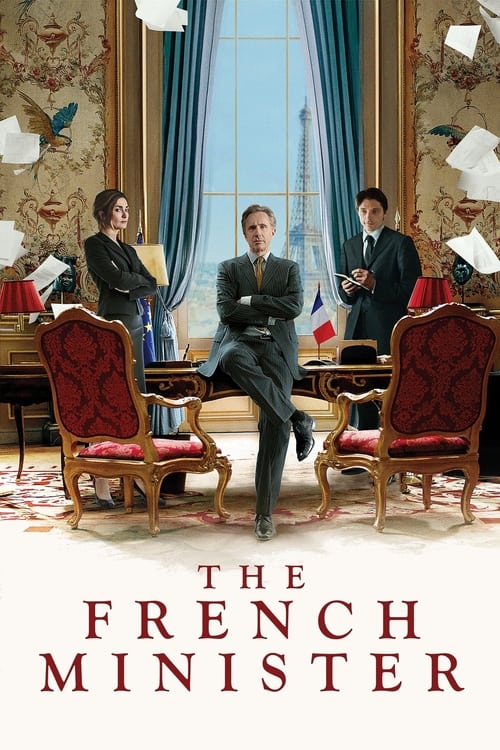
The French Minister
Alexandre Taillard de Vorms is a force to be reckoned with. With his silver mane and tanned, athletic body, he stalks the world stage as Minister of Foreign Affairs for France, waging his own war backed up by the holy trinity of diplomatic concepts: legitimacy, lucidity, and efficacy. Enter Arthur Vlaminck. Hired to write the minister's speeches, Arthur must contend with the sensibilities of his boss and the dirty dealings within the Quai d'Orsay, the ministry's home.
Working with a modest budget of $5.1M, the film achieved a steady performer with $5.6M in global revenue (+9% profit margin).
3 wins & 10 nominations


Plot Structure
Story beats plotted across runtime


Narrative Arc
Emotional journey through the story's key moments
Story Circle
Blueprint 15-beat structure
Arcplot Score Breakdown
Weighted: Precision (70%) + Arc (15%) + Theme (15%)
The French Minister (2013) showcases precise dramatic framework, characteristic of Bertrand Tavernier's storytelling approach. This structural analysis examines how the film's 15-point plot structure maps to proven narrative frameworks across 1 hour and 53 minutes. With an Arcplot score of 7.3, the film balances conventional beats with creative variation.
Characters
Cast & narrative archetypes

Arthur Vlaminck
Alexandre Taillard de Vorms
Claude Maupas
Gilles Lebœuf
Main Cast & Characters
Arthur Vlaminck
Played by Raphaël Personnaz
A young speechwriter hired to work for the unpredictable French Foreign Minister, navigating the chaos of diplomatic politics.
Alexandre Taillard de Vorms
Played by Thierry Lhermitte
The bombastic and egotistical French Minister of Foreign Affairs, brilliant but utterly chaotic and self-absorbed.
Claude Maupas
Played by Anaïs Demoustier
The Minister's chief of staff, a patient and pragmatic diplomat who manages the daily crises caused by his boss.
Gilles Lebœuf
Played by Bruno Raffaelli
A senior advisor in the Minister's office, cynical and world-weary from years of diplomatic service.
Structural Analysis
The Status Quo at 2 minutes (2% through the runtime) establishes Arthur Vlaminck prepares nervously for his first day at the Quai d'Orsay (French Foreign Ministry), representing the idealistic young professional entering the prestigious world of diplomacy.. Significantly, this early placement immediately immerses viewers in the story world.
The inciting incident occurs at 14 minutes when Minister Taillard demands Arthur write a major speech on the brewing international crisis, giving him an impossible deadline. Arthur's quiet life as a scholar is shattered by the demands of high-stakes political theater.. At 12% through the film, this Disruption aligns precisely with traditional story structure. This beat shifts the emotional landscape, launching the protagonist into the central conflict.
The First Threshold at 28 minutes marks the transition into Act II, occurring at 25% of the runtime. This shows the protagonist's commitment to Arthur commits fully to the position by delivering his first successful speech draft that satisfies Taillard. He actively chooses to embrace the chaos rather than quit, crossing into the political world., moving from reaction to action.
At 57 minutes, the Midpoint arrives at 50% of the runtime—precisely centered, creating perfect narrative symmetry. Significantly, this crucial beat False victory: Arthur successfully manages a major diplomatic event and earns Taillard's genuine praise. He feels he's mastered the game and become an insider. But the stakes secretly raise—the international crisis deepens and will demand real moral choices, not just clever wordplay., fundamentally raising what's at risk. The emotional intensity shifts, dividing the narrative into clear before-and-after phases.
The Collapse moment at 85 minutes (75% through) represents the emotional nadir. Here, Arthur is forced to write a speech supporting a policy he morally opposes, betraying his principles. His idealistic self "dies"—he realizes he's become complicit in the empty political theater he once despised. Taillard dismisses his concerns with narcissistic indifference., reveals the protagonist at their lowest point. This beat's placement in the final quarter sets up the climactic reversal.
The Second Threshold at 90 minutes initiates the final act resolution at 80% of the runtime. Arthur realizes he can use his skills to subtly shape discourse toward better outcomes, working within the system while maintaining his moral core. He synthesizes his idealism with pragmatic understanding—not compromise, but strategic patience., demonstrating the transformation achieved throughout the journey.
Emotional Journey
The French Minister's emotional architecture traces a deliberate progression across 15 carefully calibrated beats.
Narrative Framework
This structural analysis employs a 15-point narrative structure framework that maps key story moments. By mapping The French Minister against these established plot points, we can identify how Bertrand Tavernier utilizes or subverts traditional narrative conventions. The plot point approach reveals not only adherence to structural principles but also creative choices that distinguish The French Minister within the comedy genre.
Bertrand Tavernier's Structural Approach
Among the 2 Bertrand Tavernier films analyzed on Arcplot, the average structural score is 7.0, reflecting strong command of classical structure. The French Minister represents one of the director's most structurally precise works. For comparative analysis, explore the complete Bertrand Tavernier filmography.
Comparative Analysis
Additional comedy films include The Bad Guys, Ella Enchanted and The Evening Star. For more Bertrand Tavernier analyses, see 'Round Midnight.
Plot Points by Act
Act I
SetupStatus Quo
Arthur Vlaminck prepares nervously for his first day at the Quai d'Orsay (French Foreign Ministry), representing the idealistic young professional entering the prestigious world of diplomacy.
Theme
A senior advisor warns Arthur about working with Minister Taillard: "You'll have to choose between your principles and survival." This establishes the central theme of idealism versus pragmatism in political service.
Worldbuilding
Arthur meets the eccentric cast of Ministry staff, witnesses the chaotic workflow, and observes Minister Taillard's theatrical management style. The absurdist bureaucracy and political maneuvering of French diplomacy is established.
Disruption
Minister Taillard demands Arthur write a major speech on the brewing international crisis, giving him an impossible deadline. Arthur's quiet life as a scholar is shattered by the demands of high-stakes political theater.
Resistance
Arthur struggles with Taillard's contradictory instructions and learns the unwritten rules from veteran staffers Claude and Maupas. He debates whether he can actually function in this bizarre environment or should flee back to academia.
Act II
ConfrontationFirst Threshold
Arthur commits fully to the position by delivering his first successful speech draft that satisfies Taillard. He actively chooses to embrace the chaos rather than quit, crossing into the political world.
Mirror World
Arthur develops a connection with his colleague and begins to bond with the Ministry staff who represent different responses to political service—Claude's cynicism, Maupas' loyalty, others' opportunism. These relationships will teach him what kind of public servant he wants to be.
Premise
The fun of political satire—Arthur navigates absurd meetings, witnesses Taillard's ego clashes with other ministers, handles media manipulation, and experiences the comedic chaos of diplomatic crisis management. The promised world of witty French political machinations.
Midpoint
False victory: Arthur successfully manages a major diplomatic event and earns Taillard's genuine praise. He feels he's mastered the game and become an insider. But the stakes secretly raise—the international crisis deepens and will demand real moral choices, not just clever wordplay.
Opposition
The political situation deteriorates. Taillard's vanity and incompetence become dangerous rather than amusing. Arthur realizes the consequences of their work affect real people. Internal ministry politics turn vicious. Arthur's idealism clashes with the compromises demanded of him.
Collapse
Arthur is forced to write a speech supporting a policy he morally opposes, betraying his principles. His idealistic self "dies"—he realizes he's become complicit in the empty political theater he once despised. Taillard dismisses his concerns with narcissistic indifference.
Crisis
Arthur contemplates his choices in dark solitude. He processes the loss of his idealistic identity and must decide: resign in protest, become a cynical careerist like others, or find a third way to maintain integrity within a corrupt system.
Act III
ResolutionSecond Threshold
Arthur realizes he can use his skills to subtly shape discourse toward better outcomes, working within the system while maintaining his moral core. He synthesizes his idealism with pragmatic understanding—not compromise, but strategic patience.
Synthesis
Arthur executes his plan, crafting a final speech that satisfies political requirements while embedding his genuine values. He confronts Taillard with subtle defiance, helps his colleagues, and navigates the resolution of the crisis with newfound wisdom.
Transformation
Final image mirrors the opening: Arthur at his desk in the Ministry. But now he works with calm competence rather than nervous anxiety, seasoned rather than naive. He has found his place—not the idealist who arrived, nor the cynic he feared becoming, but a principled professional who understands how to effect change from within.