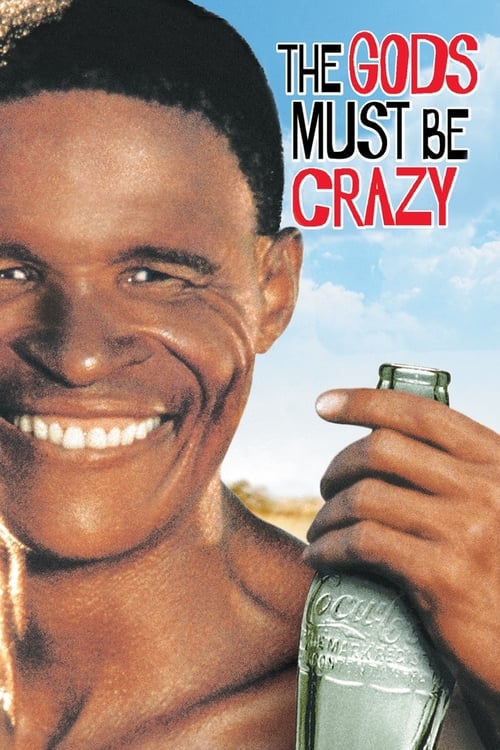
The Gods Must Be Crazy
A comic allegory about a traveling Bushman who encounters modern civilization and its stranger aspects, including a clumsy scientist and a band of revolutionaries.
Despite its limited budget of $5.0M, The Gods Must Be Crazy became a massive hit, earning $200.0M worldwide—a remarkable 3900% return. The film's compelling narrative resonated with audiences, confirming that strong storytelling can transcend budget limitations.
2 wins & 3 nominations


Plot Structure
Story beats plotted across runtime


Narrative Arc
Emotional journey through the story's key moments
Story Circle
Blueprint 15-beat structure
Characters
Cast & narrative archetypes

Xi
Andrew Steyn
Kate Thompson
Sam Boga
Main Cast & Characters
Xi
Played by N!xau
A Kalahari Bushman who embarks on a journey to return a mysterious Coke bottle that fell from the sky and disrupted his tribe's peaceful existence.
Andrew Steyn
Played by Marius Weyers
A clumsy but kind-hearted microbiologist studying wildlife in Botswana who becomes romantically interested in the new schoolteacher.
Kate Thompson
Played by Sandra Prinsloo
A cheerful and resourceful schoolteacher from Johannesburg who comes to teach children in a remote African village.
Sam Boga
Played by Louw Verwey
A ruthless rebel leader and terrorist who takes hostages during a failed coup attempt and flees into the bush.
Structural Analysis
The Status Quo at 1 minutes (1% through the runtime) establishes The Bushmen live in perfect harmony in the Kalahari Desert, 600 miles from civilization. Narrator establishes their peaceful, simple existence where they share everything and have no concept of ownership or evil.. Of particular interest, this early placement immediately immerses viewers in the story world.
The inciting incident occurs at 12 minutes when A Coke bottle is thrown from a passing airplane and lands in the Bushmen's village. This seemingly miraculous "gift from the gods" disrupts their harmonious existence. It is the first foreign object they have ever encountered.. At 11% through the film, this Disruption aligns precisely with traditional story structure. This beat shifts the emotional landscape, launching the protagonist into the central conflict.
The First Threshold at 27 minutes marks the transition into Act II, occurring at 25% of the runtime. This demonstrates the protagonist's commitment to Xi makes the active decision to leave his family and village to take the "evil thing" to the edge of the world and throw it off. This is an irreversible choice that launches him into the modern world he's never experienced., moving from reaction to action.
At 55 minutes, the Midpoint arrives at 50% of the runtime—precisely centered, creating perfect narrative symmetry. Of particular interest, this crucial beat Xi is arrested and jailed for stealing a goat (he doesn't understand property laws). This false defeat represents his complete inability to navigate the modern world. He is now trapped, unable to complete his quest, imprisoned by laws he cannot comprehend., fundamentally raising what's at risk. The emotional intensity shifts, dividing the narrative into clear before-and-after phases.
The Collapse moment at 79 minutes (73% through) represents the emotional nadir. Here, The guerrillas take Kate and the children hostage at gunpoint. The situation becomes life-threatening. Xi's quest seems impossible as he's caught up in modern violence and chaos—the very thing the bottle introduced to his world. Innocence confronts deadly modern brutality., reveals the protagonist at their lowest point. This beat's placement in the final quarter sets up the climactic reversal.
The Second Threshold at 86 minutes initiates the final act resolution at 79% of the runtime. Xi realizes his primitive skills—tracking, stealth, knowledge of nature, and his tranquilizer darts—are exactly what's needed. He synthesizes his simple world knowledge with understanding of the modern crisis. He chooses to use his "uncivilized" abilities to solve a civilized problem., demonstrating the transformation achieved throughout the journey.
Emotional Journey
The Gods Must Be Crazy's emotional architecture traces a deliberate progression across 15 carefully calibrated beats.
Narrative Framework
This structural analysis employs systematic plot point analysis that identifies crucial turning points. By mapping The Gods Must Be Crazy against these established plot points, we can identify how Jamie Uys utilizes or subverts traditional narrative conventions. The plot point approach reveals not only adherence to structural principles but also creative choices that distinguish The Gods Must Be Crazy within the adventure genre.
Jamie Uys's Structural Approach
Among the 2 Jamie Uys films analyzed on Arcplot, the average structural score is 7.6, reflecting strong command of classical structure. The Gods Must Be Crazy exemplifies the director's characteristic narrative technique. For comparative analysis, explore the complete Jamie Uys filmography.
Comparative Analysis
Additional adventure films include The Black Stallion, The Bad Guys and Puss in Boots. For more Jamie Uys analyses, see The Gods Must Be Crazy II.
Plot Points by Act
Act I
SetupStatus Quo
The Bushmen live in perfect harmony in the Kalahari Desert, 600 miles from civilization. Narrator establishes their peaceful, simple existence where they share everything and have no concept of ownership or evil.
Theme
The narrator states the central theme: "Civilized man refused to adapt himself to his environment; instead he adapted his environment to his needs. But in the process he destroyed it." This sets up the contrast between primitive harmony and modern chaos.
Worldbuilding
Parallel introduction of three worlds: the Bushmen's peaceful Kalahari existence, Andrew Steyn's clumsy work as a scientist studying elephant manure, and the political turmoil on the border. Kate Thompson is introduced traveling to teach in Botswana.
Disruption
A Coke bottle is thrown from a passing airplane and lands in the Bushmen's village. This seemingly miraculous "gift from the gods" disrupts their harmonious existence. It is the first foreign object they have ever encountered.
Resistance
The bottle initially seems useful and wonderful, but it introduces the concept of property and ownership. For the first time, the Bushmen experience jealousy, anger, and violence as they fight over the single bottle. Xi debates what to do as his people change.
Act II
ConfrontationFirst Threshold
Xi makes the active decision to leave his family and village to take the "evil thing" to the edge of the world and throw it off. This is an irreversible choice that launches him into the modern world he's never experienced.
Mirror World
Xi encounters Andrew Steyn and Kate Thompson, who represent the "civilized" world. Their awkward, complicated courtship and misunderstandings mirror and contrast with Xi's simple, direct approach to life. Kate becomes the thematic counterpoint showing civilized social complexity.
Premise
Xi's fish-out-of-water journey through the modern world. He encounters vehicles, buildings, and white people for the first time. Parallel storyline shows Andrew and Kate's developing relationship and the guerrilla subplot. Xi's innocence creates comic situations as he misunderstands civilization.
Midpoint
Xi is arrested and jailed for stealing a goat (he doesn't understand property laws). This false defeat represents his complete inability to navigate the modern world. He is now trapped, unable to complete his quest, imprisoned by laws he cannot comprehend.
Opposition
Andrew intervenes to get Xi released into his custody. The guerrilla threat intensifies as revolutionaries kidnap Kate and the schoolchildren. Xi must work for Andrew for six months, delaying his quest. The worlds collide as all three storylines begin to converge.
Collapse
The guerrillas take Kate and the children hostage at gunpoint. The situation becomes life-threatening. Xi's quest seems impossible as he's caught up in modern violence and chaos—the very thing the bottle introduced to his world. Innocence confronts deadly modern brutality.
Crisis
Xi observes the crisis and must decide whether to continue his personal quest or help these people from the strange world. Andrew struggles to find a solution. The darkness of modern conflict (guns, kidnapping, violence) contrasts with Xi's pure survival skills.
Act III
ResolutionSecond Threshold
Xi realizes his primitive skills—tracking, stealth, knowledge of nature, and his tranquilizer darts—are exactly what's needed. He synthesizes his simple world knowledge with understanding of the modern crisis. He chooses to use his "uncivilized" abilities to solve a civilized problem.
Synthesis
Xi uses his hunting and tracking skills to systematically neutralize the guerrillas with tranquilizer darts, saving Kate and the children. His "primitive" abilities prove superior to modern weapons. Andrew and Kate's relationship resolves. Xi finally reaches a cliff to dispose of the bottle.
Transformation
Xi throws the Coke bottle off the edge of a massive cliff into the clouds below. He turns and walks back toward his family, having completed his quest. He returns home wiser, having seen civilization and confirmed that his simple life is superior. Harmony restored.