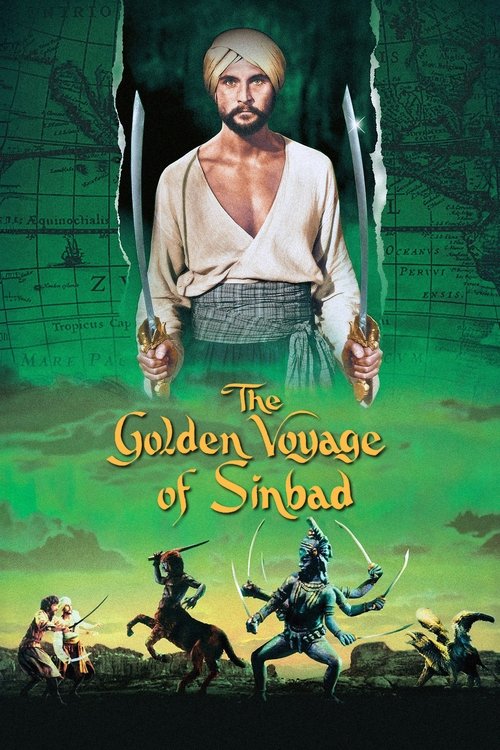
The Golden Voyage of Sinbad
Sinbad and his crew intercept a homunculus carrying a golden tablet. Koura, the creator of the homunculus and practitioner of evil magic, wants the tablet back and pursues Sinbad. Meanwhile, Sinbad meets the Vizier who has another part of the interlocking golden map, and they mount a quest across the seas to solve the riddle of the map.
The film earned $11.0M at the global box office.


Plot Structure
Story beats plotted across runtime


Narrative Arc
Emotional journey through the story's key moments
Story Circle
Blueprint 15-beat structure
Arcplot Score Breakdown
Weighted: Precision (70%) + Arc (15%) + Theme (15%)
The Golden Voyage of Sinbad (1973) exhibits deliberately positioned plot construction, characteristic of Gordon Hessler's storytelling approach. This structural analysis examines how the film's 15-point plot structure maps to proven narrative frameworks across 1 hour and 45 minutes. With an Arcplot score of 6.7, the film balances conventional beats with creative variation.
Characters
Cast & narrative archetypes

Sinbad
Prince Koura
Princess Farah
Grand Vizier
Haroun
Achmed
Main Cast & Characters
Sinbad
Played by John Phillip Law
Legendary sailor and adventurer who seeks to break a curse and restore a kingdom, driven by both honor and attraction to Princess Farah.
Prince Koura
Played by Tom Baker
Dark sorcerer who practices forbidden magic to gain power, willing to sacrifice his own life force to achieve dominion over kingdoms.
Princess Farah
Played by Caroline Munro
Slave girl who is actually the rightful heir to the kingdom of Marabia, displays courage and intelligence throughout the quest.
Grand Vizier
Played by Douglas Wilmer
Wise counselor to the Prince of Marabia whose face is hidden by a golden mask, guides the quest to restore the kingdom.
Haroun
Played by Kurt Christian
Young son of the Grand Vizier turned into a baboon by Koura's magic, accompanies the quest in hopes of being restored.
Achmed
Played by Grégoire Aslan
Captain of Sinbad's ship and loyal friend, provides comic relief and steadfast support throughout the dangerous journey.
Structural Analysis
The Status Quo at 1 minutes (1% through the runtime) establishes Sinbad sails the open seas as a free adventurer and merchant captain, master of his ship and crew, seeking fortune and adventure in exotic lands.. The analysis reveals that this early placement immediately immerses viewers in the story world.
The inciting incident occurs at 12 minutes when Sinbad encounters the disfigured Prince Koura, an evil magician who seeks the golden amulet. Koura reveals he has part of the amulet and needs Sinbad's piece to complete it and reach the Fountain of Destiny for ultimate power.. At 12% through the film, this Disruption aligns precisely with traditional story structure. This beat shifts the emotional landscape, launching the protagonist into the central conflict.
The First Threshold at 26 minutes marks the transition into Act II, occurring at 25% of the runtime. This reveals the protagonist's commitment to Sinbad makes the active choice to embark on the quest to find the Fountain of Destiny. He commits his ship and crew to the dangerous voyage, accepting that he must face Koura and unknown perils to complete the mission., moving from reaction to action.
At 51 minutes, the Midpoint arrives at 49% of the runtime—precisely centered, creating perfect narrative symmetry. Structural examination shows that this crucial beat Sinbad and his crew discover the map's next clue and successfully defeat the statue of Kali. This false victory raises stakes as Koura grows more desperate and dangerous, accelerating his magical attacks despite the cost to his own life force., fundamentally raising what's at risk. The emotional intensity shifts, dividing the narrative into clear before-and-after phases.
The Collapse moment at 77 minutes (74% through) represents the emotional nadir. Here, The crew suffers devastating losses in battle with Koura's creatures. Men die, the ship is damaged, and the mission seems impossible. Sinbad faces the possibility that his choice to pursue this quest has led his loyal crew to their doom., indicates the protagonist at their lowest point. This beat's placement in the final quarter sets up the climactic reversal.
The Second Threshold at 82 minutes initiates the final act resolution at 78% of the runtime. Sinbad synthesizes his adventurer's courage with newfound wisdom about destiny and sacrifice. He realizes the quest is about more than treasure—it's about stopping evil and honoring those lost. He commits to face Koura directly at the Fountain of Destiny., demonstrating the transformation achieved throughout the journey.
Emotional Journey
The Golden Voyage of Sinbad's emotional architecture traces a deliberate progression across 15 carefully calibrated beats.
Narrative Framework
This structural analysis employs proven narrative structure principles that track dramatic progression. By mapping The Golden Voyage of Sinbad against these established plot points, we can identify how Gordon Hessler utilizes or subverts traditional narrative conventions. The plot point approach reveals not only adherence to structural principles but also creative choices that distinguish The Golden Voyage of Sinbad within the action genre.
Comparative Analysis
Additional action films include The Bad Guys, Puss in Boots and Venom: The Last Dance.
Plot Points by Act
Act I
SetupStatus Quo
Sinbad sails the open seas as a free adventurer and merchant captain, master of his ship and crew, seeking fortune and adventure in exotic lands.
Theme
The Grand Vizier speaks of destiny and how some things are meant to be, suggesting that fate guides those brave enough to pursue their path despite uncertainty and danger.
Worldbuilding
Establishing Sinbad's world of maritime adventure, his loyal crew, and the mystical forces at play. A golden amulet mysteriously appears on Sinbad's ship, and a creature attacks trying to retrieve it, revealing supernatural forces seeking the amulet.
Disruption
Sinbad encounters the disfigured Prince Koura, an evil magician who seeks the golden amulet. Koura reveals he has part of the amulet and needs Sinbad's piece to complete it and reach the Fountain of Destiny for ultimate power.
Resistance
Sinbad debates whether to pursue this dangerous quest. He meets the Grand Vizier of Marabia who also seeks the fountain to restore the rightful prince. The Vizier convinces Sinbad that destiny has chosen him, and together they can stop Koura while gaining knowledge and riches.
Act II
ConfrontationFirst Threshold
Sinbad makes the active choice to embark on the quest to find the Fountain of Destiny. He commits his ship and crew to the dangerous voyage, accepting that he must face Koura and unknown perils to complete the mission.
Mirror World
Sinbad discovers Margiana, a slave girl stowed away on his ship. She represents a thematic counterpoint—someone seeking freedom and willing to trust in destiny, teaching Sinbad about faith and human connection beyond material treasure.
Premise
The adventure unfolds with the promise of the premise—exotic lands, fantastical creatures, and magical encounters. The crew faces animated wooden figurehead, the six-armed statue of Kali, a one-eyed centaur, and a griffin, delivering the Ray Harryhausen spectacle audiences expect.
Midpoint
Sinbad and his crew discover the map's next clue and successfully defeat the statue of Kali. This false victory raises stakes as Koura grows more desperate and dangerous, accelerating his magical attacks despite the cost to his own life force.
Opposition
Koura intensifies his pursuit, using increasingly powerful and dangerous magic. The crew faces a griffin attack and confronts the centaur guardian. Casualties mount, trust is tested, and Sinbad realizes Koura will stop at nothing, putting everyone at greater risk.
Collapse
The crew suffers devastating losses in battle with Koura's creatures. Men die, the ship is damaged, and the mission seems impossible. Sinbad faces the possibility that his choice to pursue this quest has led his loyal crew to their doom.
Crisis
In the dark aftermath, Sinbad questions his choices and grapples with guilt. The survivors must decide whether to press on or abandon the quest. Margiana's faith and the Vizier's wisdom help Sinbad see that retreat would make the sacrifices meaningless.
Act III
ResolutionSecond Threshold
Sinbad synthesizes his adventurer's courage with newfound wisdom about destiny and sacrifice. He realizes the quest is about more than treasure—it's about stopping evil and honoring those lost. He commits to face Koura directly at the Fountain of Destiny.
Synthesis
The finale at the Fountain of Destiny. Sinbad faces Koura in final confrontation. The prince is restored, Koura's evil magic consumes him, and Sinbad must choose between power and freedom. He rejects the fountain's temptation, proving his transformation.
Transformation
Sinbad sails away with Margiana at his side, having freed her and found partnership. Unlike the opening where he sailed alone seeking fortune, he now values love and freedom over treasure, understanding that some destinies are worth more than gold.