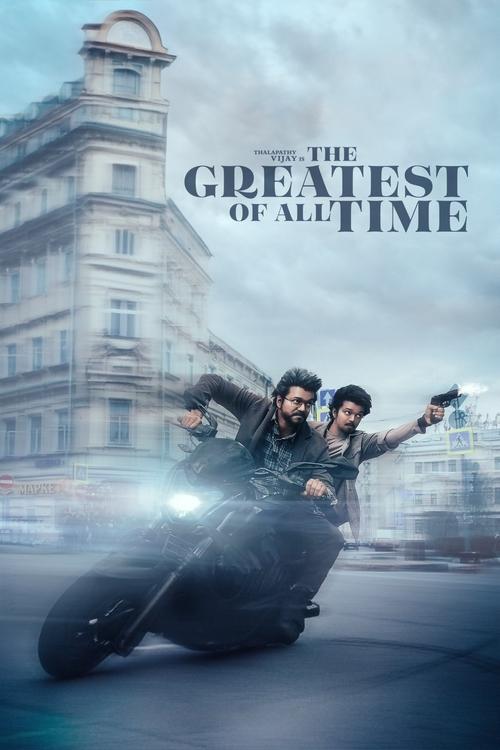
The Greatest of All Time
A once decorated member of the Special Anti-Terrorism Squad (SATS) is called back into action by his former colleagues for an important mission, setting him on a dangerous collision course with his own past.
Working with a moderate budget of $36.0M, the film achieved a respectable showing with $47.7M in global revenue (+33% profit margin).


Plot Structure
Story beats plotted across runtime


Narrative Arc
Emotional journey through the story's key moments
Story Circle
Blueprint 15-beat structure
Arcplot Score Breakdown
Weighted: Precision (70%) + Arc (15%) + Theme (15%)
The Greatest of All Time (2024) exhibits deliberately positioned plot construction, characteristic of Venkat Prabhu's storytelling approach. This structural analysis examines how the film's 15-point plot structure maps to proven narrative frameworks across 3 hours and 3 minutes. With an Arcplot score of 7.4, the film balances conventional beats with creative variation.
Characters
Cast & narrative archetypes

Gandhi
Jeevan
Anu
Sunil
Ajay
Nazeer
Rajiv Menon
Dharman
Main Cast & Characters
Gandhi
Played by Vijay
A Special Anti-Terrorism Squad officer who faces his past when confronting a dangerous threat
Jeevan
Played by Vijay
Gandhi's younger self and former SATS operative, representing his past identity
Anu
Played by Sneha
Gandhi's wife who supports him through his struggles with the past
Sunil
Played by Prashanth
A fellow SATS team member and Gandhi's close friend and ally
Ajay
Played by Prabhu Deva
A SATS operative and trusted member of the anti-terrorism team
Nazeer
Played by Jayaram
Senior SATS official who guides and oversees the team's operations
Rajiv Menon
Played by Mohan
The main antagonist seeking revenge against the SATS team
Dharman
Played by Ajmal Ameer
A SATS team member who provides tactical support
Structural Analysis
The Status Quo at 2 minutes (1% through the runtime) establishes Gandhi is introduced as an elite SATS agent at the peak of his career, successfully completing a high-stakes mission in Moscow with his team. He's respected, skilled, and living his best life as a covert operative.. Of particular interest, this early placement immediately immerses viewers in the story world.
The inciting incident occurs at 23 minutes when During a mission in Thailand, Gandhi's young son Jeevan is caught in crossfire and apparently killed. This devastating loss shatters Gandhi's world and changes everything.. At 12% through the film, this Disruption aligns precisely with traditional story structure. This beat shifts the emotional landscape, launching the protagonist into the central conflict.
The First Threshold at 47 minutes marks the transition into Act II, occurring at 26% of the runtime. This demonstrates the protagonist's commitment to A major terrorist threat emerges that specifically requires Gandhi's expertise. Despite his reluctance, he makes the active choice to return to SATS one more time, stepping back into the world he left behind., moving from reaction to action.
At 92 minutes, the Midpoint arrives at 50% of the runtime—precisely centered, creating perfect narrative symmetry. Notably, this crucial beat Gandhi discovers the shocking truth: his son Jeevan is alive and has been raised by the antagonist. Jeevan, now grown and brainwashed, is leading the terrorist operation against India. False victory of stopping the threat becomes devastating revelation., fundamentally raising what's at risk. The emotional intensity shifts, dividing the narrative into clear before-and-after phases.
The Collapse moment at 138 minutes (75% through) represents the emotional nadir. Here, Gandhi's attempt to reason with Jeevan fails catastrophically. Jeevan rejects him completely and launches a devastating attack that kills several of Gandhi's team members. Gandhi is left broken, having lost his son twice—once to death, now to hatred., indicates the protagonist at their lowest point. This beat's placement in the final quarter sets up the climactic reversal.
The Second Threshold at 147 minutes initiates the final act resolution at 80% of the runtime. Gandhi realizes that being the greatest means making the ultimate sacrifice—he must stop Jeevan to save millions, even if it means losing his son forever. He synthesizes his duty as an agent with his love as a father, finding resolve., demonstrating the transformation achieved throughout the journey.
Emotional Journey
The Greatest of All Time's emotional architecture traces a deliberate progression across 15 carefully calibrated beats.
Narrative Framework
This structural analysis employs a 15-point narrative structure framework that maps key story moments. By mapping The Greatest of All Time against these established plot points, we can identify how Venkat Prabhu utilizes or subverts traditional narrative conventions. The plot point approach reveals not only adherence to structural principles but also creative choices that distinguish The Greatest of All Time within the action genre.
Comparative Analysis
Additional action films include The Bad Guys, Puss in Boots and Venom: The Last Dance.
Plot Points by Act
Act I
SetupStatus Quo
Gandhi is introduced as an elite SATS agent at the peak of his career, successfully completing a high-stakes mission in Moscow with his team. He's respected, skilled, and living his best life as a covert operative.
Theme
A fellow agent remarks that "the greatest glory comes with the greatest sacrifice," foreshadowing the personal cost of Gandhi's dedication to duty and hinting at the film's central question about what makes someone truly great.
Worldbuilding
Establishes the world of SATS (Special Anti-Terrorist Squad), Gandhi's team dynamics, his relationship with his wife Anu, and their young son Jeevan. We see the tension between family life and dangerous missions.
Disruption
During a mission in Thailand, Gandhi's young son Jeevan is caught in crossfire and apparently killed. This devastating loss shatters Gandhi's world and changes everything.
Resistance
Gandhi and Anu struggle with their grief. Gandhi debates leaving SATS entirely. His mentor Nazeer tries to help him process the trauma. Gandhi eventually retreats from active duty into a teaching role, unable to return to the field.
Act II
ConfrontationFirst Threshold
A major terrorist threat emerges that specifically requires Gandhi's expertise. Despite his reluctance, he makes the active choice to return to SATS one more time, stepping back into the world he left behind.
Mirror World
Gandhi reconnects with his former team members and builds a relationship with a young agent who reminds him of his former self. This mentorship subplot carries the theme of legacy and passing the torch.
Premise
Gandhi and the team pursue the terrorist threat across multiple countries. Action sequences showcase Gandhi back in his element, though haunted by his past. The promise of seeing the legendary agent back in action is fulfilled.
Midpoint
Gandhi discovers the shocking truth: his son Jeevan is alive and has been raised by the antagonist. Jeevan, now grown and brainwashed, is leading the terrorist operation against India. False victory of stopping the threat becomes devastating revelation.
Opposition
Gandhi must face his own son in combat while trying to reach the boy inside the terrorist. Jeevan, believing Gandhi abandoned him, escalates attacks. The emotional and physical stakes intensify as father and son become enemies.
Collapse
Gandhi's attempt to reason with Jeevan fails catastrophically. Jeevan rejects him completely and launches a devastating attack that kills several of Gandhi's team members. Gandhi is left broken, having lost his son twice—once to death, now to hatred.
Crisis
Gandhi sits in darkness, questioning whether he can fight his own son and whether his choices led to this tragedy. Anu provides emotional support but even she doesn't know if there's a way forward.
Act III
ResolutionSecond Threshold
Gandhi realizes that being the greatest means making the ultimate sacrifice—he must stop Jeevan to save millions, even if it means losing his son forever. He synthesizes his duty as an agent with his love as a father, finding resolve.
Synthesis
The final confrontation unfolds. Gandhi executes a plan that stops the terrorist plot while trying one last time to save Jeevan. An intense father-son battle leads to a resolution where Gandhi must choose between his son and his duty.
Transformation
Gandhi, having made peace with his sacrifice, stands as a changed man who understands that greatness isn't measured in victories but in the choices we make. The closing image mirrors the opening but shows a man transformed by loss and purpose.