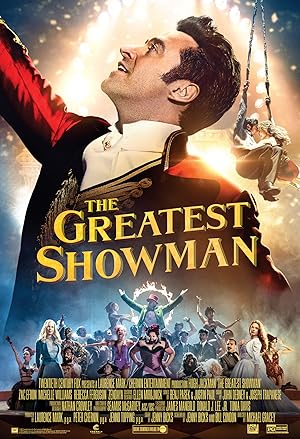
The Greatest Showman
Orphaned, penniless, but ambitious and with a mind crammed with imagination and fresh ideas, the American entertainer, Phineas Taylor Barnum, will always be remembered as the man with the gift to blur the line between reality and fiction. Thirsty for innovation and hungry for success, the son of a tailor manages to open a wax museum; however, he soon shifts focus to the unique and the peculiar, introducing extraordinary, never-seen-before live acts on the circus stage. Now, some people call Barnum's rich collection of oddities, an outright freak show; but, when Phineas, obsessed for cheers and respectability, gambles everything on the opera singer, Jenny Lind, to appeal to a high-brow audience, he will lose sight of the most crucial aspect of his life: his family. Will Barnum, the greatest showman, risk it all to be accepted?
Despite a considerable budget of $84.0M, The Greatest Showman became a solid performer, earning $459.1M worldwide—a 447% return.
Nominated for 1 Oscar. 17 wins & 32 nominations


Plot Structure
Story beats plotted across runtime


Narrative Arc
Emotional journey through the story's key moments
Story Circle
Blueprint 15-beat structure
Arcplot Score Breakdown
Weighted: Precision (70%) + Arc (15%) + Theme (15%)
The Greatest Showman (2017) exemplifies precise narrative architecture, characteristic of Michael Gracey's storytelling approach. This structural analysis examines how the film's 15-point plot structure maps to proven narrative frameworks across 1 hour and 45 minutes. With an Arcplot score of 7.0, the film balances conventional beats with creative variation.
Characters
Cast & narrative archetypes

P.T. Barnum
Charity Barnum
Phillip Carlyle
Anne Wheeler
Jenny Lind
Lettie Lutz
W.D. Wheeler
Main Cast & Characters
P.T. Barnum
Played by Hugh Jackman
An ambitious visionary who rises from poverty to create a spectacular entertainment empire, struggling between his dreams and his family.
Charity Barnum
Played by Michelle Williams
P.T. Barnum's devoted wife who supports his dreams while longing for his presence and stability for their family.
Phillip Carlyle
Played by Zac Efron
A wealthy playwright who abandons high society to join Barnum's circus and pursue his love for Anne Wheeler.
Anne Wheeler
Played by Zendaya
A talented African-American trapeze artist who faces societal prejudice while falling in love with Phillip Carlyle.
Jenny Lind
Played by Rebecca Ferguson
A renowned Swedish opera singer whose talent Barnum promotes, testing his loyalty to his family and values.
Lettie Lutz
Played by Keala Settle
A bearded lady and circus performer who finds confidence and acceptance as part of Barnum's troupe.
W.D. Wheeler
Played by Yahya Abdul-Mateen II
Anne Wheeler's brother and fellow trapeze artist who is protective of his sister and skeptical of societal acceptance.
Structural Analysis
The Status Quo at 1 minutes (1% through the runtime) establishes Young P.T. Barnum as a poor tailor's son, dreaming while watching the wealthy Charity through her mansion window. Establishes his humble origins and longing for more.. Structural examination shows that this early placement immediately immerses viewers in the story world.
The inciting incident occurs at 12 minutes when Barnum loses his clerk job when the shipping company goes bankrupt. With two daughters and a wife to support, his ordinary path to respectability collapses.. At 12% through the film, this Disruption aligns precisely with traditional story structure. This beat shifts the emotional landscape, launching the protagonist into the central conflict.
The First Threshold at 25 minutes marks the transition into Act II, occurring at 24% of the runtime. This shows the protagonist's commitment to Barnum makes the active choice to embrace the spectacle, opening "Barnum's Circus" with his troupe of human oddities. He commits fully to showmanship over respectability., moving from reaction to action.
At 51 minutes, the Midpoint arrives at 49% of the runtime—precisely centered, creating perfect narrative symmetry. Significantly, this crucial beat False victory: Barnum meets Jenny Lind, the Swedish soprano, and sees his chance at cultural legitimacy. He partners with her for an American tour, believing this will finally earn him respect. Stakes raise - he's risking what he has for validation., fundamentally raising what's at risk. The emotional intensity shifts, dividing the narrative into clear before-and-after phases.
The Collapse moment at 77 minutes (74% through) represents the emotional nadir. Here, Triple collapse: Jenny Lind publicly kisses Barnum (scandal), he realizes she was using him, the tour ends in financial ruin. Simultaneously, protesters burn down the circus. Philip rushes in to save Anne and is critically injured. Barnum loses everything - reputation, fortune, his circus family, and his actual family who leave him., reveals the protagonist at their lowest point. This beat's placement in the final quarter sets up the climactic reversal.
The Second Threshold at 83 minutes initiates the final act resolution at 79% of the runtime. The circus troupe arrives at the bar and embraces Barnum despite his failures. Their acceptance - not high society's - gives him the breakthrough: "From now on, these eyes will not be blinded by the lights." He synthesizes his showman skills with authentic love for his found family., demonstrating the transformation achieved throughout the journey.
Emotional Journey
The Greatest Showman's emotional architecture traces a deliberate progression across 15 carefully calibrated beats.
Narrative Framework
This structural analysis employs a 15-point narrative structure framework that maps key story moments. By mapping The Greatest Showman against these established plot points, we can identify how Michael Gracey utilizes or subverts traditional narrative conventions. The plot point approach reveals not only adherence to structural principles but also creative choices that distinguish The Greatest Showman within the biography genre.
Michael Gracey's Structural Approach
Among the 2 Michael Gracey films analyzed on Arcplot, the average structural score is 7.2, reflecting strong command of classical structure. The Greatest Showman takes a more unconventional approach compared to the director's typical style. For comparative analysis, explore the complete Michael Gracey filmography.
Comparative Analysis
Additional biography films include After Thomas, Taking Woodstock and The Fire Inside. For more Michael Gracey analyses, see Better Man.
Plot Points by Act
Act I
SetupStatus Quo
Young P.T. Barnum as a poor tailor's son, dreaming while watching the wealthy Charity through her mansion window. Establishes his humble origins and longing for more.
Theme
Charity's father tells young Barnum, "You'll never be more than what you are now - a tailor's son." The film's central question: Can someone redefine themselves beyond society's labels?
Worldbuilding
Barnum grows up poor, marries Charity despite her father's objections, struggles with low-paying jobs, has two daughters. Shows his ambition, his loving family, and mounting financial desperation after being laid off.
Disruption
Barnum loses his clerk job when the shipping company goes bankrupt. With two daughters and a wife to support, his ordinary path to respectability collapses.
Resistance
Barnum debates what to do, gets inspired by his daughters' imagination, creates a museum of wax figures and curiosities using fraudulent collateral. The museum fails until he pivots to "living curiosities" - recruiting people society calls freaks.
Act II
ConfrontationFirst Threshold
Barnum makes the active choice to embrace the spectacle, opening "Barnum's Circus" with his troupe of human oddities. He commits fully to showmanship over respectability.
Mirror World
Philip Carlyle, a wealthy playwright, enters Barnum's world. He represents the respectable society Barnum craves, and will teach Barnum about authenticity vs. approval. Their partnership ("The Other Side") also introduces the theme of acceptance.
Premise
The circus thrives, Barnum becomes rich and famous, Philip falls for trapeze artist Anne Wheeler despite racial barriers, the troupe becomes a family. This is the "fun and games" - spectacular musical numbers, success, joy, and the promise of belonging.
Midpoint
False victory: Barnum meets Jenny Lind, the Swedish soprano, and sees his chance at cultural legitimacy. He partners with her for an American tour, believing this will finally earn him respect. Stakes raise - he's risking what he has for validation.
Opposition
Barnum tours with Jenny, neglecting his family and circus troupe. Protesters attack the circus. Philip's relationship with Anne faces social persecution. Jenny develops feelings for Barnum. Charity feels abandoned. The troupe feels used. Barnum's pursuit of acceptance costs him everything authentic.
Collapse
Triple collapse: Jenny Lind publicly kisses Barnum (scandal), he realizes she was using him, the tour ends in financial ruin. Simultaneously, protesters burn down the circus. Philip rushes in to save Anne and is critically injured. Barnum loses everything - reputation, fortune, his circus family, and his actual family who leave him.
Crisis
Barnum sits in a bar, broken and alone, drinking. He contemplates his choices in "From Now On" - realizing he chased the wrong dream. This is his dark night, processing the cost of seeking validation from those who would never accept him.
Act III
ResolutionSecond Threshold
The circus troupe arrives at the bar and embraces Barnum despite his failures. Their acceptance - not high society's - gives him the breakthrough: "From now on, these eyes will not be blinded by the lights." He synthesizes his showman skills with authentic love for his found family.
Synthesis
Barnum reconciles with Charity and his daughters, apologizing genuinely. He makes Philip his equal partner, giving him the circus to run. He chooses family over fame, attending his daughter's ballet recital instead of the show. The troupe rebuilds with a tent circus - humble but authentic.
Transformation
Barnum watches from the audience as Philip runs the show, Barnum's daughters beside him, Charity holding his hand. He's transformed from attention-seeking showman to present father and husband. The circus thrives without him at center stage - he's found belonging by being himself, not by earning applause.