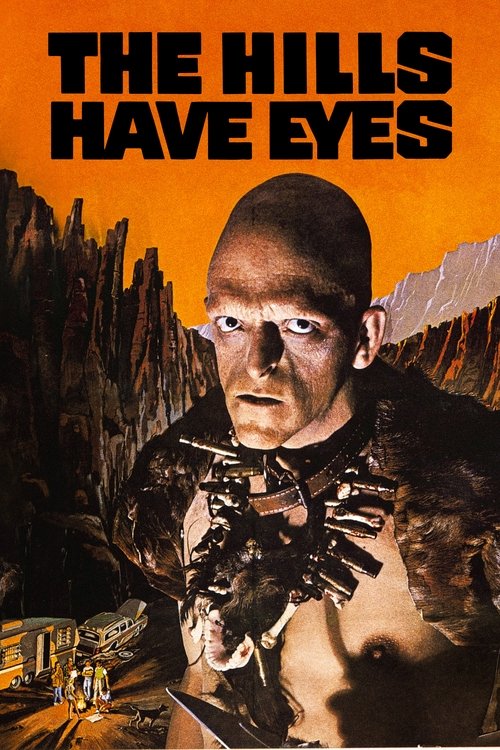
The Hills Have Eyes
Taking an ill-advised detour en-route to California, the Carter family soon run into trouble when their RV breaks down in the middle of the desert. Stranded, they find themselves at the mercy of monstrous cannibals lurking in the surrounding hills.
Despite its minimal budget of $350K, The Hills Have Eyes became a runaway success, earning $25.0M worldwide—a remarkable 7043% return. The film's unique voice connected with viewers, demonstrating that strong storytelling can transcend budget limitations.
1 win & 1 nomination


Plot Structure
Story beats plotted across runtime


Narrative Arc
Emotional journey through the story's key moments
Story Circle
Blueprint 15-beat structure
Arcplot Score Breakdown
Weighted: Precision (70%) + Arc (15%) + Theme (15%)
The Hills Have Eyes (1977) exhibits precise narrative design, characteristic of Wes Craven's storytelling approach. This structural analysis examines how the film's 15-point plot structure maps to proven narrative frameworks across 1 hour and 30 minutes. With an Arcplot score of 7.4, the film balances conventional beats with creative variation.
Structural Analysis
The Status Quo at 1 minutes (1% through the runtime) establishes The Carter family drives through the Nevada desert in their station wagon and trailer, celebrating Bob and Ethel's silver anniversary. A normal, optimistic American family on vacation, unaware of the danger ahead.. Significantly, this early placement immediately immerses viewers in the story world.
The inciting incident occurs at 10 minutes when The car's axle breaks after the family ignores Fred's warnings and takes a shortcut through the desert. They are stranded with their trailer in hostile, isolated territory, vulnerable and trapped.. At 11% through the film, this Disruption aligns precisely with traditional story structure. This beat shifts the emotional landscape, launching the protagonist into the central conflict.
The First Threshold at 23 minutes marks the transition into Act II, occurring at 25% of the runtime. This illustrates the protagonist's commitment to Bob discovers Fred has committed suicide after leaving a confession about his cannibal sons. Beast is killed by the cannibals. Bob chooses to return to save his family rather than seek further help. The family commits to survival mode, entering a point of no return., moving from reaction to action.
At 44 minutes, the Midpoint arrives at 49% of the runtime—precisely centered, creating perfect narrative symmetry. Notably, this crucial beat Bob dies on the cross and Ethel dies from her wounds. Doug returns from his search to find his wife traumatized, his baby stolen, and his in-laws dead. The family is decimated. This false defeat raises the stakes to maximum—survival becomes vengeance, and the civilized family must become savage., fundamentally raising what's at risk. The emotional intensity shifts, dividing the narrative into clear before-and-after phases.
The Collapse moment at 69 minutes (77% through) represents the emotional nadir. Here, Doug is captured and beaten by Mars in the cannibal lair. He is stabbed, bleeding, surrounded, and outnumbered. Baby Katy is still in their possession. Doug appears mortally wounded and defeated—his mission seems to have failed completely., shows the protagonist at their lowest point. This beat's placement in the final quarter sets up the climactic reversal.
The Second Threshold at 73 minutes initiates the final act resolution at 82% of the runtime. Ruby (Jupiter's daughter) helps Doug, revealing not all cannibals are monsters. Doug's transformation completes—he brutally kills Mars using both intelligence and savage ruthlessness, then retrieves baby Katy. He synthesizes civilized tactics with primal fury., demonstrating the transformation achieved throughout the journey.
Emotional Journey
The Hills Have Eyes's emotional architecture traces a deliberate progression across 15 carefully calibrated beats.
Narrative Framework
This structural analysis employs structural analysis methodology used to understand storytelling architecture. By mapping The Hills Have Eyes against these established plot points, we can identify how Wes Craven utilizes or subverts traditional narrative conventions. The plot point approach reveals not only adherence to structural principles but also creative choices that distinguish The Hills Have Eyes within the horror genre.
Wes Craven's Structural Approach
Among the 14 Wes Craven films analyzed on Arcplot, the average structural score is 7.0, demonstrating varied approaches to story architecture. The Hills Have Eyes represents one of the director's most structurally precise works. For comparative analysis, explore the complete Wes Craven filmography.
Comparative Analysis
Additional horror films include Thinner, Mary Reilly. For more Wes Craven analyses, see A Nightmare on Elm Street, Vampire in Brooklyn and The Serpent and the Rainbow.
Plot Points by Act
Act I
SetupStatus Quo
The Carter family drives through the Nevada desert in their station wagon and trailer, celebrating Bob and Ethel's silver anniversary. A normal, optimistic American family on vacation, unaware of the danger ahead.
Theme
At Fred's Oasis gas station, the attendant warns the family about the dangers of the desert road, saying there are "things out there" and advising them to turn back. This establishes the theme of civilization versus savagery and the thin line separating humanity from barbarism.
Worldbuilding
Introduction to the Carter family dynamics: Big Bob (retired detective, authoritarian patriarch), Ethel (traditional mother), Lynne (pregnant daughter), Doug (liberal son-in-law), Brenda (teenage daughter), Bobby (teenage son), baby Katy, and their dogs Beauty and Beast. The family represents postwar American prosperity and normalcy.
Disruption
The car's axle breaks after the family ignores Fred's warnings and takes a shortcut through the desert. They are stranded with their trailer in hostile, isolated territory, vulnerable and trapped.
Resistance
The family debates their options and plans survival. Bob and Doug decide to walk in opposite directions seeking help—Bob back toward Fred's Oasis, Doug forward. The family doesn't yet realize they're being hunted. The dogs sense unseen danger.
Act II
ConfrontationFirst Threshold
Bob discovers Fred has committed suicide after leaving a confession about his cannibal sons. Beast is killed by the cannibals. Bob chooses to return to save his family rather than seek further help. The family commits to survival mode, entering a point of no return.
Mirror World
Introduction to Jupiter's cannibal clan: Jupiter (patriarch), Mama, Mars, Mercury, Pluto, and Ruby. They represent a dark mirror of the Carter family—another family unit that has devolved into savage cannibalism, hunting the Carters as prey.
Premise
The horror premise unfolds as the cannibals stalk and terrorize the family. Bob is captured. The cannibals launch a coordinated assault: Bob is crucified and burned alive, Ethel is shot, Brenda is brutally assaulted, and baby Katy is kidnapped. The civilized family is subjected to savage violence.
Midpoint
Bob dies on the cross and Ethel dies from her wounds. Doug returns from his search to find his wife traumatized, his baby stolen, and his in-laws dead. The family is decimated. This false defeat raises the stakes to maximum—survival becomes vengeance, and the civilized family must become savage.
Opposition
The surviving Carters transform from victims to hunters. Doug arms himself and tracks the cannibals to their lair in an abandoned nuclear test town. Bobby sets deadly traps and kills Mercury using a rattlesnake. Brenda finds inner strength. The family sheds civilized behavior for primal survival instincts, using cunning, violence, and rage.
Collapse
Doug is captured and beaten by Mars in the cannibal lair. He is stabbed, bleeding, surrounded, and outnumbered. Baby Katy is still in their possession. Doug appears mortally wounded and defeated—his mission seems to have failed completely.
Crisis
In his moment of near-death, Doug processes his failure and finds primal rage. He accepts that to save his daughter, he must become as savage as his enemies. He stops fighting like a civilized man and embraces brutal, primitive violence.
Act III
ResolutionSecond Threshold
Ruby (Jupiter's daughter) helps Doug, revealing not all cannibals are monsters. Doug's transformation completes—he brutally kills Mars using both intelligence and savage ruthlessness, then retrieves baby Katy. He synthesizes civilized tactics with primal fury.
Synthesis
The final battle: Doug fights Jupiter, Bobby and Brenda defend the trailer against Pluto, and Beauty the dog attacks the cannibals. The Carters use guns, fire, traps, and animal cunning. Doug kills Jupiter, Bobby and Brenda kill Pluto. The cannibal family is destroyed, but the Carters win by abandoning civilization entirely.
Transformation
The film ends with a freeze-frame of Doug's face as he beats Jupiter to death with a rock. His expression is savage, primal, transformed—he has become the monster he fought. The family has survived, but at the cost of their humanity. The closing image asks: who are the real savages?