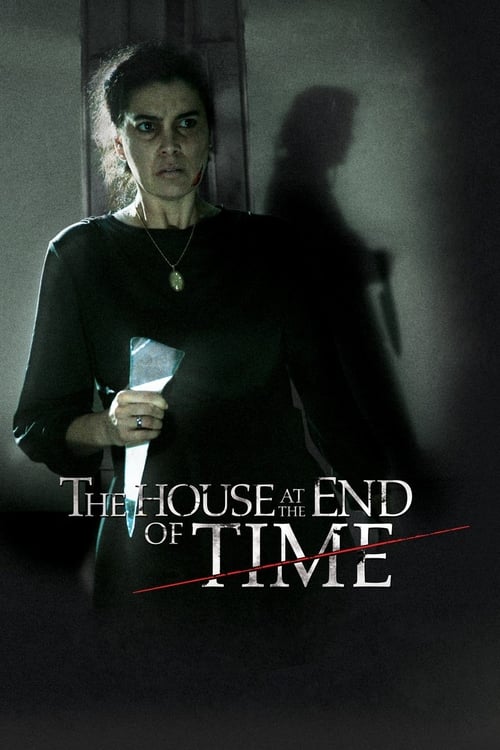
The House at the End of Time
The story of Dulce, a mother who has encounters with apparitions inside her old house. She must decipher a mystery that could trigger a prophecy: the death of her family.
Despite its extremely modest budget of $300K, The House at the End of Time became a massive hit, earning $4.6M worldwide—a remarkable 1430% return. The film's compelling narrative found its audience, showing that strong storytelling can transcend budget limitations.


Plot Structure
Story beats plotted across runtime


Narrative Arc
Emotional journey through the story's key moments
Story Circle
Blueprint 15-beat structure
Arcplot Score Breakdown
Weighted: Precision (70%) + Arc (15%) + Theme (15%)
The House at the End of Time (2013) demonstrates deliberately positioned dramatic framework, characteristic of Alejandro Hidalgo's storytelling approach. This structural analysis examines how the film's 15-point plot structure maps to proven narrative frameworks across 1 hour and 41 minutes. With an Arcplot score of 6.7, the film balances conventional beats with creative variation.
Structural Analysis
The Status Quo at 1 minutes (1% through the runtime) establishes The film opens with a terrifying prologue in 1981: Dulce is found covered in blood beside her dead husband Juan José, while her son Leopoldo has vanished. She screams in horror, establishing the mystery that will drive the entire narrative.. Significantly, this early placement immediately immerses viewers in the story world.
The inciting incident occurs at 12 minutes when In 1981, young Leopoldo witnesses a ghostly figure in the house and is pulled into a mysterious passage in the basement. The supernatural forces that have haunted the house for generations have now targeted Dulce's family directly, beginning the chain of events leading to tragedy.. At 12% through the film, this Disruption aligns precisely with traditional story structure. This beat shifts the emotional landscape, launching the protagonist into the central conflict.
The First Threshold at 25 minutes marks the transition into Act II, occurring at 25% of the runtime. This demonstrates the protagonist's commitment to Elderly Dulce commits to investigating the house's mysteries rather than simply enduring her house arrest. She begins actively searching the hidden passages and confronting the supernatural presence, determined to finally understand what happened to Leopoldo thirty years ago., moving from reaction to action.
At 51 minutes, the Midpoint arrives at 50% of the runtime—precisely centered, creating perfect narrative symmetry. The analysis reveals that this crucial beat Dulce realizes the horrifying truth: the ghostly figure she saw attacking her family in 1981 appeared to be herself—an older version. The "haunting" is actually a time loop, and she may be destined to cause the very tragedy she's been trying to prevent. False defeat as her understanding becomes her curse., fundamentally raising what's at risk. The emotional intensity shifts, dividing the narrative into clear before-and-after phases.
The Collapse moment at 76 minutes (75% through) represents the emotional nadir. Here, Dulce fully relives the night of the tragedy from her 2011 perspective, watching helplessly as her younger self discovers Juan José's body and Leopoldo disappears. She realizes she has been the ghost all along—her presence across time terrorized her own family. Father Salazar dies, leaving her utterly alone., shows the protagonist at their lowest point. This beat's placement in the final quarter sets up the climactic reversal.
The Second Threshold at 81 minutes initiates the final act resolution at 80% of the runtime. Dulce realizes the loop can be broken not by preventing the tragedy but by completing it differently. If she caused Leopoldo's disappearance by pulling him through time, perhaps she can also save him. She chooses to embrace her role in the temporal paradox rather than fight it., demonstrating the transformation achieved throughout the journey.
Emotional Journey
The House at the End of Time's emotional architecture traces a deliberate progression across 15 carefully calibrated beats.
Narrative Framework
This structural analysis employs systematic plot point analysis that identifies crucial turning points. By mapping The House at the End of Time against these established plot points, we can identify how Alejandro Hidalgo utilizes or subverts traditional narrative conventions. The plot point approach reveals not only adherence to structural principles but also creative choices that distinguish The House at the End of Time within the horror genre.
Comparative Analysis
Additional horror films include Thinner, A Nightmare on Elm Street and Mary Reilly.
Plot Points by Act
Act I
SetupStatus Quo
The film opens with a terrifying prologue in 1981: Dulce is found covered in blood beside her dead husband Juan José, while her son Leopoldo has vanished. She screams in horror, establishing the mystery that will drive the entire narrative.
Theme
Father Salazar tells Dulce that the house holds secrets beyond human understanding, and that some bonds—especially between mother and child—transcend the boundaries of time itself. This foreshadows the film's revelation about temporal loops and maternal love.
Worldbuilding
We establish both timelines: 2011 shows elderly Dulce released from 30 years in prison, returned to the cursed house under house arrest. Flashbacks to 1981 show her family before the tragedy—husband Juan José, sons Leopoldo and Rodrigo—living uneasily in the haunted colonial mansion with its dark history.
Disruption
In 1981, young Leopoldo witnesses a ghostly figure in the house and is pulled into a mysterious passage in the basement. The supernatural forces that have haunted the house for generations have now targeted Dulce's family directly, beginning the chain of events leading to tragedy.
Resistance
Dulce debates what to do as supernatural occurrences intensify in both timelines. In 2011, Father Salazar becomes her guide, sharing his decades of research into the house's history. In 1981, she struggles between protecting her children and her husband's dismissal of her fears about the house.
Act II
ConfrontationFirst Threshold
Elderly Dulce commits to investigating the house's mysteries rather than simply enduring her house arrest. She begins actively searching the hidden passages and confronting the supernatural presence, determined to finally understand what happened to Leopoldo thirty years ago.
Mirror World
Father Salazar reveals the house's complete history: built in the 1800s, it exists at a temporal nexus where past, present, and future intersect. The "ghosts" Dulce has seen may not be spirits of the dead but echoes across time. This reframes everything she thought she knew.
Premise
Dulce explores the house's supernatural properties in both timelines. In 1981, she witnesses terrifying apparitions and tries desperately to protect her sons. In 2011, she discovers hidden rooms, ancient symbols, and begins piecing together the house's true nature as a place where time folds upon itself.
Midpoint
Dulce realizes the horrifying truth: the ghostly figure she saw attacking her family in 1981 appeared to be herself—an older version. The "haunting" is actually a time loop, and she may be destined to cause the very tragedy she's been trying to prevent. False defeat as her understanding becomes her curse.
Opposition
The temporal paradox intensifies. Dulce in 2011 experiences moments bleeding through from 1981. She sees her younger self, her children, her husband—all trapped in the loop. Her attempts to intervene seem to cause the very events she witnessed. The house's malevolent design becomes clear: it feeds on family tragedy.
Collapse
Dulce fully relives the night of the tragedy from her 2011 perspective, watching helplessly as her younger self discovers Juan José's body and Leopoldo disappears. She realizes she has been the ghost all along—her presence across time terrorized her own family. Father Salazar dies, leaving her utterly alone.
Crisis
Dulce despairs as she processes the full horror of her situation. Thirty years in prison for a murder she didn't commit, her son lost to time itself, and now the revelation that her attempts to save her family may have doomed them. She contemplates whether any escape from the cycle is possible.
Act III
ResolutionSecond Threshold
Dulce realizes the loop can be broken not by preventing the tragedy but by completing it differently. If she caused Leopoldo's disappearance by pulling him through time, perhaps she can also save him. She chooses to embrace her role in the temporal paradox rather than fight it.
Synthesis
Dulce navigates the house's temporal passages one final time, deliberately appearing to her 1981 self and children. She guides young Leopoldo through the time rift not to his death but to safety in another time. The apparent haunting was actually protection—her older self saving her son from the real danger.
Transformation
An adult Leopoldo returns to the house and reunites with his elderly mother. He survived, raised in another time, and has come back to her. Dulce's love transcended thirty years of imprisonment and the boundaries of time itself. Mother and son embrace as the house finally falls silent.