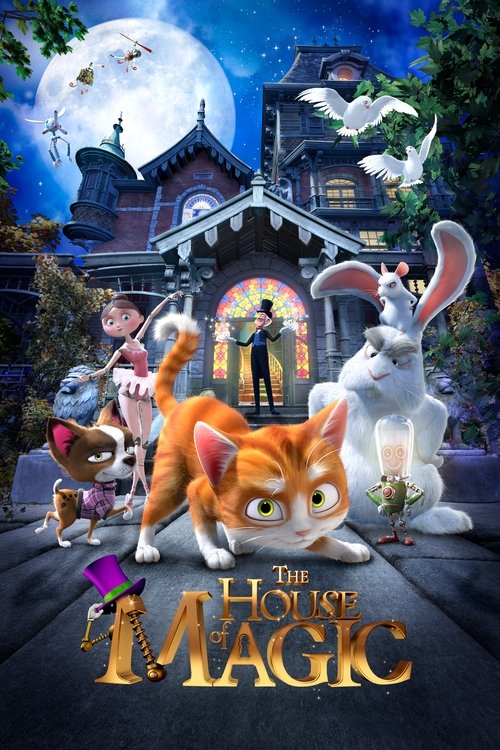
The House of Magic
Thunder, an abandoned young cat seeking shelter from a storm, stumbles into the strangest house imaginable, owned by an old magician and inhabited by a dazzling array of automatons and gizmos. Not everyone welcomes the new addition to the troupe as Jack Rabbit and Maggie Mouse plot to evict Thunder. The situation gets worse when the magician lands in hospital and his scheming nephew sees his chance to cash in by selling the mansion. Our young hero is determined to earn his place and so he enlists the help of some wacky magician's assistants to protect his magical new home.
Working with a respectable budget of $34.0M, the film achieved a modest success with $64.2M in global revenue (+89% profit margin).



Plot Structure
Story beats plotted across runtime


Narrative Arc
Emotional journey through the story's key moments
Story Circle
Blueprint 15-beat structure
Arcplot Score Breakdown
Weighted: Precision (70%) + Arc (15%) + Theme (15%)
The House of Magic (2013) exemplifies strategically placed plot construction, characteristic of Ben Stassen's storytelling approach. This structural analysis examines how the film's 15-point plot structure maps to proven narrative frameworks across 1 hour and 25 minutes. With an Arcplot score of 7.4, the film balances conventional beats with creative variation.
Structural Analysis
The Status Quo at 1 minutes (1% through the runtime) establishes Thunder performs in a street magic act with his owner, living as a show cat. His world is colorful but precarious, dependent on his owner's success.. Structural examination shows that this early placement immediately immerses viewers in the story world.
The inciting incident occurs at 9 minutes when Thunder is abandoned by his owner after a failed street performance. Left alone in a cardboard box on a busy street, he must flee from aggressive dogs and traffic.. At 11% through the film, this Disruption aligns precisely with traditional story structure. This beat shifts the emotional landscape, launching the protagonist into the central conflict.
The First Threshold at 21 minutes marks the transition into Act II, occurring at 25% of the runtime. This indicates the protagonist's commitment to Thunder makes the conscious choice to stay in the house despite the other animals' hostility. Lawrence welcomes him, and Thunder commits to making this magical house his new home., moving from reaction to action.
At 42 minutes, the Midpoint arrives at 49% of the runtime—precisely centered, creating perfect narrative symmetry. Notably, this crucial beat Lawrence has a medical emergency and is hospitalized. His greedy nephew Jack arrives, revealing plans to sell the house and get rid of the animals. The stakes escalate dramatically., fundamentally raising what's at risk. The emotional intensity shifts, dividing the narrative into clear before-and-after phases.
The Collapse moment at 63 minutes (74% through) represents the emotional nadir. Here, Thunder is captured and taken to the pound, seemingly losing everything. The other animals are also rounded up for removal. The magical house faces demolition, and all hope appears lost., reveals the protagonist at their lowest point. This beat's placement in the final quarter sets up the climactic reversal.
The Second Threshold at 67 minutes initiates the final act resolution at 79% of the runtime. Thunder escapes the pound and rallies the other animals. They realize they must work together as a true family to save their home and Lawrence. Thunder synthesizes his street-smart skills with the house animals' magic knowledge., demonstrating the transformation achieved throughout the journey.
Emotional Journey
The House of Magic's emotional architecture traces a deliberate progression across 15 carefully calibrated beats.
Narrative Framework
This structural analysis employs a 15-point narrative structure framework that maps key story moments. By mapping The House of Magic against these established plot points, we can identify how Ben Stassen utilizes or subverts traditional narrative conventions. The plot point approach reveals not only adherence to structural principles but also creative choices that distinguish The House of Magic within the family genre.
Ben Stassen's Structural Approach
Among the 3 Ben Stassen films analyzed on Arcplot, the average structural score is 7.3, reflecting strong command of classical structure. The House of Magic represents one of the director's most structurally precise works. For comparative analysis, explore the complete Ben Stassen filmography.
Comparative Analysis
Additional family films include The Bad Guys, Like A Rolling Stone and Cats Don't Dance. For more Ben Stassen analyses, see The Queen's Corgi, Fly Me to the Moon.
Plot Points by Act
Act I
SetupStatus Quo
Thunder performs in a street magic act with his owner, living as a show cat. His world is colorful but precarious, dependent on his owner's success.
Theme
Early dialogue establishes the theme of "home is where you're accepted" as Thunder is shown to be just a prop in his owner's act, not truly valued.
Worldbuilding
Establishment of Thunder's life as a performing cat, his relationship with his neglectful owner, and the chaotic street performance that defines his existence.
Disruption
Thunder is abandoned by his owner after a failed street performance. Left alone in a cardboard box on a busy street, he must flee from aggressive dogs and traffic.
Resistance
Thunder wanders lost and afraid, eventually discovering the magical house. He debates entering this strange new world, encounters the resident animals who reject him, but is saved by Lawrence the elderly magician who offers him shelter.
Act II
ConfrontationFirst Threshold
Thunder makes the conscious choice to stay in the house despite the other animals' hostility. Lawrence welcomes him, and Thunder commits to making this magical house his new home.
Mirror World
Thunder begins bonding with Lawrence and observes the loving relationship between the magician and his animal companions, seeing what true belonging could mean.
Premise
The fun of living in a magical house: Thunder explores enchanted objects, witnesses magic tricks, attempts to win over the other animals (particularly Jack Rabbit and Maggie the mouse), and experiences the wonder of this new world.
Midpoint
Lawrence has a medical emergency and is hospitalized. His greedy nephew Jack arrives, revealing plans to sell the house and get rid of the animals. The stakes escalate dramatically.
Opposition
Jack the nephew actively works to remove the animals and prepare the house for sale. The animals blame Thunder for bringing this misfortune. Thunder must prove his worth while fighting against Jack's schemes and the other animals' distrust.
Collapse
Thunder is captured and taken to the pound, seemingly losing everything. The other animals are also rounded up for removal. The magical house faces demolition, and all hope appears lost.
Crisis
Thunder faces his darkest moment in the pound, separated from the house and friends he'd come to love. The animals process their collective failure and impending loss of their home.
Act III
ResolutionSecond Threshold
Thunder escapes the pound and rallies the other animals. They realize they must work together as a true family to save their home and Lawrence. Thunder synthesizes his street-smart skills with the house animals' magic knowledge.
Synthesis
The animals execute an elaborate plan using the house's magic to thwart Jack, rescue Lawrence from the hospital, and expose Jack's greedy schemes. Thunder leads the effort, fully accepted by his new family.
Transformation
Thunder and the animals celebrate together in their saved magical house with Lawrence recovered. Thunder, once abandoned and alone, is now surrounded by family who truly accept him. The house is filled with magic and love.