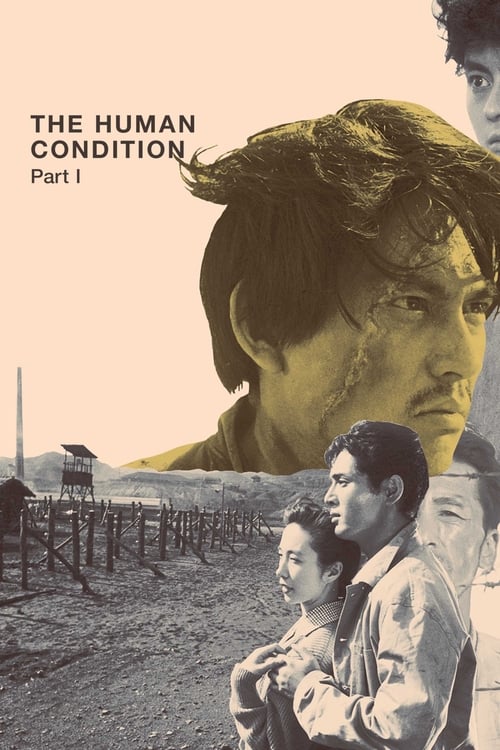
The Human Condition I: No Greater Love
A Japanese pacifist, unable to face the dire consequences of conscientious objection, is transformed by his attempts to compromise with the demands of war-time Japan.

Plot Structure
Story beats plotted across runtime


Narrative Arc
Emotional journey through the story's key moments
Story Circle
Blueprint 15-beat structure
Arcplot Score Breakdown
Weighted: Precision (70%) + Arc (15%) + Theme (15%)
The Human Condition I: No Greater Love (1959) exemplifies carefully calibrated dramatic framework, characteristic of Masaki Kobayashi's storytelling approach. This structural analysis examines how the film's 15-point plot structure maps to proven narrative frameworks across 3 hours and 26 minutes. With an Arcplot score of 6.9, the film balances conventional beats with creative variation.
Structural Analysis
The Status Quo at 3 minutes (1% through the runtime) establishes Kaji and Michiko share an intimate moment in prewar Japan, establishing their loving relationship and Kaji's idealistic nature before war disrupts their lives.. Notably, this early placement immediately immerses viewers in the story world.
The inciting incident occurs at 24 minutes when Kaji is offered a position as labor supervisor at a remote ore mine in Manchuria, forcing him to choose between military conscription and complicity in the exploitation of Chinese laborers.. At 12% through the film, this Disruption aligns precisely with traditional story structure. This beat shifts the emotional landscape, launching the protagonist into the central conflict.
The First Threshold at 50 minutes marks the transition into Act II, occurring at 24% of the runtime. This illustrates the protagonist's commitment to Kaji accepts the position and travels to Manchuria with Michiko, choosing to enter a world where his humanistic ideals will be tested against brutal reality., moving from reaction to action.
At 101 minutes, the Midpoint arrives at 49% of the runtime—precisely centered, creating perfect narrative symmetry. Structural examination shows that this crucial beat Kaji's methods show results—productivity increases and he gains approval from management. A false victory: his success seems to prove that humanity and efficiency can coexist, but this attracts dangerous attention from the military., fundamentally raising what's at risk. The emotional intensity shifts, dividing the narrative into clear before-and-after phases.
The Collapse moment at 151 minutes (73% through) represents the emotional nadir. Here, Chinese laborers attempt escape; several are killed. Kaji is implicated and interrogated. His ideals have not only failed to protect the workers but may have given them false hope. His dream of humanizing the system dies., demonstrates the protagonist at their lowest point. This beat's placement in the final quarter sets up the climactic reversal.
The Second Threshold at 166 minutes initiates the final act resolution at 81% of the runtime. Kaji realizes he cannot change the system from within—he can only choose how to maintain his humanity while trapped in it. He accepts that resistance, even futile resistance, is the only moral path., demonstrating the transformation achieved throughout the journey.
Emotional Journey
The Human Condition I: No Greater Love's emotional architecture traces a deliberate progression across 15 carefully calibrated beats.
Narrative Framework
This structural analysis employs structural analysis methodology used to understand storytelling architecture. By mapping The Human Condition I: No Greater Love against these established plot points, we can identify how Masaki Kobayashi utilizes or subverts traditional narrative conventions. The plot point approach reveals not only adherence to structural principles but also creative choices that distinguish The Human Condition I: No Greater Love within the drama genre.
Masaki Kobayashi's Structural Approach
Among the 3 Masaki Kobayashi films analyzed on Arcplot, the average structural score is 5.8, showcasing experimental approaches to narrative form. The Human Condition I: No Greater Love represents one of the director's most structurally precise works. For comparative analysis, explore the complete Masaki Kobayashi filmography.
Comparative Analysis
Additional drama films include After Thomas, South Pacific and Dirty Dancing: Havana Nights. For more Masaki Kobayashi analyses, see Harakiri, The Human Condition III: A Soldier's Prayer.
Plot Points by Act
Act I
SetupStatus Quo
Kaji and Michiko share an intimate moment in prewar Japan, establishing their loving relationship and Kaji's idealistic nature before war disrupts their lives.
Theme
Company officials discuss the labor shortage and treatment of Chinese prisoners, introducing the central theme: can humanistic principles survive in a system built on exploitation and military oppression?
Worldbuilding
Kaji's life in wartime Japan is established: his relationship with Michiko, his pacifist ideals, his work at the mining company, and the oppressive military-industrial complex that surrounds him.
Disruption
Kaji is offered a position as labor supervisor at a remote ore mine in Manchuria, forcing him to choose between military conscription and complicity in the exploitation of Chinese laborers.
Resistance
Kaji debates the decision with Michiko, weighing his ideals against survival. He convinces himself he can humanize the system from within, though Michiko expresses doubt about compromising his principles.
Act II
ConfrontationFirst Threshold
Kaji accepts the position and travels to Manchuria with Michiko, choosing to enter a world where his humanistic ideals will be tested against brutal reality.
Mirror World
Kaji meets the Chinese laborers and comfort women, particularly forming a connection that represents the humanity he seeks to protect—these relationships will challenge and teach him throughout Act 2.
Premise
Kaji attempts to implement humane reforms: better food, medical care, reduced violence. He fights against the sadistic foremen and military police while trying to increase productivity through compassion rather than brutality.
Midpoint
Kaji's methods show results—productivity increases and he gains approval from management. A false victory: his success seems to prove that humanity and efficiency can coexist, but this attracts dangerous attention from the military.
Opposition
The Kempeitai (military police) increase their presence and brutality. Kaji's authority is undermined, laborers are beaten despite his protests, and his reforms are systematically dismantled. The system closes in around him.
Collapse
Chinese laborers attempt escape; several are killed. Kaji is implicated and interrogated. His ideals have not only failed to protect the workers but may have given them false hope. His dream of humanizing the system dies.
Crisis
Kaji faces the consequences of the escape attempt, enduring interrogation and witnessing the execution of those he tried to protect. He confronts the devastating reality that his position has made him complicit in atrocities.
Act III
ResolutionSecond Threshold
Kaji realizes he cannot change the system from within—he can only choose how to maintain his humanity while trapped in it. He accepts that resistance, even futile resistance, is the only moral path.
Synthesis
Kaji makes a final stand, openly defying the military authorities and attempting to protect the remaining laborers despite knowing it will lead to his own conscription. He chooses principle over survival.
Transformation
Kaji receives his conscription notice. He embraces Michiko, no longer the naive idealist from the opening but a man who has learned the cost of his convictions. He must now enter the military system he despises.