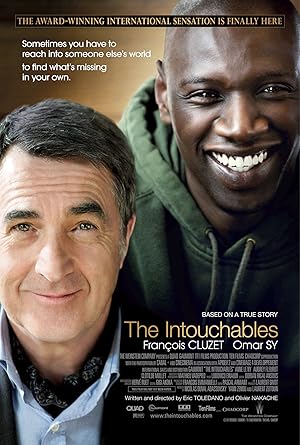
The Intouchables
In Paris, the aristocratic and intellectual Philippe is a quadriplegic millionaire who is interviewing candidates for the position of his carer, with his red-haired secretary Magalie. Out of the blue, Driss cuts the line of candidates and brings a document from the Social Security and asks Phillipe to sign it to prove that he is seeking a job position so he can receive his unemployment benefit. Philippe challenges Driss, offering him a trial period of one month to gain experience helping him. Then Driss can decide whether he would like to stay with him or not. Driss accepts the challenge and moves to the mansion, changing the boring life of Phillipe and his employees.
Despite its small-scale budget of $13.0M, The Intouchables became a massive hit, earning $426.6M worldwide—a remarkable 3181% return. The film's compelling narrative attracted moviegoers, illustrating how strong storytelling can transcend budget limitations.
Nominated for 1 BAFTA Award38 wins & 40 nominations


Plot Structure
Story beats plotted across runtime


Narrative Arc
Emotional journey through the story's key moments
Story Circle
Blueprint 15-beat structure
Arcplot Score Breakdown
Weighted: Precision (70%) + Arc (15%) + Theme (15%)
The Intouchables (2011) showcases carefully calibrated plot construction, characteristic of Éric Toledano's storytelling approach. This structural analysis examines how the film's 15-point plot structure maps to proven narrative frameworks across 1 hour and 52 minutes. With an Arcplot score of 5.3, the film takes an unconventional approach to traditional narrative frameworks.
Structural Analysis
The Status Quo at 1 minutes (1% through the runtime) establishes Philippe, a wealthy quadriplegic, lives in his Parisian mansion with round-the-clock care. His world is one of refinement, opera, and isolation—comfortable but emotionally dead.. Significantly, this early placement immediately immerses viewers in the story world.
The inciting incident occurs at 11 minutes when Philippe hires Driss—the one candidate who showed no pity and treated him like a normal person. This disrupts both their worlds: Driss gets a chance he never expected; Philippe gets someone who challenges him.. At 10% through the film, this Disruption aligns precisely with traditional story structure. This beat shifts the emotional landscape, launching the protagonist into the central conflict.
The First Threshold at 24 minutes marks the transition into Act II, occurring at 22% of the runtime. This indicates the protagonist's commitment to Driss chooses to stay after his trial period. He moves into the mansion, fully committing to this new world. This is his active choice to leave behind the projects and embrace the unknown., moving from reaction to action.
At 50 minutes, the Midpoint arrives at 45% of the runtime—arriving early, accelerating into Act IIb complications. Significantly, this crucial beat Philippe reveals his pen-pal correspondence with a woman named Éléonore, a relationship conducted entirely through letters. He's afraid to meet her in person. This false victory moment shows Philippe opening up emotionally, but his vulnerability about meeting her reveals deeper fears remain., fundamentally raising what's at risk. The emotional intensity shifts, dividing the narrative into clear before-and-after phases.
The Collapse moment at 74 minutes (66% through) represents the emotional nadir. Here, Philippe has a medical emergency requiring hospitalization. In the hospital, he realizes Driss has a life beyond him. Simultaneously, Driss realizes his family needs him. They recognize their friendship, while genuine, cannot be Philippe's entire emotional support system. The perfect bubble of their world together is dying., indicates the protagonist at their lowest point. This beat's placement in the final quarter sets up the climactic reversal.
The Second Threshold at 79 minutes initiates the final act resolution at 71% of the runtime. Philippe reaches out to Driss for help with an important occasion. Driss realizes what Philippe truly needs isn't another caretaker—he needs to face his fear and meet Éléonore. Driss synthesizes everything he's learned: Philippe gave him opportunity; now he'll give Philippe courage., demonstrating the transformation achieved throughout the journey.
Emotional Journey
The Intouchables's emotional architecture traces a deliberate progression across 15 carefully calibrated beats.
Narrative Framework
This structural analysis employs a 15-point narrative structure framework that maps key story moments. By mapping The Intouchables against these established plot points, we can identify how Éric Toledano utilizes or subverts traditional narrative conventions. The plot point approach reveals not only adherence to structural principles but also creative choices that distinguish The Intouchables within the comedy genre.
Comparative Analysis
Additional comedy films include The Bad Guys, Ella Enchanted and The Evening Star.
Plot Points by Act
Act I
SetupStatus Quo
Philippe, a wealthy quadriplegic, lives in his Parisian mansion with round-the-clock care. His world is one of refinement, opera, and isolation—comfortable but emotionally dead.
Theme
During interviews for a new caretaker, Philippe's aide Yvonne discusses what Philippe truly needs: someone who won't pity him, who will treat him like a person, not a patient. The film asks: Can human connection transcend class and circumstance?
Worldbuilding
We learn Philippe's backstory through the caretaker interviews. He's wealthy, cultured, surrounded by staff but emotionally distant since his paragliding accident. Driss crashes the interview only wanting a signature for unemployment, showing his world: the projects, poverty, a life of hustle with no prospects.
Disruption
Philippe hires Driss—the one candidate who showed no pity and treated him like a normal person. This disrupts both their worlds: Driss gets a chance he never expected; Philippe gets someone who challenges him.
Resistance
Driss undergoes training from the uptight staff. He's terrible at the job—rough handling, no tact, ignorant of high culture. Philippe finds this refreshing but the staff doubts it will work. Driss debates whether to stay or return to his old life.
Act II
ConfrontationFirst Threshold
Driss chooses to stay after his trial period. He moves into the mansion, fully committing to this new world. This is his active choice to leave behind the projects and embrace the unknown.
Mirror World
The relationship between Driss and Philippe deepens. They become genuine friends who teach each other—Driss brings spontaneity and life; Philippe offers refinement and opportunity. This friendship is the heart of the film's theme about connection transcending barriers.
Premise
The "fun and games" of their unlikely friendship: paragliding in the Alps, speeding through Paris, pranking pompous art dealers, dancing to Earth Wind & Fire. Philippe comes alive; Driss discovers culture. Their bond defies all expectations.
Midpoint
Philippe reveals his pen-pal correspondence with a woman named Éléonore, a relationship conducted entirely through letters. He's afraid to meet her in person. This false victory moment shows Philippe opening up emotionally, but his vulnerability about meeting her reveals deeper fears remain.
Opposition
Complications mount: Driss's troubled younger brother gets into crime. Philippe's daughter resents Driss's influence. Yvonne worries Philippe is becoming too dependent on someone so unconventional. Driss is torn between two worlds—his old family obligations and his new life.
Collapse
Philippe has a medical emergency requiring hospitalization. In the hospital, he realizes Driss has a life beyond him. Simultaneously, Driss realizes his family needs him. They recognize their friendship, while genuine, cannot be Philippe's entire emotional support system. The perfect bubble of their world together is dying.
Crisis
Driss leaves to handle his family situation. Philippe sinks back into depression, cycling through new caretakers who treat him with stifling professionalism. Both men process what they've lost—not just each other, but the versions of themselves they became together.
Act III
ResolutionSecond Threshold
Philippe reaches out to Driss for help with an important occasion. Driss realizes what Philippe truly needs isn't another caretaker—he needs to face his fear and meet Éléonore. Driss synthesizes everything he's learned: Philippe gave him opportunity; now he'll give Philippe courage.
Synthesis
Driss takes Philippe to meet Éléonore at a seaside restaurant, then discreetly leaves them alone. Philippe, empowered by his friendship with Driss, faces his vulnerability. The finale shows both men applying what they learned: Philippe opening his heart, Driss finding legitimate work and caring for his family.
Transformation
Philippe and Éléonore are together and happy. Driss visits with his family, now stable and thriving. The final image mirrors the opening: Philippe in his world of culture and refinement—but now he's emotionally alive, laughing, connected. Both men have been transformed by their friendship.