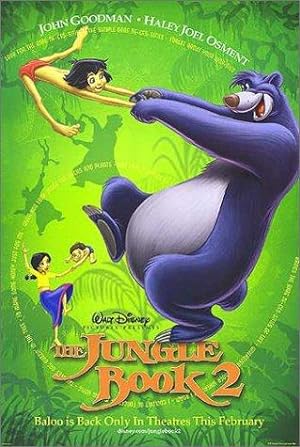
The Jungle Book 2
Jungle boy Mowgli (voiced by Osment) decides to forsake civilized village life for the "bare necessities" of the wild with his old friends. However, the evil tiger Shere Khan is looking for a little payback after Mowgli's last adventure. Trouble's a-brewing!
Despite a respectable budget of $20.0M, The Jungle Book 2 became a runaway success, earning $135.7M worldwide—a remarkable 579% return.
1 win & 9 nominations

Plot Structure
Story beats plotted across runtime


Narrative Arc
Emotional journey through the story's key moments
Story Circle
Blueprint 15-beat structure
Arcplot Score Breakdown
Weighted: Precision (70%) + Arc (15%) + Theme (15%)
The Jungle Book 2 (2003) exemplifies strategically placed plot construction, characteristic of Steve Trenbirth's storytelling approach. This structural analysis examines how the film's 15-point plot structure maps to proven narrative frameworks across 1 hour and 12 minutes. With an Arcplot score of 7.4, the film balances conventional beats with creative variation.
Structural Analysis
The Status Quo at 1 minutes (1% through the runtime) establishes Mowgli lives in the man-village but tells Shanti and Ranjan stories about his jungle adventures with Baloo, revealing his longing for his old life while trying to fit into human society.. The analysis reveals that this early placement immediately immerses viewers in the story world.
The inciting incident occurs at 8 minutes when Baloo and Bagheera arrive at the edge of the man-village to bring Mowgli back to the jungle. Baloo's presence disrupts Mowgli's attempts to settle into village life and reignites his desire for the jungle.. At 12% through the film, this Disruption aligns precisely with traditional story structure. This beat shifts the emotional landscape, launching the protagonist into the central conflict.
The First Threshold at 16 minutes marks the transition into Act II, occurring at 22% of the runtime. This demonstrates the protagonist's commitment to Mowgli actively chooses to run away from the village and return to the jungle with Baloo, crossing back into the wild world and Act 2. This is his decision, not forced., moving from reaction to action.
At 36 minutes, the Midpoint arrives at 50% of the runtime—precisely centered, creating perfect narrative symmetry. Structural examination shows that this crucial beat Mowgli encounters Shanti in the jungle; she's angry and frightened. Their confrontation raises stakes as both worlds collide. Shere Khan learns Mowgli is back in the jungle, transforming from false victory (freedom) to rising danger., fundamentally raising what's at risk. The emotional intensity shifts, dividing the narrative into clear before-and-after phases.
The Collapse moment at 53 minutes (74% through) represents the emotional nadir. Here, Shere Khan captures or corners the group at the ancient ruins. Mowgli's choice to run away has led to everyone being in mortal danger. His jungle dream collapses into nightmare; potential death of friends or self looms., illustrates the protagonist at their lowest point. This beat's placement in the final quarter sets up the climactic reversal.
The Second Threshold at 57 minutes initiates the final act resolution at 79% of the runtime. Mowgli realizes he doesn't have to choose one world over the other - he can embrace both identities. He synthesizes jungle cunning with human courage, accepting who he truly is: a bridge between both worlds., demonstrating the transformation achieved throughout the journey.
Emotional Journey
The Jungle Book 2's emotional architecture traces a deliberate progression across 15 carefully calibrated beats.
Narrative Framework
This structural analysis employs systematic plot point analysis that identifies crucial turning points. By mapping The Jungle Book 2 against these established plot points, we can identify how Steve Trenbirth utilizes or subverts traditional narrative conventions. The plot point approach reveals not only adherence to structural principles but also creative choices that distinguish The Jungle Book 2 within the animation genre.
Comparative Analysis
Additional animation films include The Bad Guys, Puss in Boots and Violet Evergarden: Eternity and the Auto Memory Doll.
Plot Points by Act
Act I
SetupStatus Quo
Mowgli lives in the man-village but tells Shanti and Ranjan stories about his jungle adventures with Baloo, revealing his longing for his old life while trying to fit into human society.
Theme
Village elder or authority figure warns about the dangers of the jungle and staying where you belong, establishing the central question of identity and home.
Worldbuilding
Setup of Mowgli's life in the village with Shanti and adopted brother Ranjan, his restlessness, and parallel setup of Baloo missing Mowgli in the jungle. Establishes both worlds and the protagonist's divided heart.
Disruption
Baloo and Bagheera arrive at the edge of the man-village to bring Mowgli back to the jungle. Baloo's presence disrupts Mowgli's attempts to settle into village life and reignites his desire for the jungle.
Resistance
Mowgli debates between staying in the village (where he "should" be) and returning to the jungle (where he wants to be). Bagheera counsels staying; Baloo represents temptation. Mowgli resists but is conflicted.
Act II
ConfrontationFirst Threshold
Mowgli actively chooses to run away from the village and return to the jungle with Baloo, crossing back into the wild world and Act 2. This is his decision, not forced.
Mirror World
Shanti discovers Mowgli is gone and decides to follow him into the jungle despite her fear, bringing Ranjan along. She represents the man-village world pursuing him and the relationship that will teach him about true belonging.
Premise
Fun and games of Mowgli back in the jungle with Baloo - the promised premise delivered. They have adventures, sing songs, and enjoy freedom. Meanwhile Shanti and Ranjan navigate the dangerous jungle searching for Mowgli.
Midpoint
Mowgli encounters Shanti in the jungle; she's angry and frightened. Their confrontation raises stakes as both worlds collide. Shere Khan learns Mowgli is back in the jungle, transforming from false victory (freedom) to rising danger.
Opposition
Shere Khan stalks Mowgli and friends. Tensions rise between Mowgli and Shanti about where he belongs. Baloo and Mowgli argue about responsibility. The tiger closes in while relationships fracture under pressure.
Collapse
Shere Khan captures or corners the group at the ancient ruins. Mowgli's choice to run away has led to everyone being in mortal danger. His jungle dream collapses into nightmare; potential death of friends or self looms.
Crisis
Dark moment as Mowgli faces the consequences of running away. He must confront that he endangered everyone he loves from both worlds. Emotional processing of his divided identity crisis.
Act III
ResolutionSecond Threshold
Mowgli realizes he doesn't have to choose one world over the other - he can embrace both identities. He synthesizes jungle cunning with human courage, accepting who he truly is: a bridge between both worlds.
Synthesis
Final confrontation with Shere Khan using both jungle and human skills. Mowgli saves everyone by accepting all parts of himself. Reconciliation with Shanti and Baloo. The village and jungle come to understanding.
Transformation
Mowgli returns to the village but maintains connection to the jungle, with Baloo and jungle friends welcomed at the village edge. He is at peace with his dual identity, transformed from conflicted runaway to bridge between worlds.