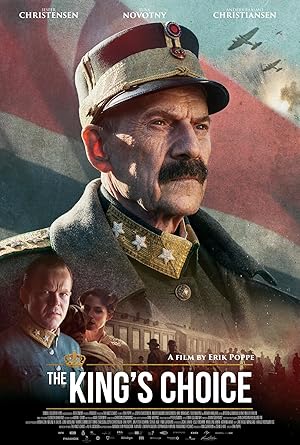
The King's Choice
April 1940. Norway has been invaded by Germany and the royal family and government have fled into the interior. The German envoy to Norway tries to negotiate a peace. Ultimately, the decision on Norway's future will rest with the ...
Working with a limited budget of $7.5M, the film achieved a modest success with $9.1M in global revenue (+21% profit margin).
15 wins & 9 nominations


Plot Structure
Story beats plotted across runtime


Narrative Arc
Emotional journey through the story's key moments
Story Circle
Blueprint 15-beat structure
Arcplot Score Breakdown
Weighted: Precision (70%) + Arc (15%) + Theme (15%)
The King's Choice (2016) exhibits meticulously timed plot construction, characteristic of Erik Poppe's storytelling approach. This structural analysis examines how the film's 15-point plot structure maps to proven narrative frameworks across 2 hours and 13 minutes. With an Arcplot score of 7.4, the film balances conventional beats with creative variation.
Structural Analysis
The Status Quo at 2 minutes (1% through the runtime) establishes King Haakon VII enjoys a peaceful morning at the royal palace with his family, representing Norway's neutrality and the aging king's comfortable relationship with democratic governance. The scene establishes a sovereign who values constitutional process over absolute power.. The analysis reveals that this early placement immediately immerses viewers in the story world.
The inciting incident occurs at 15 minutes when News arrives that German forces have invaded Norway on April 9, 1940. Ships are spotted in Oslo fjord and paratroopers are dropping. The peaceful status quo is shattered as neutral Norway becomes a target of Nazi aggression.. At 11% through the film, this Disruption aligns precisely with traditional story structure. This beat shifts the emotional landscape, launching the protagonist into the central conflict.
The First Threshold at 32 minutes marks the transition into Act II, occurring at 24% of the runtime. This shows the protagonist's commitment to King Haakon makes the active choice to refuse Germany's demands and reject Quisling's puppet government. He commits to resistance despite the danger, telling the parliament he will abdicate rather than appoint a Nazi government. This irreversible decision launches him into three years of exile and war., moving from reaction to action.
At 67 minutes, the Midpoint arrives at 50% of the runtime—precisely centered, creating perfect narrative symmetry. Structural examination shows that this crucial beat False defeat: German bombers attack the farmhouse where the royal family is sheltering at Nybergsund. The king barely escapes death, and the physical danger becomes terrifyingly real. The stakes escalate as Hitler personally orders Haakon's capture or death. The pursuit intensifies., fundamentally raising what's at risk. The emotional intensity shifts, dividing the narrative into clear before-and-after phases.
The Collapse moment at 99 minutes (74% through) represents the emotional nadir. Here, Norwegian military resistance collapses in southern Norway. The government receives news that continued fighting is futile and will only cause civilian casualties. The king faces the possibility that his refusal has led to unnecessary death and suffering. His lowest moment of doubt and despair., illustrates the protagonist at their lowest point. This beat's placement in the final quarter sets up the climactic reversal.
The Second Threshold at 105 minutes initiates the final act resolution at 79% of the runtime. Haakon receives word that Britain and allies will continue to support Norwegian resistance, and that his refusal has inspired the Norwegian people and international community. He realizes that his symbolic stand—saying "no" to tyranny—has meaning beyond military victory. He chooses exile to continue the fight., demonstrating the transformation achieved throughout the journey.
Emotional Journey
The King's Choice's emotional architecture traces a deliberate progression across 15 carefully calibrated beats.
Narrative Framework
This structural analysis employs proven narrative structure principles that track dramatic progression. By mapping The King's Choice against these established plot points, we can identify how Erik Poppe utilizes or subverts traditional narrative conventions. The plot point approach reveals not only adherence to structural principles but also creative choices that distinguish The King's Choice within the biography genre.
Comparative Analysis
Additional biography films include After Thomas, Taking Woodstock and The Fire Inside.
Plot Points by Act
Act I
SetupStatus Quo
King Haakon VII enjoys a peaceful morning at the royal palace with his family, representing Norway's neutrality and the aging king's comfortable relationship with democratic governance. The scene establishes a sovereign who values constitutional process over absolute power.
Theme
Crown Prince Olav or an advisor remarks on the cost of principles, foreshadowing the central question: what price is worth paying for sovereignty and democratic values? This plants the thematic seed about moral courage versus pragmatic survival.
Worldbuilding
Establishment of the Norwegian royal family, government structure, and the geopolitical situation of April 1940. Shows King Haakon's age and reluctance for conflict, the relationship between king and parliament, and the growing threat from Nazi Germany. Norway's official neutrality is emphasized.
Disruption
News arrives that German forces have invaded Norway on April 9, 1940. Ships are spotted in Oslo fjord and paratroopers are dropping. The peaceful status quo is shattered as neutral Norway becomes a target of Nazi aggression.
Resistance
Chaos and debate as the government scrambles to respond. The king and parliament evacuate Oslo. German envoy Curt Bräuer arrives with Hitler's ultimatum demanding Norway's surrender. Haakon debates with advisors about whether to flee, fight, or negotiate. The aging king is torn between protecting his people and preserving sovereignty.
Act II
ConfrontationFirst Threshold
King Haakon makes the active choice to refuse Germany's demands and reject Quisling's puppet government. He commits to resistance despite the danger, telling the parliament he will abdicate rather than appoint a Nazi government. This irreversible decision launches him into three years of exile and war.
Mirror World
The relationship between King Haakon and German envoy Curt Bräuer deepens as a thematic counterpoint. Bräuer represents pragmatic diplomacy and following orders, while Haakon embodies principled resistance. Their conversations explore the cost of moral stands versus survival.
Premise
The promise of the premise: the king on the run. Haakon and the government flee through the Norwegian countryside, evading German forces. Tense encounters, narrow escapes, and the logistics of a government in exile. Shows the physical and psychological toll on the elderly king while he inspires resistance.
Midpoint
False defeat: German bombers attack the farmhouse where the royal family is sheltering at Nybergsund. The king barely escapes death, and the physical danger becomes terrifyingly real. The stakes escalate as Hitler personally orders Haakon's capture or death. The pursuit intensifies.
Opposition
Germany tightens its grip on Norway. The royal family and government are pushed further north toward the Swedish border. Pressure mounts from all sides: military defeats, dwindling options, exhaustion, and diplomatic pressure to surrender. Some advisors suggest accepting German terms or fleeing to Britain.
Collapse
Norwegian military resistance collapses in southern Norway. The government receives news that continued fighting is futile and will only cause civilian casualties. The king faces the possibility that his refusal has led to unnecessary death and suffering. His lowest moment of doubt and despair.
Crisis
King Haakon wrestles with the weight of his choice in the dark night of the soul. He questions whether his stand was worth the cost in Norwegian lives. Quiet moments of grief and reflection as he processes the human toll of his moral stand.
Act III
ResolutionSecond Threshold
Haakon receives word that Britain and allies will continue to support Norwegian resistance, and that his refusal has inspired the Norwegian people and international community. He realizes that his symbolic stand—saying "no" to tyranny—has meaning beyond military victory. He chooses exile to continue the fight.
Synthesis
The finale: King Haakon and the government escape to Britain. The evacuation from Tromsø, final farewells to Norwegian soil, and the establishment of the government-in-exile in London. Haakon's radio addresses to occupied Norway begin, cementing his role as symbol of resistance.
Transformation
Closing image mirrors the opening but shows transformation: King Haakon, now in exile in London, has become a symbol of democratic resistance. Where he began as a comfortable constitutional monarch, he has become a leader who chose principle over comfort, inspiring his nation through five years of occupation. Epilogue text confirms his triumphant return in 1945.