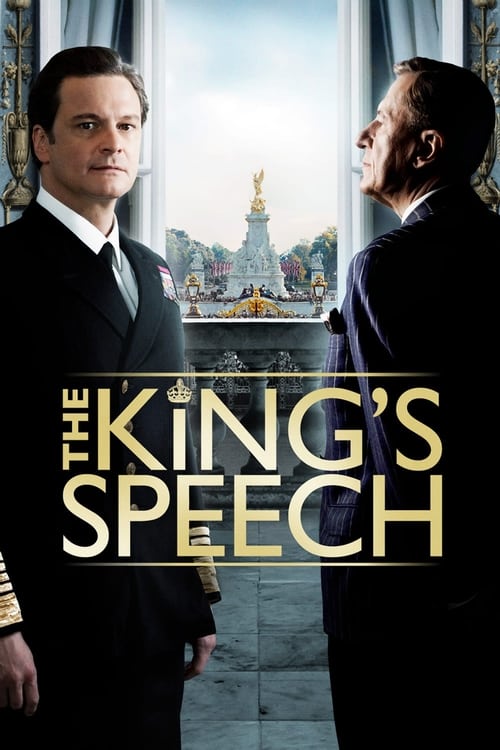
The King's Speech
The story of King George VI, his unexpected ascension to the throne of the British Empire in 1936, and the speech therapist who helped the unsure monarch overcome his stammer.
Despite a mid-range budget of $15.0M, The King's Speech became a massive hit, earning $414.2M worldwide—a remarkable 2661% return.
4 Oscars. 109 wins & 206 nominations


Plot Structure
Story beats plotted across runtime


Narrative Arc
Emotional journey through the story's key moments
Story Circle
Blueprint 15-beat structure
Structural Analysis
The Status Quo at 1 minutes (1% through the runtime) establishes Prince Albert (Bertie) stands frozen before a BBC microphone at Wembley Stadium, 1925. His stammering speech is excruciating, establishing him as a man trapped by his disability and public duty. The crowd waits in painful silence as he struggles to speak.. Structural examination shows that this early placement immediately immerses viewers in the story world.
The inciting incident occurs at 13 minutes when Elizabeth secretly visits Lionel Logue's shabby Harley Street office. This Australian commoner represents everything the Palace would reject, but Elizabeth is desperate enough to break protocol. The possibility of unconventional help enters Bertie's world.. At 11% through the film, this Disruption aligns precisely with traditional story structure. This beat shifts the emotional landscape, launching the protagonist into the central conflict.
The First Threshold at 29 minutes marks the transition into Act II, occurring at 24% of the runtime. This indicates the protagonist's commitment to After hearing the recording of himself reading Hamlet perfectly, Bertie chooses to return to Lionel and commit to the therapy. He actively decides to trust this commoner and embark on the difficult journey of confronting his inner demons, not just his stammer., moving from reaction to action.
At 58 minutes, the Midpoint arrives at 50% of the runtime—precisely centered, creating perfect narrative symmetry. The analysis reveals that this crucial beat King George V dies. Bertie delivers a radio eulogy that goes reasonably well—a false victory. But David becomes King Edward VIII, and Bertie realizes he may soon be thrust into kingship himself if David's affair with the twice-divorced American continues. The stakes raise enormously. The fun is over., fundamentally raising what's at risk. The emotional intensity shifts, dividing the narrative into clear before-and-after phases.
The Collapse moment at 86 minutes (73% through) represents the emotional nadir. Here, Edward VIII abdicates. Bertie explodes in rage and terror at his brother, screaming "I'm not a king!" His worst nightmare comes true—he must become King George VI despite his stammer. The weight of the crown, the coming war, and his inadequacy crush him. His old identity dies., reveals the protagonist at their lowest point. This beat's placement in the final quarter sets up the climactic reversal.
The Second Threshold at 93 minutes initiates the final act resolution at 79% of the runtime. Bertie reconciles with Lionel, apologizing and asking him to help prepare for the most important speech of his life—declaring war on Germany. He accepts Lionel as his friend and equal, synthesizing his royal duty with Lionel's lesson: he has a voice and a right to be heard., demonstrating the transformation achieved throughout the journey.
Emotional Journey
The King's Speech's emotional architecture traces a deliberate progression across 15 carefully calibrated beats.
Narrative Framework
This structural analysis employs a 15-point narrative structure framework that maps key story moments. By mapping The King's Speech against these established plot points, we can identify how Tom Hooper utilizes or subverts traditional narrative conventions. The plot point approach reveals not only adherence to structural principles but also creative choices that distinguish The King's Speech within the biography genre.
Tom Hooper's Structural Approach
Among the 3 Tom Hooper films analyzed on Arcplot, the average structural score is 6.8, demonstrating varied approaches to story architecture. The King's Speech exemplifies the director's characteristic narrative technique. For comparative analysis, explore the complete Tom Hooper filmography.
Comparative Analysis
Additional biography films include After Thomas, Taking Woodstock and The Fire Inside. For more Tom Hooper analyses, see Les Misérables, The Danish Girl.
Plot Points by Act
Act I
SetupStatus Quo
Prince Albert (Bertie) stands frozen before a BBC microphone at Wembley Stadium, 1925. His stammering speech is excruciating, establishing him as a man trapped by his disability and public duty. The crowd waits in painful silence as he struggles to speak.
Theme
Lionel Logue tells his wife: "My game, my turf, my rules." This encapsulates the film's theme about finding one's voice on one's own terms, not dictated by tradition or hierarchy. The reluctant student must trust the unconventional teacher.
Worldbuilding
We see Bertie's failed attempts with various speech therapists, his loving but frustrated wife Elizabeth, his strained relationship with his father King George V, and his dismissive older brother David. The royal world is one of rigid protocol and impossible expectations for a stammering prince.
Disruption
Elizabeth secretly visits Lionel Logue's shabby Harley Street office. This Australian commoner represents everything the Palace would reject, but Elizabeth is desperate enough to break protocol. The possibility of unconventional help enters Bertie's world.
Resistance
Bertie reluctantly meets Lionel and bristles at his unorthodox methods and refusal to bow to royal protocol. Lionel insists on equality and calling him "Bertie." The reading of Hamlet with music playing proves Bertie can speak fluently when he can't hear himself, planting hope. Bertie debates whether to continue.
Act II
ConfrontationFirst Threshold
After hearing the recording of himself reading Hamlet perfectly, Bertie chooses to return to Lionel and commit to the therapy. He actively decides to trust this commoner and embark on the difficult journey of confronting his inner demons, not just his stammer.
Mirror World
Lionel probes into Bertie's childhood traumas—his abusive nanny, being forced to use his right hand, his brother's bullying, his father's coldness. Their relationship deepens beyond patient-therapist to genuine friendship. Lionel represents authentic human connection versus royal isolation.
Premise
The fun and games of unorthodox therapy: tongue twisters, physical exercises, rolling on the floor, swearing freely. Bertie makes progress while navigating his father's declining health and brother David's scandalous romance with Wallis Simpson. The therapy sessions provide comic relief and growing camaraderie.
Midpoint
King George V dies. Bertie delivers a radio eulogy that goes reasonably well—a false victory. But David becomes King Edward VIII, and Bertie realizes he may soon be thrust into kingship himself if David's affair with the twice-divorced American continues. The stakes raise enormously. The fun is over.
Opposition
Edward VIII's abdication crisis deepens. Bertie grows angry with Lionel, discovering he has no formal credentials and feeling betrayed. The Archbishop and government pressure mount. Bertie must prepare for kingship while his relationship with Lionel fractures. Hitler's threat looms. War becomes inevitable.
Collapse
Edward VIII abdicates. Bertie explodes in rage and terror at his brother, screaming "I'm not a king!" His worst nightmare comes true—he must become King George VI despite his stammer. The weight of the crown, the coming war, and his inadequacy crush him. His old identity dies.
Crisis
Bertie is crowned in Westminster Abbey, stammering through the ceremony. He sits isolated in his new role, estranged from Lionel. Elizabeth quietly arranges for Lionel to attend the coronation. Bertie processes the loss of his old life and the impossibility of the task ahead.
Act III
ResolutionSecond Threshold
Bertie reconciles with Lionel, apologizing and asking him to help prepare for the most important speech of his life—declaring war on Germany. He accepts Lionel as his friend and equal, synthesizing his royal duty with Lionel's lesson: he has a voice and a right to be heard.
Synthesis
September 3, 1939. Lionel guides Bertie through the wartime radio address beat by beat, using all their techniques. Bertie delivers the speech with only minor stammers, speaking with authority and conviction to the Empire. The friendship sustains him through the ultimate test. He finds his voice as king.
Transformation
Bertie emerges onto the Buckingham Palace balcony to massive crowds cheering for their king. The man who couldn't speak now stands confidently before his people. Lionel watches from inside, his job complete. The final image mirrors the opening—Bertie before a crowd—but now transformed, no longer trapped.