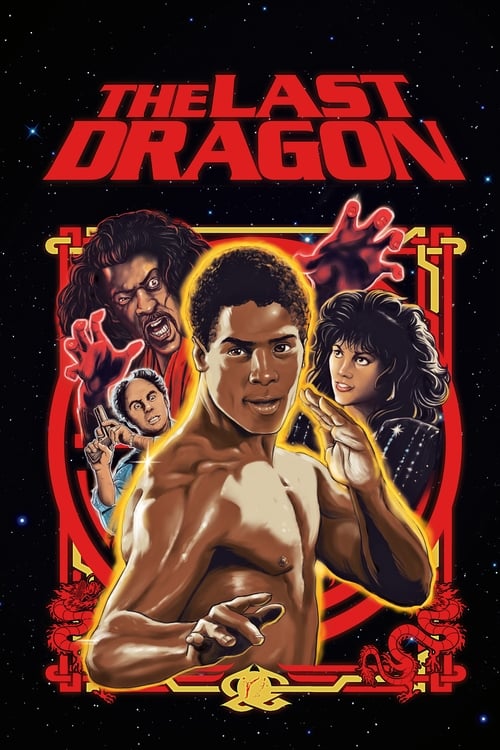
The Last Dragon
A young man searches for the "master" to obtain the final level of martial arts mastery known as the glow. Along the way he must fight an evil martial arts expert and rescue a beautiful singer from an obsessed music promoter.
Despite its small-scale budget of $10.0M, The Last Dragon became a box office success, earning $25.8M worldwide—a 158% return.


Plot Structure
Story beats plotted across runtime


Narrative Arc
Emotional journey through the story's key moments
Story Circle
Blueprint 15-beat structure
Arcplot Score Breakdown
Weighted: Precision (70%) + Arc (15%) + Theme (15%)
The Last Dragon (1985) demonstrates carefully calibrated dramatic framework, characteristic of Michael Schultz's storytelling approach. This structural analysis examines how the film's 15-point plot structure maps to proven narrative frameworks across 1 hour and 48 minutes. With an Arcplot score of 7.5, the film showcases strong structural fundamentals.
Structural Analysis
The Status Quo at 1 minutes (1% through the runtime) establishes Leroy "Bruce" Green meditates in his Harlem dojo, dressed in traditional gi and conical hat, the image of a dedicated martial arts student seeking "The Glow" - the highest level of martial arts mastery. He is disciplined but still searching, not yet complete.. Significantly, this early placement immediately immerses viewers in the story world.
The inciting incident occurs at 12 minutes when Sho'nuff, the Shogun of Harlem, confronts Leroy at the dojo, demanding he acknowledge Sho'nuff as the master. Leroy refuses to fight, walking away from the confrontation. This disrupts Leroy's peaceful practice and introduces the external antagonistic force that will pursue him.. At 11% through the film, this Disruption aligns precisely with traditional story structure. This beat shifts the emotional landscape, launching the protagonist into the central conflict.
The First Threshold at 27 minutes marks the transition into Act II, occurring at 25% of the runtime. This indicates the protagonist's commitment to Leroy actively chooses to help Laura escape from Arkadian's goons at a nightclub, using his martial arts skills in service of someone else rather than just his personal quest. This marks his decision to engage with the world beyond his dojo and his search for the Master., moving from reaction to action.
At 55 minutes, the Midpoint arrives at 50% of the runtime—precisely centered, creating perfect narrative symmetry. Significantly, this crucial beat False defeat: Arkadian's men kidnap Laura and take her to a warehouse. Leroy arrives to save her but is overwhelmed by the sheer number of fighters. Despite his skills, he realizes his quest for the Master hasn't prepared him for this real-world stakes. The game has changed - he can't just walk away anymore., fundamentally raising what's at risk. The emotional intensity shifts, dividing the narrative into clear before-and-after phases.
The Collapse moment at 79 minutes (73% through) represents the emotional nadir. Here, Leroy is captured and forced into a brutal fight at a club where he is beaten down publicly by multiple opponents. His confidence is shattered, his reputation destroyed, and he loses faith in his abilities. This is his darkest moment - the death of his identity as a martial artist and his dream of finding the Master., indicates the protagonist at their lowest point. This beat's placement in the final quarter sets up the climactic reversal.
The Second Threshold at 85 minutes initiates the final act resolution at 79% of the runtime. Leroy realizes that Sum Dum Goy ("some dumb guy") means the Master is within himself - he is the master he's been seeking. This realization, combined with his love for Laura and loyalty to his family, gives him the synthesis of technical skill and emotional truth needed to achieve "The Glow."., demonstrating the transformation achieved throughout the journey.
Emotional Journey
The Last Dragon's emotional architecture traces a deliberate progression across 15 carefully calibrated beats.
Narrative Framework
This structural analysis employs a 15-point narrative structure framework that maps key story moments. By mapping The Last Dragon against these established plot points, we can identify how Michael Schultz utilizes or subverts traditional narrative conventions. The plot point approach reveals not only adherence to structural principles but also creative choices that distinguish The Last Dragon within the action genre.
Michael Schultz's Structural Approach
Among the 5 Michael Schultz films analyzed on Arcplot, the average structural score is 7.3, reflecting strong command of classical structure. The Last Dragon represents one of the director's most structurally precise works. For comparative analysis, explore the complete Michael Schultz filmography.
Comparative Analysis
Additional action films include The Bad Guys, Puss in Boots and Venom: The Last Dance. For more Michael Schultz analyses, see Cooley High, Carbon Copy and Woman Thou Art Loosed.
Plot Points by Act
Act I
SetupStatus Quo
Leroy "Bruce" Green meditates in his Harlem dojo, dressed in traditional gi and conical hat, the image of a dedicated martial arts student seeking "The Glow" - the highest level of martial arts mastery. He is disciplined but still searching, not yet complete.
Theme
Leroy's master tells him he must search for the Master Sum Dum Goy to reach the final level, but cryptically adds: "A man cannot live by knowledge alone. You must have within yourself that which is above knowledge... feeling." This states the theme: true mastery comes from within, not from external validation.
Worldbuilding
Establishment of Leroy's world: his devoted practice, his family's skepticism (father wants him to work in the pizzeria), his younger brother's embarrassment, and the vibrant 1980s Harlem setting. We see his naivety and single-minded focus on martial arts mastery at the expense of real-world connection.
Disruption
Sho'nuff, the Shogun of Harlem, confronts Leroy at the dojo, demanding he acknowledge Sho'nuff as the master. Leroy refuses to fight, walking away from the confrontation. This disrupts Leroy's peaceful practice and introduces the external antagonistic force that will pursue him.
Resistance
Leroy continues searching for the Master while avoiding Sho'nuff's challenges. He meets Laura Charles (a VJ being harassed by promoter Eddie Arkadian) and rescues her from thugs. Leroy debates whether to engage with the real world or continue his isolated quest. His reluctance to fight and connection with Laura begins to pull him toward engagement.
Act II
ConfrontationFirst Threshold
Leroy actively chooses to help Laura escape from Arkadian's goons at a nightclub, using his martial arts skills in service of someone else rather than just his personal quest. This marks his decision to engage with the world beyond his dojo and his search for the Master.
Mirror World
Leroy and Laura's relationship deepens as he continues to protect her. She represents the "feeling" his master spoke of - the emotional connection and love that he lacks in his purely technical pursuit of martial arts mastery. Laura embodies the theme: true power comes from emotional authenticity, not just discipline.
Premise
The fun of watching Bruce Leroy navigate threats: fighting Arkadian's goons in increasingly creative ways, developing his romance with Laura, dealing with Sho'nuff's recurring challenges, and maintaining his quirky fish-out-of-water persona in modern Harlem. The promise of the premise: martial arts action with 80s style and humor.
Midpoint
False defeat: Arkadian's men kidnap Laura and take her to a warehouse. Leroy arrives to save her but is overwhelmed by the sheer number of fighters. Despite his skills, he realizes his quest for the Master hasn't prepared him for this real-world stakes. The game has changed - he can't just walk away anymore.
Opposition
Arkadian and Sho'nuff form an alliance against Leroy. The pressure intensifies from both antagonists. Leroy's family is threatened, his younger brother is kidnapped, and he faces increasing violence. His traditional training and search for external mastery proves insufficient against coordinated real-world threats.
Collapse
Leroy is captured and forced into a brutal fight at a club where he is beaten down publicly by multiple opponents. His confidence is shattered, his reputation destroyed, and he loses faith in his abilities. This is his darkest moment - the death of his identity as a martial artist and his dream of finding the Master.
Crisis
Leroy retreats, wounded physically and spiritually. He contemplates giving up his quest entirely. His family comforts him, and Laura's belief in him reminds him of what he's fighting for. He processes the lesson: he was seeking mastery outside himself when it was within him all along.
Act III
ResolutionSecond Threshold
Leroy realizes that Sum Dum Goy ("some dumb guy") means the Master is within himself - he is the master he's been seeking. This realization, combined with his love for Laura and loyalty to his family, gives him the synthesis of technical skill and emotional truth needed to achieve "The Glow."
Synthesis
Leroy returns to confront Sho'nuff in a final showdown. Drawing on both his martial arts training and his newfound understanding of fighting for love and family rather than ego, Leroy battles Sho'nuff. When fighting with emotional truth and inner confidence, Leroy achieves "The Glow" - his body radiates golden light as he defeats Sho'nuff.
Transformation
Leroy, now glowing with inner mastery, embraces Laura. He is no longer the naive student searching externally for validation. He has integrated discipline with feeling, technique with heart. The final image shows him confident, connected, and complete - a true master who found what he needed within himself.