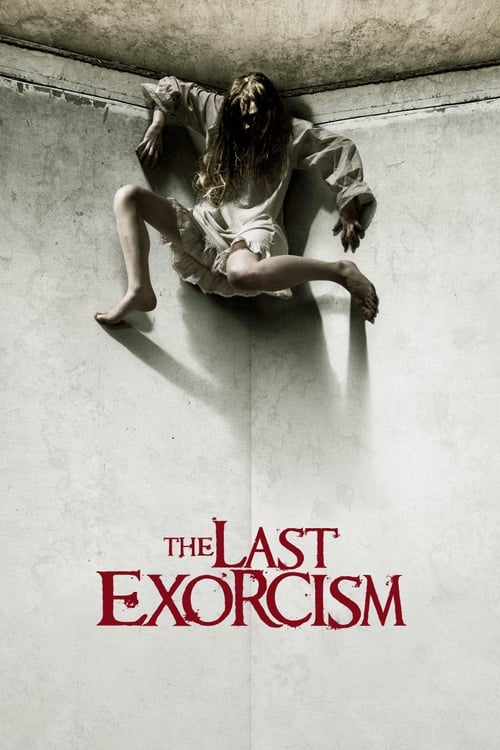
The Last Exorcism
After years of performing “exorcisms” and taking believers’ money, Reverend Marcus travels to rural Louisiana with a film crew so he can dispel what he believes is the myth of demonic possession. The dynamic reverend is certain that this will be another routine “exorcism” on a disturbed religious fanatic but instead comes upon the blood-soaked farm of the Sweetzer family and a true evil he would have never thought imaginable.
Despite its limited budget of $1.8M, The Last Exorcism became a runaway success, earning $69.4M worldwide—a remarkable 3756% return. The film's fresh perspective connected with viewers, demonstrating that strong storytelling can transcend budget limitations.
7 wins & 10 nominations


Plot Structure
Story beats plotted across runtime


Narrative Arc
Emotional journey through the story's key moments
Story Circle
Blueprint 15-beat structure
Arcplot Score Breakdown
Weighted: Precision (70%) + Arc (15%) + Theme (15%)
The Last Exorcism (2010) reveals precise story structure, characteristic of Daniel Stamm's storytelling approach. This structural analysis examines how the film's 15-point plot structure maps to proven narrative frameworks across 1 hour and 27 minutes. With an Arcplot score of 6.9, the film balances conventional beats with creative variation.
Structural Analysis
The Status Quo at 1 minutes (1% through the runtime) establishes Reverend Cotton Marcus preaches to his congregation with practiced charisma, demonstrating his showmanship as he slips a banana bread recipe into his sermon without anyone noticing—revealing the performative nature of his ministry.. Notably, this early placement immediately immerses viewers in the story world.
The inciting incident occurs at 11 minutes when Cotton and the crew arrive at the isolated Sweetzer farm in rural Louisiana, where patriarch Louis Sweetzer desperately believes his daughter Nell is possessed by a demon that has been killing their livestock. The disturbing isolation and Louis's intense religious fervor signal that this case may be different.. At 12% through the film, this Disruption aligns precisely with traditional story structure. This beat shifts the emotional landscape, launching the protagonist into the central conflict.
The First Threshold at 21 minutes marks the transition into Act II, occurring at 24% of the runtime. This shows the protagonist's commitment to Cotton performs his elaborate fake exorcism on Nell, using all his tricks to simulate a demonic departure. The ritual appears to work—Nell seems freed, the family is grateful, and Cotton collects his payment. He has crossed into his mission to debunk exorcism, believing the case is closed., moving from reaction to action.
At 44 minutes, the Midpoint arrives at 50% of the runtime—precisely centered, creating perfect narrative symmetry. Notably, this crucial beat Cotton discovers Nell is pregnant and initially suspects incest with her father Louis. However, investigation reveals the father of Nell's child is Pastor Manley from a neighboring church. This false defeat shifts the narrative—the horror seems to have a mundane, though disturbing, explanation of abuse rather than possession., fundamentally raising what's at risk. The emotional intensity shifts, dividing the narrative into clear before-and-after phases.
The Collapse moment at 66 minutes (76% through) represents the emotional nadir. Here, Nell, in a possessed state, kills the family cat on camera and slices her own face with shears. Cotton can no longer deny he is witnessing something beyond psychology or abuse. His entire worldview—built on comfortable skepticism—collapses as he faces genuine evil he is unequipped to fight., demonstrates the protagonist at their lowest point. This beat's placement in the final quarter sets up the climactic reversal.
The Second Threshold at 70 minutes initiates the final act resolution at 80% of the runtime. Cotton learns Nell has returned to the farm. Despite every instinct to flee, he makes the choice to go back—not as a fraud with tricks, but as a man willing to confront genuine evil. He reclaims his cross not as a prop but as a symbol of recovered faith, choosing to act even without certainty., demonstrating the transformation achieved throughout the journey.
Emotional Journey
The Last Exorcism's emotional architecture traces a deliberate progression across 15 carefully calibrated beats.
Narrative Framework
This structural analysis employs structural analysis methodology used to understand storytelling architecture. By mapping The Last Exorcism against these established plot points, we can identify how Daniel Stamm utilizes or subverts traditional narrative conventions. The plot point approach reveals not only adherence to structural principles but also creative choices that distinguish The Last Exorcism within the horror genre.
Daniel Stamm's Structural Approach
Among the 2 Daniel Stamm films analyzed on Arcplot, the average structural score is 6.8, demonstrating varied approaches to story architecture. The Last Exorcism represents one of the director's most structurally precise works. For comparative analysis, explore the complete Daniel Stamm filmography.
Comparative Analysis
Additional horror films include Thinner, A Nightmare on Elm Street and Mary Reilly. For more Daniel Stamm analyses, see Prey for the Devil.
Plot Points by Act
Act I
SetupStatus Quo
Reverend Cotton Marcus preaches to his congregation with practiced charisma, demonstrating his showmanship as he slips a banana bread recipe into his sermon without anyone noticing—revealing the performative nature of his ministry.
Theme
Cotton tells the documentary crew that after his son's illness, he lost his faith—stating that if his healing was just 'good doctors and medicine,' then exorcisms are equally explainable. The theme emerges: the tension between faith and skepticism, and whether belief itself has power.
Worldbuilding
Cotton reveals his crisis of faith and his history of performing fake exorcisms using theatrical tricks. He shows the camera crew his bag of illusions—speakers that make demonic sounds, rings that spray holy water. He selects the Sweetzer case from his mail to be his final, filmed exorcism before exposing the practice as fraud.
Disruption
Cotton and the crew arrive at the isolated Sweetzer farm in rural Louisiana, where patriarch Louis Sweetzer desperately believes his daughter Nell is possessed by a demon that has been killing their livestock. The disturbing isolation and Louis's intense religious fervor signal that this case may be different.
Resistance
Cotton meets the shy, sheltered Nell and her hostile brother Caleb. He investigates the farm, finding disturbing drawings in Nell's room depicting violence. Cotton prepares his fake exorcism, setting up his props and theatrical effects, still confident he can 'cure' Nell through the placebo of ritual while the crew documents his deception.
Act II
ConfrontationFirst Threshold
Cotton performs his elaborate fake exorcism on Nell, using all his tricks to simulate a demonic departure. The ritual appears to work—Nell seems freed, the family is grateful, and Cotton collects his payment. He has crossed into his mission to debunk exorcism, believing the case is closed.
Mirror World
That night at their motel, Nell appears in Cotton's room in a catatonic state—having somehow traveled miles in the dark. This impossible occurrence forces Cotton to confront that his rational explanations may be inadequate. Nell represents the mirror world: genuine supernatural evil that challenges his comfortable skepticism.
Premise
Cotton returns Nell home and attempts to find rational explanations for her behavior. The investigation deepens as Nell's condition worsens—she contorts unnaturally, speaks in tongues, and the camera captures increasingly disturbing footage. Cotton oscillates between psychological explanations and growing doubt, while uncovering dark secrets about the Sweetzer family and Nell's possible pregnancy.
Midpoint
Cotton discovers Nell is pregnant and initially suspects incest with her father Louis. However, investigation reveals the father of Nell's child is Pastor Manley from a neighboring church. This false defeat shifts the narrative—the horror seems to have a mundane, though disturbing, explanation of abuse rather than possession.
Opposition
The crew confronts Pastor Manley, who denies involvement and claims Nell seduced him. Nell's behavior becomes increasingly violent and impossible to explain—she attacks her brother with a knife, the camera captures her bending in inhuman ways. Louis, believing Cotton failed, attempts to kill Nell himself. Cotton saves her but the situation spirals beyond any rational framework.
Collapse
Nell, in a possessed state, kills the family cat on camera and slices her own face with shears. Cotton can no longer deny he is witnessing something beyond psychology or abuse. His entire worldview—built on comfortable skepticism—collapses as he faces genuine evil he is unequipped to fight.
Crisis
Cotton sends Nell to a hospital for psychological evaluation. Doctors find nothing physically wrong with her. Cotton grapples with his lost faith—if demons are real, then God must be too, and his years of fraudulent ministry take on a terrible new meaning. He must decide whether to abandon Nell or accept a faith he had rejected.
Act III
ResolutionSecond Threshold
Cotton learns Nell has returned to the farm. Despite every instinct to flee, he makes the choice to go back—not as a fraud with tricks, but as a man willing to confront genuine evil. He reclaims his cross not as a prop but as a symbol of recovered faith, choosing to act even without certainty.
Synthesis
Cotton and the crew follow sounds into the woods and discover a satanic cult conducting a ritual. Pastor Manley leads the ceremony—Nell was never abused but chosen as a vessel. The cult extracts a demonic infant from Nell, throwing it into a massive bonfire that erupts into a towering column of hellfire as a demon manifests.
Transformation
Cotton, holding his cross aloft, walks directly into the demonic flames to confront the evil—a complete reversal from the skeptical showman who began this journey. The crew is killed by cultists and the footage ends. Cotton's transformation from faithless fraud to genuine believer is complete, though the cost is his life.