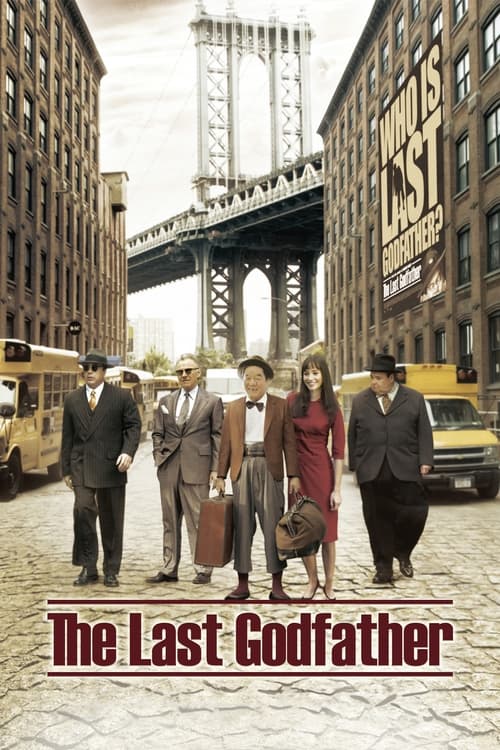
The Last Godfather
Young-goo the son of mafia boss Don Carini, is too foolish to be part of the mafia elite. One day, Young-goo comes to his father and is trained by Tony V to be his father's successor. A few days later, Young-goo accidentally rescues Nancy, the only daughter of Don Bonfante, the boss of a rival mafia family. But Vinnie, an under-boss of the Bonfante family kidnapped her and fabricates that Young-goo has taken her. Vinnie's behavior provokes an armed conflict between the two families.
Working with a tight budget of $13.4M, the film achieved a steady performer with $16.7M in global revenue (+25% profit margin).


Plot Structure
Story beats plotted across runtime


Narrative Arc
Emotional journey through the story's key moments
Story Circle
Blueprint 15-beat structure
Arcplot Score Breakdown
Weighted: Precision (70%) + Arc (15%) + Theme (15%)
The Last Godfather (2010) demonstrates strategically placed plot construction, characteristic of Shim Hyung-rae's storytelling approach. This structural analysis examines how the film's 15-point plot structure maps to proven narrative frameworks across 1 hour and 40 minutes. With an Arcplot score of 7.0, the film balances conventional beats with creative variation.
Structural Analysis
The Status Quo at 1 minutes (1% through the runtime) establishes Young-gu lives as a simpleminded, naive man in Korea, working odd jobs and completely oblivious to his true heritage. He exists in blissful ignorance of the criminal underworld.. Structural examination shows that this early placement immediately immerses viewers in the story world.
The inciting incident occurs at 13 minutes when Young-gu receives shocking news that his estranged father in America is a mafia don who wants to meet him. This revelation disrupts his simple existence and offers an escape from his mundane life.. At 13% through the film, this Disruption is delayed, allowing extended setup of the story world. This beat shifts the emotional landscape, launching the protagonist into the central conflict.
The First Threshold at 25 minutes marks the transition into Act II, occurring at 25% of the runtime. This illustrates the protagonist's commitment to Young-gu makes the active choice to travel to New York and meet his father, stepping into the world of organized crime. He boards the plane, leaving his old life behind and committing to this new, unknown path., moving from reaction to action.
At 50 minutes, the Midpoint arrives at 50% of the runtime—precisely centered, creating perfect narrative symmetry. Structural examination shows that this crucial beat Don Carini officially declares Young-gu as his heir and successor. This false victory seems like triumph—Young-gu has won his father's approval—but raises the stakes as rival families now target him and he's deeper in the criminal world., fundamentally raising what's at risk. The emotional intensity shifts, dividing the narrative into clear before-and-after phases.
The Collapse moment at 75 minutes (75% through) represents the emotional nadir. Here, Don Carini dies, leaving Young-gu truly alone at the head of the family. This "death" moment forces Young-gu to face that he must lead without guidance, and Nancy rejects him due to his criminal life, representing the death of his hope for normalcy., illustrates the protagonist at their lowest point. This beat's placement in the final quarter sets up the climactic reversal.
The Second Threshold at 80 minutes initiates the final act resolution at 80% of the runtime. Young-gu realizes he can use his unique perspective—his innocence and unconventional thinking—as strength rather than weakness. He synthesizes his naive nature with his father's strategic lessons to forge his own path as a different kind of leader., demonstrating the transformation achieved throughout the journey.
Emotional Journey
The Last Godfather's emotional architecture traces a deliberate progression across 15 carefully calibrated beats.
Narrative Framework
This structural analysis employs systematic plot point analysis that identifies crucial turning points. By mapping The Last Godfather against these established plot points, we can identify how Shim Hyung-rae utilizes or subverts traditional narrative conventions. The plot point approach reveals not only adherence to structural principles but also creative choices that distinguish The Last Godfather within the comedy genre.
Shim Hyung-rae's Structural Approach
Among the 2 Shim Hyung-rae films analyzed on Arcplot, the average structural score is 7.2, reflecting strong command of classical structure. The Last Godfather takes a more unconventional approach compared to the director's typical style. For comparative analysis, explore the complete Shim Hyung-rae filmography.
Comparative Analysis
Additional comedy films include The Bad Guys, Ella Enchanted and The Evening Star. For more Shim Hyung-rae analyses, see Dragon Wars: D-War.
Plot Points by Act
Act I
SetupStatus Quo
Young-gu lives as a simpleminded, naive man in Korea, working odd jobs and completely oblivious to his true heritage. He exists in blissful ignorance of the criminal underworld.
Theme
Don Carini's advisor mentions that "family is everything" and that blood ties transcend all other bonds, foreshadowing Young-gu's journey to discover his true identity and place in the family business.
Worldbuilding
Establishment of two parallel worlds: Young-gu's simple life in Korea and Don Carini's mafia empire in New York. We learn Don Carini is dying and has no heir, while Young-gu remains unaware of his connection to this criminal dynasty.
Disruption
Young-gu receives shocking news that his estranged father in America is a mafia don who wants to meet him. This revelation disrupts his simple existence and offers an escape from his mundane life.
Resistance
Young-gu debates whether to go to America, receives guidance about his father's world, and prepares for the journey. His caretakers and friends discuss what this opportunity might mean, though he doesn't fully grasp the criminal nature of his father's business.
Act II
ConfrontationFirst Threshold
Young-gu makes the active choice to travel to New York and meet his father, stepping into the world of organized crime. He boards the plane, leaving his old life behind and committing to this new, unknown path.
Mirror World
Young-gu meets Nancy, a kind-hearted woman who represents legitimate society and genuine human connection, contrasting sharply with the cold, calculating mob world. She embodies the honest life he could choose instead of crime.
Premise
The "fish out of water" comedy as Young-gu attempts to learn the mob business. His naive bumbling creates chaos but accidentally leads to success. He undergoes "training" in mafia operations while his innocence both charms and frustrates the hardened criminals around him.
Midpoint
Don Carini officially declares Young-gu as his heir and successor. This false victory seems like triumph—Young-gu has won his father's approval—but raises the stakes as rival families now target him and he's deeper in the criminal world.
Opposition
Rival mafia families escalate attacks against Young-gu. His incompetence becomes dangerous rather than charming. Nancy discovers his mob connections, creating romantic tension. Internal family members plot against him, and his father's health deteriorates, increasing pressure.
Collapse
Don Carini dies, leaving Young-gu truly alone at the head of the family. This "death" moment forces Young-gu to face that he must lead without guidance, and Nancy rejects him due to his criminal life, representing the death of his hope for normalcy.
Crisis
Young-gu processes his loss and questions whether he belongs in this violent world. He faces his dark night of the soul, reflecting on his father's legacy versus his own nature, and whether power is worth sacrificing love and innocence.
Act III
ResolutionSecond Threshold
Young-gu realizes he can use his unique perspective—his innocence and unconventional thinking—as strength rather than weakness. He synthesizes his naive nature with his father's strategic lessons to forge his own path as a different kind of leader.
Synthesis
Young-gu executes his plan to unite the families through unconventional means, using humor and humanity rather than violence. He confronts rival bosses, resolves the succession crisis, and finds a way to honor his father while staying true to himself.
Transformation
Young-gu stands as a transformed leader who has bridged two worlds—maintaining his essential goodness while commanding respect. He's with Nancy, suggesting he's found a way to have both love and family legacy, no longer the naive fool from the opening.