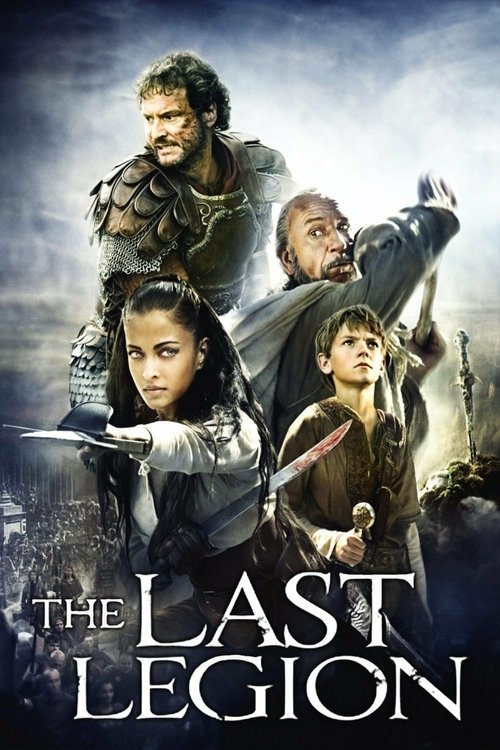
The Last Legion
As the Roman empire crumbles, young Romulus Augustus flees the city and embarks on a perilous voyage to Britain to track down a legion of supporters.
The film commercial failure against its respectable budget of $67.0M, earning $25.3M globally (-62% loss). While initial box office returns were modest, the film has gained appreciation for its unconventional structure within the action genre.


Plot Structure
Story beats plotted across runtime


Narrative Arc
Emotional journey through the story's key moments
Story Circle
Blueprint 15-beat structure
Arcplot Score Breakdown
Weighted: Precision (70%) + Arc (15%) + Theme (15%)
The Last Legion (2007) showcases precise dramatic framework, characteristic of Doug Lefler's storytelling approach. This structural analysis examines how the film's 15-point plot structure maps to proven narrative frameworks across 1 hour and 42 minutes. With an Arcplot score of 7.2, the film balances conventional beats with creative variation.
Structural Analysis
The Status Quo at 1 minutes (1% through the runtime) establishes Rome, 460 AD. Young Romulus Augustus is crowned as the last Emperor of Rome in a lavish ceremony, establishing the glory and power of the Roman Empire before its fall.. Structural examination shows that this early placement immediately immerses viewers in the story world.
The inciting incident occurs at 13 minutes when Odoacer and his barbarian forces attack Rome. The city falls, Romulus's father Emperor Orestes is murdered, and the boy emperor is captured and imprisoned on Capri, marking the end of the Western Roman Empire.. At 12% through the film, this Disruption aligns precisely with traditional story structure. This beat shifts the emotional landscape, launching the protagonist into the central conflict.
The First Threshold at 26 minutes marks the transition into Act II, occurring at 26% of the runtime. This indicates the protagonist's commitment to Aurelius and his team infiltrate the island fortress of Capri and successfully rescue Romulus. They make the active choice to flee Italy entirely and head to Britannia, leaving the fallen empire behind., moving from reaction to action.
At 52 minutes, the Midpoint arrives at 51% of the runtime—precisely centered, creating perfect narrative symmetry. Notably, this crucial beat The group arrives in Britannia and discovers the legendary sword of Julius Caesar hidden at Hadrian's Wall. Romulus claims Excalibur, giving them hope and a symbol of power. This false victory makes them believe they can restore Rome., fundamentally raising what's at risk. The emotional intensity shifts, dividing the narrative into clear before-and-after phases.
The Collapse moment at 76 minutes (74% through) represents the emotional nadir. Here, Wulfila's forces attack their sanctuary. Multiple members of the Dragon Legion are killed, including key protectors. Aurelius is gravely wounded. The dream of restoring Rome dies - they are truly the last remnants of a fallen empire., demonstrates the protagonist at their lowest point. This beat's placement in the final quarter sets up the climactic reversal.
The Second Threshold at 82 minutes initiates the final act resolution at 80% of the runtime. Romulus accepts he is no longer Emperor of Rome but can become something greater - the founder of a new legend. He takes the sword and the name it will make famous, synthesizing his Roman heritage with his new British destiny., demonstrating the transformation achieved throughout the journey.
Emotional Journey
The Last Legion's emotional architecture traces a deliberate progression across 15 carefully calibrated beats.
Narrative Framework
This structural analysis employs systematic plot point analysis that identifies crucial turning points. By mapping The Last Legion against these established plot points, we can identify how Doug Lefler utilizes or subverts traditional narrative conventions. The plot point approach reveals not only adherence to structural principles but also creative choices that distinguish The Last Legion within the action genre.
Comparative Analysis
Additional action films include The Bad Guys, Puss in Boots and Venom: The Last Dance.
Plot Points by Act
Act I
SetupStatus Quo
Rome, 460 AD. Young Romulus Augustus is crowned as the last Emperor of Rome in a lavish ceremony, establishing the glory and power of the Roman Empire before its fall.
Theme
Ambrosinus, the boy emperor's tutor, tells Romulus: "The blade is nothing without the man who wields it" - suggesting true power comes from within, not from symbols or titles.
Worldbuilding
Establishment of the declining Roman Empire, introduction of young Emperor Romulus Augustus, his protector Aurelius and the Dragon Legion, and the barbarian threat led by Odoacer. The political instability and vulnerability of Rome is revealed.
Disruption
Odoacer and his barbarian forces attack Rome. The city falls, Romulus's father Emperor Orestes is murdered, and the boy emperor is captured and imprisoned on Capri, marking the end of the Western Roman Empire.
Resistance
Aurelius and his remaining Dragon Legion members debate whether to attempt a rescue. Ambrosinus convinces them that saving Romulus is their duty. They recruit the warrior Mira and plan the impossible rescue mission from Capri.
Act II
ConfrontationFirst Threshold
Aurelius and his team infiltrate the island fortress of Capri and successfully rescue Romulus. They make the active choice to flee Italy entirely and head to Britannia, leaving the fallen empire behind.
Mirror World
Mira reveals her true identity as a skilled warrior woman. Her relationship with Aurelius develops, and she serves as both love interest and thematic mirror - representing the strength that comes from loyalty and purpose rather than titles.
Premise
The journey to Britannia. The fugitive group travels through dangerous territories, bonding as a makeshift family. Romulus transforms from helpless boy emperor to determined young man. The quest for Caesar's legendary sword becomes their driving mission.
Midpoint
The group arrives in Britannia and discovers the legendary sword of Julius Caesar hidden at Hadrian's Wall. Romulus claims Excalibur, giving them hope and a symbol of power. This false victory makes them believe they can restore Rome.
Opposition
Wulfila, Odoacer's ruthless commander, pursues them relentlessly to Britannia. The group faces betrayal, attacks, and discovers they cannot return to Rome. The enemy closes in as they seek refuge with the last Roman settlements in Britain.
Collapse
Wulfila's forces attack their sanctuary. Multiple members of the Dragon Legion are killed, including key protectors. Aurelius is gravely wounded. The dream of restoring Rome dies - they are truly the last remnants of a fallen empire.
Crisis
In the darkness after the devastating losses, Romulus realizes he can never reclaim Rome. He must choose between clinging to a dead empire or becoming something new. Ambrosinus reveals deeper truths about destiny and legacy.
Act III
ResolutionSecond Threshold
Romulus accepts he is no longer Emperor of Rome but can become something greater - the founder of a new legend. He takes the sword and the name it will make famous, synthesizing his Roman heritage with his new British destiny.
Synthesis
The final battle against Wulfila's forces. Romulus fights alongside Aurelius, Mira, and the survivors. They defend their new home using both Roman discipline and the legendary sword. Wulfila is defeated. A new kingdom is forged from the ashes of the old.
Transformation
Romulus Augustus, once the boy emperor of a fallen Rome, stands transformed as a young warrior-king in Britannia. He wields Excalibur with earned authority. The legend of Arthur begins, showing that true power comes from the man, not the title.