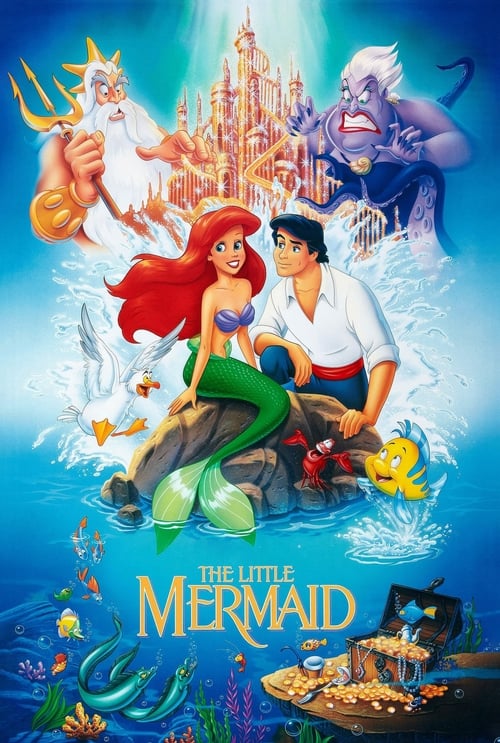
The Little Mermaid
This colorful adventure tells the story of an impetuous mermaid princess named Ariel who falls in love with the very human Prince Eric and puts everything on the line for the chance to be with him. Memorable songs and characters -- including the villainous sea witch Ursula.
Despite a moderate budget of $40.0M, The Little Mermaid became a solid performer, earning $211.3M worldwide—a 428% return.
2 Oscars. 16 wins & 9 nominations


Plot Structure
Story beats plotted across runtime


Narrative Arc
Emotional journey through the story's key moments
Story Circle
Blueprint 15-beat structure
Arcplot Score Breakdown
Weighted: Precision (70%) + Arc (15%) + Theme (15%)
The Little Mermaid (1989) exemplifies deliberately positioned story structure, characteristic of John Musker's storytelling approach. This structural analysis examines how the film's 15-point plot structure maps to proven narrative frameworks across 1 hour and 23 minutes. With an Arcplot score of 7.0, the film balances conventional beats with creative variation.
Structural Analysis
The Status Quo at 1 minutes (1% through the runtime) establishes Ariel singing "Part of Your World" in her grotto, surrounded by human treasures. She longs for life on land, showing her dissatisfaction with her underwater world and foreshadowing her transformation.. Structural examination shows that this early placement immediately immerses viewers in the story world.
The inciting incident occurs at 9 minutes when Ariel saves Prince Eric from drowning after a shipwreck and sings to him on the beach. She falls in love with him, intensifying her desire for the human world and making her previous longing concrete and personal.. At 11% through the film, this Disruption aligns precisely with traditional story structure. This beat shifts the emotional landscape, launching the protagonist into the central conflict.
The First Threshold at 20 minutes marks the transition into Act II, occurring at 24% of the runtime. This indicates the protagonist's commitment to Ariel signs Ursula's contract, trading her voice for human legs with three days to get true love's kiss. This is her active, irreversible choice to leave her world behind, despite the cost and risk., moving from reaction to action.
At 41 minutes, the Midpoint arrives at 49% of the runtime—precisely centered, creating perfect narrative symmetry. Significantly, this crucial beat During "Kiss the Girl," Eric nearly kisses Ariel, but Ursula's eels overturn the boat (false defeat). Ursula realizes Ariel might succeed and takes matters into her own hands. The stakes raise dramatically and the clock becomes urgent., fundamentally raising what's at risk. The emotional intensity shifts, dividing the narrative into clear before-and-after phases.
The Collapse moment at 58 minutes (70% through) represents the emotional nadir. Here, The sun sets on the third day before Ariel can kiss Eric. She transforms back into a mermaid and falls into the ocean, now belonging to Ursula. Her dream dies, she loses her humanity, and Ursula drags her into the depths., illustrates the protagonist at their lowest point. This beat's placement in the final quarter sets up the climactic reversal.
The Second Threshold at 63 minutes initiates the final act resolution at 76% of the runtime. King Triton sacrifices himself, taking Ariel's place in the contract and giving up his crown and power to Ursula. This act of true love breaks the cycle - Triton learns to let go, and Eric sees the truth, ready to fight for Ariel., demonstrating the transformation achieved throughout the journey.
Emotional Journey
The Little Mermaid's emotional architecture traces a deliberate progression across 15 carefully calibrated beats.
Narrative Framework
This structural analysis employs systematic plot point analysis that identifies crucial turning points. By mapping The Little Mermaid against these established plot points, we can identify how John Musker utilizes or subverts traditional narrative conventions. The plot point approach reveals not only adherence to structural principles but also creative choices that distinguish The Little Mermaid within the animation genre.
Comparative Analysis
Additional animation films include The Bad Guys, Puss in Boots and Violet Evergarden: Eternity and the Auto Memory Doll.
Plot Points by Act
Act I
SetupStatus Quo
Ariel singing "Part of Your World" in her grotto, surrounded by human treasures. She longs for life on land, showing her dissatisfaction with her underwater world and foreshadowing her transformation.
Theme
Sebastian tells Ariel "The human world is a mess. Life under the sea is better than anything they got up there." The theme: where you belong vs. where you think you want to be; finding your true identity.
Worldbuilding
Establishing Ariel's world: her obsession with human artifacts, conflict with King Triton over humans, her secret grotto collection, her friendship with Flounder and Sebastian, and the underwater kingdom's rules against contact with the surface world.
Disruption
Ariel saves Prince Eric from drowning after a shipwreck and sings to him on the beach. She falls in love with him, intensifying her desire for the human world and making her previous longing concrete and personal.
Resistance
Triton discovers Ariel's grotto and destroys it in rage. Devastated and defiant, Ariel is approached by Ursula's eels. Despite Sebastian and Flounder's warnings, Ariel debates making a deal with the sea witch, driven by heartbreak and desire.
Act II
ConfrontationFirst Threshold
Ariel signs Ursula's contract, trading her voice for human legs with three days to get true love's kiss. This is her active, irreversible choice to leave her world behind, despite the cost and risk.
Mirror World
Ariel meets Eric on the beach as a human. Their relationship begins - he represents the world she's dreamed of and will teach her about true love, sacrifice, and whether surface life matches her fantasies.
Premise
The "promise of the premise" - Ariel explores human life with Eric. Tour of the kingdom, dinner with fork-combing mishap, romantic boat ride with "Kiss the Girl." Ariel experiences everything she dreamed about while trying to win Eric's love without her voice.
Midpoint
During "Kiss the Girl," Eric nearly kisses Ariel, but Ursula's eels overturn the boat (false defeat). Ursula realizes Ariel might succeed and takes matters into her own hands. The stakes raise dramatically and the clock becomes urgent.
Opposition
Ursula transforms into Vanessa, using Ariel's voice to hypnotize Eric. Eric announces he'll marry Vanessa the next day. Ariel's chances collapse as the antagonist gains total control. Time runs out as Scuttle discovers the truth too late.
Collapse
The sun sets on the third day before Ariel can kiss Eric. She transforms back into a mermaid and falls into the ocean, now belonging to Ursula. Her dream dies, she loses her humanity, and Ursula drags her into the depths.
Crisis
Ariel is now Ursula's prisoner. Triton arrives and learns what his daughter has done. In his darkest moment of realization about his own failures as a father, he faces losing Ariel forever to his worst enemy.
Act III
ResolutionSecond Threshold
King Triton sacrifices himself, taking Ariel's place in the contract and giving up his crown and power to Ursula. This act of true love breaks the cycle - Triton learns to let go, and Eric sees the truth, ready to fight for Ariel.
Synthesis
Final battle: Ursula becomes giant with Triton's power. Eric and Ariel fight together, combining both worlds. Eric kills Ursula with a ship's bow. Triton is restored, recognizes Ariel's true love, and transforms her permanently into a human, giving his blessing.
Transformation
Ariel and Eric's wedding on a ship, with both sea and land creatures celebrating together. Mirrors the opening but transformed: Ariel has found where she truly belongs, Triton has learned to trust and let go, two worlds unite in harmony.