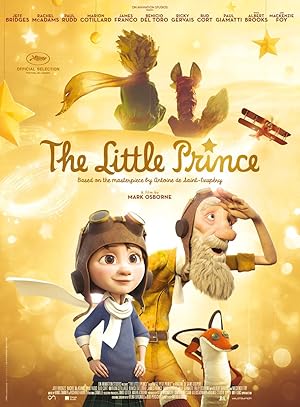
The Little Prince
From Mark Osborne comes the first-ever animated feature film adaptation of Antoine de Saint-Exupéry's iconic masterpiece, The Little Prince. At the heart of it all is The Little Girl, who's being prepared by her mother for the very grown-up world in which they live - only to be interrupted by her eccentric, kind-hearted neighbor, The Aviator. The Aviator introduces his new friend to an extraordinary world where anything is possible. A world that he himself was initiated into long ago by The Little Prince. It's here that The Little Girl's magical and emotional journey into her own imagination - and into the universe of The Little Prince - begins. And it's where The Little Girl rediscovers her childhood and learns that ultimately, it's human connections that matter most, and that what's truly essential can only be seen with the heart.
Working with a mid-range budget of $64.0M, the film achieved a modest success with $97.6M in global revenue (+52% profit margin).
7 wins & 15 nominations


Plot Structure
Story beats plotted across runtime


Narrative Arc
Emotional journey through the story's key moments
Story Circle
Blueprint 15-beat structure
Arcplot Score Breakdown
Weighted: Precision (70%) + Arc (15%) + Theme (15%)
The Little Prince (2015) showcases precise dramatic framework, characteristic of Mark Osborne's storytelling approach. This structural analysis examines how the film's 15-point plot structure maps to proven narrative frameworks across 1 hour and 48 minutes. With an Arcplot score of 7.1, the film balances conventional beats with creative variation.
Structural Analysis
The Status Quo at 1 minutes (1% through the runtime) establishes The Little Girl lives in a hyper-scheduled, achievement-oriented world controlled by her Mother. She studies at her desk, surrounded by a detailed life plan mapped out to ensure success at the prestigious Werth Academy.. Significantly, this early placement immediately immerses viewers in the story world.
The inciting incident occurs at 12 minutes when The Aviator's plane crashes through the Little Girl's wall, and he gives her the first pages of his story about the Little Prince. This ruptures her controlled world and introduces wonder, imagination, and the possibility of something beyond her scheduled life.. At 11% through the film, this Disruption aligns precisely with traditional story structure. This beat shifts the emotional landscape, launching the protagonist into the central conflict.
The First Threshold at 26 minutes marks the transition into Act II, occurring at 25% of the runtime. This demonstrates the protagonist's commitment to The Little Girl makes an active choice to embrace the Aviator's world. She sneaks out to visit him regularly, actively engaging with the Little Prince story and helping him fix his plane, choosing imagination and friendship over her rigid schedule., moving from reaction to action.
At 53 minutes, the Midpoint arrives at 49% of the runtime—precisely centered, creating perfect narrative symmetry. Significantly, this crucial beat The Aviator collapses and is taken to the hospital before finishing the story. The Little Girl doesn't know how the story ends or what happened to the Little Prince. This false defeat raises the stakes—she might lose her friend and never learn the truth., fundamentally raising what's at risk. The emotional intensity shifts, dividing the narrative into clear before-and-after phases.
The Collapse moment at 79 minutes (74% through) represents the emotional nadir. Here, The Little Girl finds the Little Prince, but he has become "Mr. Prince," a mindless adult consumed by work, who doesn't remember his rose, his planets, or his past. The magic and wonder have died—everything she was trying to save has been lost to the adult world., demonstrates the protagonist at their lowest point. This beat's placement in the final quarter sets up the climactic reversal.
The Second Threshold at 87 minutes initiates the final act resolution at 80% of the runtime. The Little Girl synthesizes her lessons: she uses her intelligence and planning skills (from her old world) combined with heart and imagination (from the Aviator) to help the Little Prince remember who he truly is through the rose—proof that love makes things essential., demonstrating the transformation achieved throughout the journey.
Emotional Journey
The Little Prince's emotional architecture traces a deliberate progression across 15 carefully calibrated beats.
Narrative Framework
This structural analysis employs proven narrative structure principles that track dramatic progression. By mapping The Little Prince against these established plot points, we can identify how Mark Osborne utilizes or subverts traditional narrative conventions. The plot point approach reveals not only adherence to structural principles but also creative choices that distinguish The Little Prince within the animation genre.
Mark Osborne's Structural Approach
Among the 2 Mark Osborne films analyzed on Arcplot, the average structural score is 7.3, reflecting strong command of classical structure. The Little Prince takes a more unconventional approach compared to the director's typical style. For comparative analysis, explore the complete Mark Osborne filmography.
Comparative Analysis
Additional animation films include The Bad Guys, Puss in Boots and Violet Evergarden: Eternity and the Auto Memory Doll. For more Mark Osborne analyses, see Kung Fu Panda.
Plot Points by Act
Act I
SetupStatus Quo
The Little Girl lives in a hyper-scheduled, achievement-oriented world controlled by her Mother. She studies at her desk, surrounded by a detailed life plan mapped out to ensure success at the prestigious Werth Academy.
Theme
The Aviator tells the Little Girl: "It's only with the heart that one can see rightly. What is essential is invisible to the eye." This thematic statement about seeing beyond surface appearances and valuing relationships over achievement runs throughout the film.
Worldbuilding
Introduction to the Little Girl's meticulously planned life, her anxious Mother, their move to a new house next to the eccentric Aviator, and the strict interview process for Werth Academy. The world values efficiency, adulthood, and conformity.
Disruption
The Aviator's plane crashes through the Little Girl's wall, and he gives her the first pages of his story about the Little Prince. This ruptures her controlled world and introduces wonder, imagination, and the possibility of something beyond her scheduled life.
Resistance
The Little Girl resists the Aviator's stories initially, torn between her mother's plan and her growing curiosity. The Aviator gradually becomes her mentor, teaching her through the story of the Little Prince while she tries to maintain her studies.
Act II
ConfrontationFirst Threshold
The Little Girl makes an active choice to embrace the Aviator's world. She sneaks out to visit him regularly, actively engaging with the Little Prince story and helping him fix his plane, choosing imagination and friendship over her rigid schedule.
Mirror World
The friendship between the Little Girl and the Aviator deepens as he shares more of the Little Prince's story. This relationship becomes the emotional core that will teach her about what truly matters—love, connection, and seeing with the heart.
Premise
The Little Girl explores the world of imagination through the Aviator's stories. We experience the Little Prince's journey across planets, meeting the various adults (king, businessman, lamplighter), while the Little Girl learns about friendship, love, and the rose.
Midpoint
The Aviator collapses and is taken to the hospital before finishing the story. The Little Girl doesn't know how the story ends or what happened to the Little Prince. This false defeat raises the stakes—she might lose her friend and never learn the truth.
Opposition
The Mother forbids contact with the Aviator, intensifying pressure on the Little Girl to conform. She struggles between her old life and new understanding. Believing she must find the Little Prince to save the Aviator, she embarks on a fantastical journey to a dystopian adult world.
Collapse
The Little Girl finds the Little Prince, but he has become "Mr. Prince," a mindless adult consumed by work, who doesn't remember his rose, his planets, or his past. The magic and wonder have died—everything she was trying to save has been lost to the adult world.
Crisis
The Little Girl grapples with despair that the Little Prince has lost himself. In her darkest moment, she must process that growing up doesn't have to mean losing what's essential. She finds the rose—the connection the Prince forgot—and realizes what she must do.
Act III
ResolutionSecond Threshold
The Little Girl synthesizes her lessons: she uses her intelligence and planning skills (from her old world) combined with heart and imagination (from the Aviator) to help the Little Prince remember who he truly is through the rose—proof that love makes things essential.
Synthesis
The Little Girl helps the Little Prince remember and escape. She returns home, reunites with the Aviator in the hospital, and shares what she learned. The Mother sees her daughter's growth and begins to let go of rigid control, understanding what truly matters.
Transformation
The Little Girl sits with the Aviator under the stars, now balanced between responsibility and imagination. She has her own story to tell, treasuring her friendships and understanding that growing up doesn't mean losing wonder—mirroring the opening but transformed by love and connection.