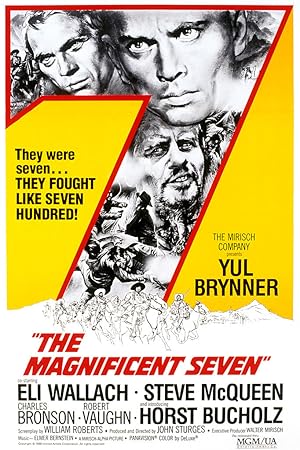
The Magnificent Seven
A bandit terrorizes a small Mexican farming village each year. Several of the village elders send three of the farmers into the United States to search for gunmen to defend them. They end up with seven, each of whom comes for a different reason. They must prepare the town to repulse an army of thirty bandits who will arrive wanting food.
Despite its small-scale budget of $2.0M, The Magnificent Seven became a solid performer, earning $4.9M worldwide—a 145% return.
Nominated for 1 Oscar. 2 wins & 6 nominations


Plot Structure
Story beats plotted across runtime


Narrative Arc
Emotional journey through the story's key moments
Story Circle
Blueprint 15-beat structure
Arcplot Score Breakdown
Weighted: Precision (70%) + Arc (15%) + Theme (15%)
The Magnificent Seven (1960) demonstrates strategically placed dramatic framework, characteristic of John Sturges's storytelling approach. This structural analysis examines how the film's 15-point plot structure maps to proven narrative frameworks across 2 hours and 7 minutes. With an Arcplot score of 6.8, the film balances conventional beats with creative variation.
Structural Analysis
The Status Quo at 2 minutes (1% through the runtime) establishes Mexican villagers live in fear under Calvera's bandit raids, repeatedly robbed of their harvest and food, establishing a world of oppression and helplessness.. Significantly, this early placement immediately immerses viewers in the story world.
The inciting incident occurs at 15 minutes when The villagers directly approach Chris Adams and offer him everything they have ($20 and their possessions) to recruit gunfighters and defend their village, catalyzing his transition from observer to potential protector.. At 12% through the film, this Disruption aligns precisely with traditional story structure. This beat shifts the emotional landscape, launching the protagonist into the central conflict.
The First Threshold at 32 minutes marks the transition into Act II, occurring at 25% of the runtime. This demonstrates the protagonist's commitment to The seven gunfighters ride into the Mexican village, crossing from their world of saloons and gunfights into the farmers' world of families and fields. They actively choose to commit to defending the village., moving from reaction to action.
At 64 minutes, the Midpoint arrives at 51% of the runtime—precisely centered, creating perfect narrative symmetry. Structural examination shows that this crucial beat Calvera returns with his full force for a major assault. Though the seven successfully repel the attack, the stakes raise dramatically as Calvera recognizes the real threat and promises to return with overwhelming numbers. The fun and games are over; this is now a war of survival., fundamentally raising what's at risk. The emotional intensity shifts, dividing the narrative into clear before-and-after phases.
The Collapse moment at 95 minutes (75% through) represents the emotional nadir. Here, The frightened villagers betray the seven, allowing Calvera to capture them at gunpoint while they sleep. The gunfighters are disarmed, humiliated, and forced out of town. Everything they fought for collapses; their trust is broken, their mission failed., reveals the protagonist at their lowest point. This beat's placement in the final quarter sets up the climactic reversal.
The Second Threshold at 102 minutes initiates the final act resolution at 80% of the runtime. Chris makes the decision: "We'll go back." The seven realize they're not fighting for the villagers anymore, but for themselves and what they represent. They choose to return, understanding they'll likely die, synthesizing their gunfighter skills with a newfound sense of purpose and self-awareness., demonstrating the transformation achieved throughout the journey.
Emotional Journey
The Magnificent Seven's emotional architecture traces a deliberate progression across 15 carefully calibrated beats.
Narrative Framework
This structural analysis employs structural analysis methodology used to understand storytelling architecture. By mapping The Magnificent Seven against these established plot points, we can identify how John Sturges utilizes or subverts traditional narrative conventions. The plot point approach reveals not only adherence to structural principles but also creative choices that distinguish The Magnificent Seven within the action genre.
John Sturges's Structural Approach
Among the 5 John Sturges films analyzed on Arcplot, the average structural score is 6.5, demonstrating varied approaches to story architecture. The Magnificent Seven represents one of the director's most structurally precise works. For comparative analysis, explore the complete John Sturges filmography.
Comparative Analysis
Additional action films include The Bad Guys, Puss in Boots and Venom: The Last Dance. For more John Sturges analyses, see The Great Escape, Gunfight at the O.K. Corral and Joe Kidd.
Plot Points by Act
Act I
SetupStatus Quo
Mexican villagers live in fear under Calvera's bandit raids, repeatedly robbed of their harvest and food, establishing a world of oppression and helplessness.
Theme
The old man tells the villagers seeking help: "Only the farmers have won. They remain forever. They are like the land itself. You help them, you are good. You fight for them, you are a great man." This states the film's theme about the value of humble perseverance versus glory-seeking.
Worldbuilding
The Mexican village's plight is established, villagers debate their options, and three representatives travel north to a border town seeking gunfighters. We meet Chris Adams, a gunfighter who demonstrates quiet courage in helping bury an Indian despite local prejudice. The world of professional gunfighters and desperate farmers is fully established.
Disruption
The villagers directly approach Chris Adams and offer him everything they have ($20 and their possessions) to recruit gunfighters and defend their village, catalyzing his transition from observer to potential protector.
Resistance
Chris debates whether to take the job for so little money, then begins recruiting six other gunfighters: Vin, O'Reilly, Lee, Britt, Chico, and Harry. Each man has his own reasons for joining what appears to be a suicide mission. The team assembles and prepares for the journey south.
Act II
ConfrontationFirst Threshold
The seven gunfighters ride into the Mexican village, crossing from their world of saloons and gunfights into the farmers' world of families and fields. They actively choose to commit to defending the village.
Mirror World
The gunfighters begin bonding with the villagers, particularly the children who idolize them. O'Reilly connects with three boys, and romantic connections form. This subplot introduces the alternative life of settling down versus the gunfighter's transient existence.
Premise
The promise of the premise: seven gunfighters train villagers to defend themselves and fight off initial bandit raids. The gunfighters teach farmers to shoot, dig trenches, and fight back. Small victories build confidence. The contrast between warrior and farmer lifestyles is explored through interactions and budding relationships.
Midpoint
Calvera returns with his full force for a major assault. Though the seven successfully repel the attack, the stakes raise dramatically as Calvera recognizes the real threat and promises to return with overwhelming numbers. The fun and games are over; this is now a war of survival.
Opposition
Calvera regroups and plans his revenge. Tensions rise in the village as fear grows. Some villagers begin to doubt and waver. The gunfighters face the reality that they may die for a cause that isn't even theirs. Harry questions why they're really there. The pressure intensifies as Calvera prepares his final assault.
Collapse
The frightened villagers betray the seven, allowing Calvera to capture them at gunpoint while they sleep. The gunfighters are disarmed, humiliated, and forced out of town. Everything they fought for collapses; their trust is broken, their mission failed.
Crisis
Calvera releases the seven, expecting them to ride away. The gunfighters process their betrayal and loss. They debate whether to leave or return. Chris reflects on why they took the job in the first place, confronting the dark truth about their existence as gunfighters with nowhere else to go.
Act III
ResolutionSecond Threshold
Chris makes the decision: "We'll go back." The seven realize they're not fighting for the villagers anymore, but for themselves and what they represent. They choose to return, understanding they'll likely die, synthesizing their gunfighter skills with a newfound sense of purpose and self-awareness.
Synthesis
The seven ride back and launch a surprise attack on Calvera's bandits in the village. An intense gunfight ensues. Four of the seven (Lee, O'Reilly, Britt, and Harry) die heroically in combat. Calvera is killed by Chris. The villagers join the fight. Victory comes at tremendous cost, but the village is finally free.
Transformation
Chris and Vin, the two surviving gunfighters, prepare to leave as villagers bury their fallen comrades. Chris observes: "The old man was right. Only the farmers won. We lost. We always lose." They ride away, transformed by the understanding that their glory-seeking life is ultimately empty compared to the farmers' enduring legacy.