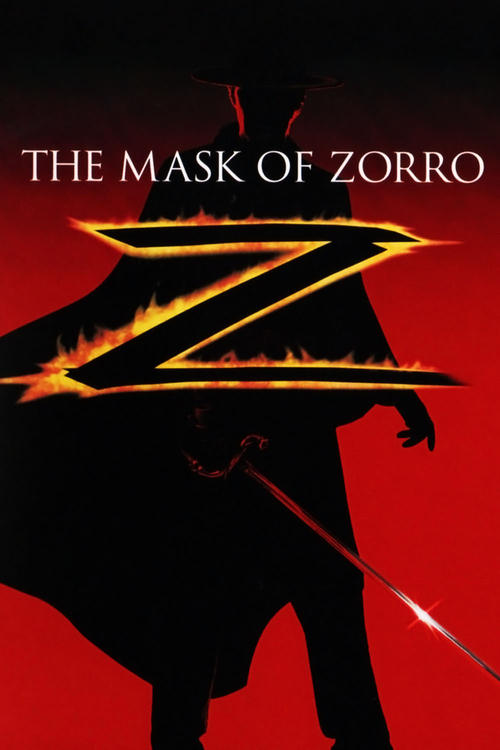
The Mask of Zorro
It has been twenty years since Don Diego de la Vega fought Spanish oppression in Alta California as the legendary romantic hero, Zorro. Having escaped from prison he transforms troubled bandit Alejandro into his successor, in order to foil the plans of the tyrannical Don Rafael Montero who robbed him of his freedom, his wife and his precious daughter.
Despite a substantial budget of $95.0M, The Mask of Zorro became a commercial success, earning $250.3M worldwide—a 163% return.
Nominated for 2 Oscars. 9 wins & 18 nominations


Plot Structure
Story beats plotted across runtime


Narrative Arc
Emotional journey through the story's key moments
Story Circle
Blueprint 15-beat structure
Arcplot Score Breakdown
Weighted: Precision (70%) + Arc (15%) + Theme (15%)
The Mask of Zorro (1998) exhibits precise dramatic framework, characteristic of Martin Campbell's storytelling approach. This structural analysis examines how the film's 15-point plot structure maps to proven narrative frameworks across 2 hours and 16 minutes. With an Arcplot score of 7.0, the film balances conventional beats with creative variation.
Structural Analysis
The Status Quo at 1 minutes (1% through the runtime) establishes 1821 Spanish California: The legendary Zorro rides triumphantly, a heroic masked defender of the people against oppression, admired and untouchable.. Of particular interest, this early placement immediately immerses viewers in the story world.
The inciting incident occurs at 15 minutes when Montero's soldiers massacre the dons and arrest Diego. His wife is killed, his infant daughter Elena is stolen by Montero, and Diego is imprisoned for twenty years.. At 11% through the film, this Disruption aligns precisely with traditional story structure. This beat shifts the emotional landscape, launching the protagonist into the central conflict.
The First Threshold at 34 minutes marks the transition into Act II, occurring at 25% of the runtime. This demonstrates the protagonist's commitment to Alejandro chooses to accept Diego's offer: "I will train you to be Zorro." He commits to the path of becoming a hero rather than simply pursuing revenge., moving from reaction to action.
At 69 minutes, the Midpoint arrives at 50% of the runtime—precisely centered, creating perfect narrative symmetry. Significantly, this crucial beat False victory: Alejandro as Zorro successfully rescues workers from the mine, wins Elena's heart at the party, and publicly humiliates Montero. He seems invincible, but he's still driven by revenge, not true heroism., fundamentally raising what's at risk. The emotional intensity shifts, dividing the narrative into clear before-and-after phases.
The Collapse moment at 100 minutes (74% through) represents the emotional nadir. Here, Diego is mortally wounded by Captain Love while saving Alejandro. The mentor dies, whispering final wisdom about protecting Elena. Alejandro loses his guide and faces his destiny alone., reveals the protagonist at their lowest point. This beat's placement in the final quarter sets up the climactic reversal.
The Second Threshold at 107 minutes initiates the final act resolution at 79% of the runtime. Alejandro chooses heroism over revenge. He dons the Zorro mask with new purpose: to stop Montero's conspiracy, save California, and protect Elena. He has become the true Zorro., demonstrating the transformation achieved throughout the journey.
Emotional Journey
The Mask of Zorro's emotional architecture traces a deliberate progression across 15 carefully calibrated beats.
Narrative Framework
This structural analysis employs a 15-point narrative structure framework that maps key story moments. By mapping The Mask of Zorro against these established plot points, we can identify how Martin Campbell utilizes or subverts traditional narrative conventions. The plot point approach reveals not only adherence to structural principles but also creative choices that distinguish The Mask of Zorro within the action genre.
Martin Campbell's Structural Approach
Among the 12 Martin Campbell films analyzed on Arcplot, the average structural score is 7.1, reflecting strong command of classical structure. The Mask of Zorro takes a more unconventional approach compared to the director's typical style. For comparative analysis, explore the complete Martin Campbell filmography.
Comparative Analysis
Additional action films include The Bad Guys, Puss in Boots and Venom: The Last Dance. For more Martin Campbell analyses, see Green Lantern, Dirty Angels and The Foreigner.
Plot Points by Act
Act I
SetupStatus Quo
1821 Spanish California: The legendary Zorro rides triumphantly, a heroic masked defender of the people against oppression, admired and untouchable.
Theme
Don Diego/Zorro tells his wife: "When you took me as your husband, you knew I had a destiny." The theme of legacy, duty, and passing the torch is established.
Worldbuilding
We see Zorro's dual life as Don Diego de la Vega, his loving family, and the political tension as Spain loses California. Governor Montero plots to seize power and gold.
Disruption
Montero's soldiers massacre the dons and arrest Diego. His wife is killed, his infant daughter Elena is stolen by Montero, and Diego is imprisoned for twenty years.
Resistance
Twenty years later: Diego escapes prison as a broken old man seeking revenge. He encounters the drunken thief Alejandro Murrieta and recognizes potential. Alejandro resists but is haunted by his own need for vengeance against Captain Love, who killed his brother.
Act II
ConfrontationFirst Threshold
Alejandro chooses to accept Diego's offer: "I will train you to be Zorro." He commits to the path of becoming a hero rather than simply pursuing revenge.
Mirror World
Alejandro first sees Elena (his future love interest and unknowingly Diego's daughter) at a public gathering. She represents nobility, justice, and the life he could never have.
Premise
Training montage and Alejandro's education in swordplay, manners, and heroism. He infiltrates high society as Don Alejandro, romances Elena, and begins undermining Montero's operations. The fun of being Zorro.
Midpoint
False victory: Alejandro as Zorro successfully rescues workers from the mine, wins Elena's heart at the party, and publicly humiliates Montero. He seems invincible, but he's still driven by revenge, not true heroism.
Opposition
Stakes rise: Montero discovers the mine sabotage. Captain Love intensifies his hunt for Zorro. Alejandro's desire for personal vengeance against Love conflicts with Diego's mission. Diego reveals Elena is his daughter, creating emotional complexity.
Collapse
Diego is mortally wounded by Captain Love while saving Alejandro. The mentor dies, whispering final wisdom about protecting Elena. Alejandro loses his guide and faces his destiny alone.
Crisis
Alejandro mourns Diego and faces his dark night: should he pursue selfish revenge or honor Diego's legacy by stopping Montero's plot and saving Elena and the people?
Act III
ResolutionSecond Threshold
Alejandro chooses heroism over revenge. He dons the Zorro mask with new purpose: to stop Montero's conspiracy, save California, and protect Elena. He has become the true Zorro.
Synthesis
The finale: Zorro infiltrates the mine fortress, reveals the truth to Elena, defeats Captain Love in combat, and stops Montero's plan. The gold mine explodes. Elena learns her true identity.
Transformation
Alejandro and Elena ride together as partners. He has transformed from a drunken thief seeking revenge into a true hero and guardian. The legacy of Zorro lives on.