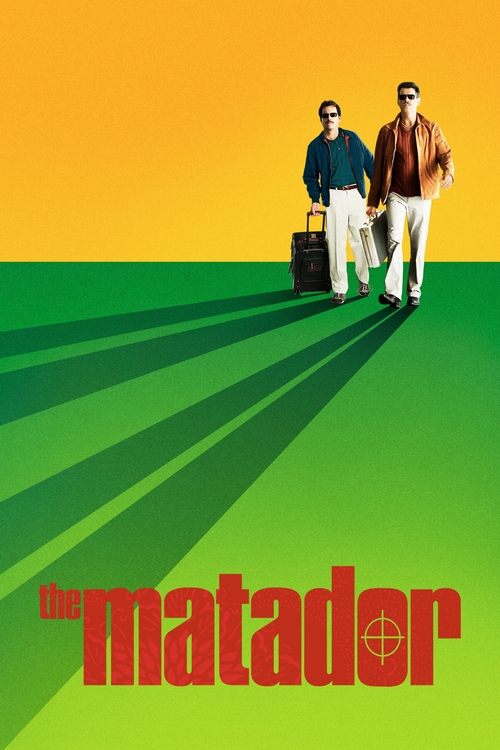
The Matador
The life of Danny Wright, a salesman forever on the road, veers into dangerous and surreal territory when he wanders into a Mexican bar and meets a mysterious stranger, Julian, who's very likely a hit man. Their meeting sets off a chain of events that will change their lives forever, as Wright is suddenly thrust into a far-from-mundane existence that he takes to surprisingly well … once he gets acclimated to it.
Working with a small-scale budget of $10.0M, the film achieved a steady performer with $17.3M in global revenue (+73% profit margin).
1 win & 6 nominations


Plot Structure
Story beats plotted across runtime


Narrative Arc
Emotional journey through the story's key moments
Story Circle
Blueprint 15-beat structure
Arcplot Score Breakdown
Weighted: Precision (70%) + Arc (15%) + Theme (15%)
The Matador (2005) demonstrates precise narrative architecture, characteristic of Richard Shepard's storytelling approach. This structural analysis examines how the film's 15-point plot structure maps to proven narrative frameworks across 1 hour and 37 minutes. With an Arcplot score of 7.1, the film balances conventional beats with creative variation.
Structural Analysis
The Status Quo at 1 minutes (1% through the runtime) establishes Julian Noble, a slick professional hitman, executes a target with cold precision at a bullfight in Mexico City, establishing his isolated, morally hollow existence as a killer-for-hire.. The analysis reveals that this early placement immediately immerses viewers in the story world.
The inciting incident occurs at 12 minutes when Julian and Danny meet at the hotel bar. Despite Julian's crude and offensive behavior, Danny engages with this strange, lonely man - an unlikely connection forms between two people from completely different worlds.. At 12% through the film, this Disruption aligns precisely with traditional story structure. This beat shifts the emotional landscape, launching the protagonist into the central conflict.
The First Threshold at 25 minutes marks the transition into Act II, occurring at 26% of the runtime. This reveals the protagonist's commitment to Danny makes the choice to continue spending time with Julian despite knowing he's a killer. He accepts this bizarre friendship, crossing a moral threshold into Julian's world., moving from reaction to action.
At 49 minutes, the Midpoint arrives at 50% of the runtime—precisely centered, creating perfect narrative symmetry. Structural examination shows that this crucial beat Months later, Julian shows up unannounced at Danny and Bean's home in Denver on Super Bowl Sunday. He's disheveled, desperate - his career is over, people want him dead. The stakes shift dramatically as Julian's crisis becomes Danny's problem., fundamentally raising what's at risk. The emotional intensity shifts, dividing the narrative into clear before-and-after phases.
The Collapse moment at 72 minutes (74% through) represents the emotional nadir. Here, Julian reveals the target is Mr. Randy, the man responsible for Danny's business failures - the man who destroyed Danny's life. This isn't just Julian's job; it's designed to help Danny. Danny must confront whether he could actually participate in murder., shows the protagonist at their lowest point. This beat's placement in the final quarter sets up the climactic reversal.
The Second Threshold at 78 minutes initiates the final act resolution at 80% of the runtime. Danny agrees to help Julian - not to kill, but to assist. He drives Julian to the location, acting as lookout. Danny chooses friendship and loyalty over his comfortable moral distance., demonstrating the transformation achieved throughout the journey.
Emotional Journey
The Matador's emotional architecture traces a deliberate progression across 15 carefully calibrated beats.
Narrative Framework
This structural analysis employs systematic plot point analysis that identifies crucial turning points. By mapping The Matador against these established plot points, we can identify how Richard Shepard utilizes or subverts traditional narrative conventions. The plot point approach reveals not only adherence to structural principles but also creative choices that distinguish The Matador within the action genre.
Richard Shepard's Structural Approach
Among the 2 Richard Shepard films analyzed on Arcplot, the average structural score is 6.6, demonstrating varied approaches to story architecture. The Matador represents one of the director's most structurally precise works. For comparative analysis, explore the complete Richard Shepard filmography.
Comparative Analysis
Additional action films include The Bad Guys, Puss in Boots and Venom: The Last Dance. For more Richard Shepard analyses, see The Hunting Party.
Plot Points by Act
Act I
SetupStatus Quo
Julian Noble, a slick professional hitman, executes a target with cold precision at a bullfight in Mexico City, establishing his isolated, morally hollow existence as a killer-for-hire.
Theme
In the hotel bar, Julian drunkenly confesses to Danny that he has no friends, no real connections - "Everyone needs a friend" becomes the thematic through-line of the story.
Worldbuilding
We see Julian's glamorous but empty hitman lifestyle and Danny's desperate situation - a businessman in Mexico City for a make-or-break deal, still grieving the death of his young son. Two lonely men in a foreign city.
Disruption
Julian and Danny meet at the hotel bar. Despite Julian's crude and offensive behavior, Danny engages with this strange, lonely man - an unlikely connection forms between two people from completely different worlds.
Resistance
Julian and Danny spend time together in Mexico City. Julian reveals he's a hitman, takes Danny to a bullfight, and even demonstrates his "technique" at the arena. Danny is horrified but fascinated. Their bond deepens despite the absurdity.
Act II
ConfrontationFirst Threshold
Danny makes the choice to continue spending time with Julian despite knowing he's a killer. He accepts this bizarre friendship, crossing a moral threshold into Julian's world.
Mirror World
The subplot of Julian's humanity emerges - beneath the hitman exterior is a desperately lonely man craving genuine connection. Danny represents the normal life Julian never had; Julian represents the excitement Danny's lost.
Premise
The "odd couple" dynamic plays out: a hitman and a suburban businessman bonding in Mexico. Julian shares stories of his kills, Danny shares his grief. They part ways, but the connection is made. Time jumps forward.
Midpoint
Months later, Julian shows up unannounced at Danny and Bean's home in Denver on Super Bowl Sunday. He's disheveled, desperate - his career is over, people want him dead. The stakes shift dramatically as Julian's crisis becomes Danny's problem.
Opposition
Julian stays with the Wrights, disrupting their suburban life. Bean is surprisingly charmed by him. Julian asks Danny for help with one final job - to kill someone so Julian can disappear. Danny is torn between his new friendship and his moral compass.
Collapse
Julian reveals the target is Mr. Randy, the man responsible for Danny's business failures - the man who destroyed Danny's life. This isn't just Julian's job; it's designed to help Danny. Danny must confront whether he could actually participate in murder.
Crisis
Danny wrestles with the impossible choice. He's not a killer, but this man ruined his life. Bean urges him to help Julian, not for revenge but for friendship. Danny must decide who he really is.
Act III
ResolutionSecond Threshold
Danny agrees to help Julian - not to kill, but to assist. He drives Julian to the location, acting as lookout. Danny chooses friendship and loyalty over his comfortable moral distance.
Synthesis
The operation unfolds. In a twist, Julian doesn't kill the target - he lets him go. Julian has changed; he can't kill anymore. The real mission was never about the hit; it was about Julian proving he had one real friend who would show up for him.
Transformation
Julian disappears to start a new life, but Danny and Bean receive a postcard - Julian is alive, free, and finally at peace. Danny's life has improved too. Both men were saved by an unlikely friendship. The lonely hitman and the broken businessman found redemption through human connection.