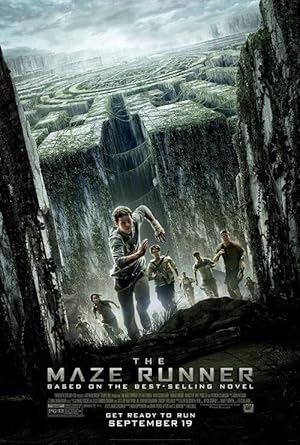
The Maze Runner
Awakening in an elevator, remembering nothing of his past, Thomas emerges into a world of about thirty teenage boys, all without past memories, who have learned to survive under their own set of rules in a completely enclosed environment, subsisting on their own agriculture and supplies. With a new boy arriving every thirty days, the group has been in "The Glade" for three years, trying to find a way to escape through the Maze that surrounds their living space (patrolled by cyborg monsters named 'Grievers'). They have begun to give up hope when a comatose girl arrives with a strange note, and their world begins to change with the boys dividing into two factions: those willing to risk their lives to escape and those wanting to hang onto what they've got and survive.
Despite a moderate budget of $34.0M, The Maze Runner became a box office phenomenon, earning $348.3M worldwide—a remarkable 924% return.
4 wins & 12 nominations


Plot Structure
Story beats plotted across runtime


Narrative Arc
Emotional journey through the story's key moments
Story Circle
Blueprint 15-beat structure
Arcplot Score Breakdown
Weighted: Precision (70%) + Arc (15%) + Theme (15%)
The Maze Runner (2014) demonstrates precise narrative architecture, characteristic of Wes Ball's storytelling approach. This structural analysis examines how the film's 15-point plot structure maps to proven narrative frameworks across 1 hour and 53 minutes. With an Arcplot score of 6.9, the film balances conventional beats with creative variation.
Structural Analysis
The Status Quo at 1 minutes (1% through the runtime) establishes Thomas wakes in a dark rising cage with no memory, panicked and confused. He doesn't know his name, where he is, or why he's trapped.. The analysis reveals that this early placement immediately immerses viewers in the story world.
The inciting incident occurs at 14 minutes when Thomas breaks the cardinal rule and runs into the Maze to save Alby and Minho, who are trapped inside as the doors close. This disrupts the established order and puts his life at risk.. At 13% through the film, this Disruption is delayed, allowing extended setup of the story world. This beat shifts the emotional landscape, launching the protagonist into the central conflict.
The First Threshold at 28 minutes marks the transition into Act II, occurring at 25% of the runtime. This shows the protagonist's commitment to Thomas chooses to become a Runner, committing to solving the Maze despite the danger. This is his active decision to pursue the mystery rather than accept life in the Glade., moving from reaction to action.
At 57 minutes, the Midpoint arrives at 51% of the runtime—precisely centered, creating perfect narrative symmetry. Of particular interest, this crucial beat The Maze doors stop closing at night, and Grievers attack the Glade for the first time, killing several Gladers. The false safety of the Glade is shattered—the stakes dramatically escalate and there's no going back., fundamentally raising what's at risk. The emotional intensity shifts, dividing the narrative into clear before-and-after phases.
The Collapse moment at 84 minutes (74% through) represents the emotional nadir. Here, Chuck is forced to attack Thomas under Gally's orders. Alby sacrifices himself to the Grievers, dying to save the group. The leader and innocence are lost—the whiff of death is literal., illustrates the protagonist at their lowest point. This beat's placement in the final quarter sets up the climactic reversal.
The Second Threshold at 90 minutes initiates the final act resolution at 79% of the runtime. Thomas realizes that being inside the Maze is the key to escaping it. He synthesizes his recovered memories with the code the Runners discovered, understanding they must face the Grievers to input the sequence and shut down the experiment., demonstrating the transformation achieved throughout the journey.
Emotional Journey
The Maze Runner's emotional architecture traces a deliberate progression across 15 carefully calibrated beats.
Narrative Framework
This structural analysis employs structural analysis methodology used to understand storytelling architecture. By mapping The Maze Runner against these established plot points, we can identify how Wes Ball utilizes or subverts traditional narrative conventions. The plot point approach reveals not only adherence to structural principles but also creative choices that distinguish The Maze Runner within the action genre.
Wes Ball's Structural Approach
Among the 4 Wes Ball films analyzed on Arcplot, the average structural score is 6.8, demonstrating varied approaches to story architecture. The Maze Runner represents one of the director's most structurally precise works. For comparative analysis, explore the complete Wes Ball filmography.
Comparative Analysis
Additional action films include The Bad Guys, Puss in Boots and Venom: The Last Dance. For more Wes Ball analyses, see Kingdom of the Planet of the Apes, Maze Runner: The Death Cure and Maze Runner: The Scorch Trials.
Plot Points by Act
Act I
SetupStatus Quo
Thomas wakes in a dark rising cage with no memory, panicked and confused. He doesn't know his name, where he is, or why he's trapped.
Theme
Alby tells Thomas, "We only have three rules: Do your part, never harm another Glader, and never go beyond those walls." The theme of community survival through order versus individual freedom is established.
Worldbuilding
Thomas arrives in the Glade and learns the rules of this mysterious prison. The Gladers have built a society in the center of a deadly maze that changes nightly. Supplies arrive monthly with a new boy who remembers nothing.
Disruption
Thomas breaks the cardinal rule and runs into the Maze to save Alby and Minho, who are trapped inside as the doors close. This disrupts the established order and puts his life at risk.
Resistance
Thomas survives the night in the Maze by ingenious thinking, killing a Griever. He faces resistance from Gally who wants to maintain order, while Minho recognizes Thomas's potential as a Runner. Teresa arrives with a message that everything is about to change.
Act II
ConfrontationFirst Threshold
Thomas chooses to become a Runner, committing to solving the Maze despite the danger. This is his active decision to pursue the mystery rather than accept life in the Glade.
Mirror World
Teresa wakes and connects with Thomas telepathically, saying "Everything is going to change." She represents hope, partnership, and the possibility of escape—the thematic counterpoint to the Glade's resigned acceptance.
Premise
Thomas and the Runners map the Maze, discovering patterns in the sections. They realize the Maze is a code and find the Griever hole—a potential exit. The promise of escape drives the exploration and reveals WICKED's manipulations.
Midpoint
The Maze doors stop closing at night, and Grievers attack the Glade for the first time, killing several Gladers. The false safety of the Glade is shattered—the stakes dramatically escalate and there's no going back.
Opposition
The Gladers fracture between Gally's faction, which wants to sacrifice Teresa and Thomas, and those who want to escape through the Maze. Thomas retrieves the serum and remembers his involvement with WICKED, creating internal and external opposition.
Collapse
Chuck is forced to attack Thomas under Gally's orders. Alby sacrifices himself to the Grievers, dying to save the group. The leader and innocence are lost—the whiff of death is literal.
Crisis
Thomas grapples with his guilt over working for WICKED and doubts whether escape is possible. The remaining Gladers face the devastating losses and must decide if they'll follow Thomas into the Maze or surrender to despair.
Act III
ResolutionSecond Threshold
Thomas realizes that being inside the Maze is the key to escaping it. He synthesizes his recovered memories with the code the Runners discovered, understanding they must face the Grievers to input the sequence and shut down the experiment.
Synthesis
The Gladers fight through the Maze to the Griever hole, battling Grievers with coordinated teamwork. They input the code sequence, shut down the Maze, and escape to the WICKED facility. Chuck dies protecting Thomas from Gally, giving Thomas purpose to continue fighting.
Transformation
The survivors are rescued and airlifted away, but Thomas stares grimly at the wasteland of the Scorch, understanding that escaping the Maze was only the beginning. He's transformed from confused victim to determined resistance fighter.