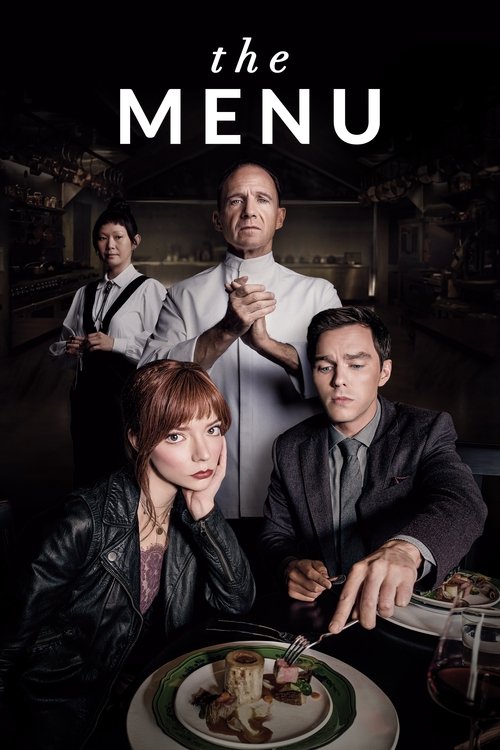
The Menu
A young couple travels to a remote island to eat at an exclusive restaurant where the chef has prepared a lavish menu, with some shocking surprises.
Despite a moderate budget of $35.0M, The Menu became a financial success, earning $79.6M worldwide—a 128% return.
2 wins & 66 nominations


Plot Structure
Story beats plotted across runtime


Narrative Arc
Emotional journey through the story's key moments
Story Circle
Blueprint 15-beat structure
Arcplot Score Breakdown
Weighted: Precision (70%) + Arc (15%) + Theme (15%)
The Menu (2022) showcases carefully calibrated story structure, characteristic of Mark Mylod's storytelling approach. This structural analysis examines how the film's 15-point plot structure maps to proven narrative frameworks across 1 hour and 47 minutes. With an Arcplot score of 6.9, the film balances conventional beats with creative variation.
Structural Analysis
The Status Quo at 1 minutes (1% through the runtime) establishes Margot sits alone in her apartment, smoking and looking disconnected, waiting to be picked up by Tyler for their date to an exclusive restaurant. She seems detached from this world of privilege she's about to enter.. Structural examination shows that this early placement immediately immerses viewers in the story world.
The inciting incident occurs at 13 minutes when Chef Slowik notices Margot and asks Elsa, "Who is she? She wasn't on my list." Margot is an unexpected variable—she replaced Tyler's original date—and this disrupts the Chef's meticulously planned evening. His reaction suggests something darker is at play.. At 12% through the film, this Disruption aligns precisely with traditional story structure. This beat shifts the emotional landscape, launching the protagonist into the central conflict.
The First Threshold at 28 minutes marks the transition into Act II, occurring at 26% of the runtime. This demonstrates the protagonist's commitment to Chef Slowik serves "The Mess" course while revealing that sous chef Jeremy will shoot himself in the head because he failed in his craft. Jeremy does so in front of everyone. The guests realize this is not a normal dinner—they are trapped in something deadly. There's no going back., moving from reaction to action.
At 54 minutes, the Midpoint arrives at 51% of the runtime—precisely centered, creating perfect narrative symmetry. Significantly, this crucial beat Chef Slowik reveals his plan: everyone will die tonight, including the staff, in a final course. He shows a photo of the building on fire with everyone inside. What seemed like punishment for individual sins is actually a mass suicide-murder. The stakes are raised—this isn't about justice, it's about nihilistic destruction. False defeat: there's no escape., fundamentally raising what's at risk. The emotional intensity shifts, dividing the narrative into clear before-and-after phases.
The Collapse moment at 81 minutes (75% through) represents the emotional nadir. Here, Margot tries to escape by boat but finds the Coast Guard officer is part of the staff—there is no outside help. She returns defeated. The Chef tells her she must choose: guest or staff. Her hope of escape dies completely. She must face the reality that cleverness and effort won't save her., illustrates the protagonist at their lowest point. This beat's placement in the final quarter sets up the climactic reversal.
The Second Threshold at 86 minutes initiates the final act resolution at 80% of the runtime. Margot has a realization from her discovery in the Chef's apartment: he used to love cooking simple food, before it became art and obligation. She asks to send back her food and orders a cheeseburger with fries—the kind of simple, joyful meal he made before fame corrupted him. This breaks through his nihilism by reminding him of pure pleasure., demonstrating the transformation achieved throughout the journey.
Emotional Journey
The Menu's emotional architecture traces a deliberate progression across 15 carefully calibrated beats.
Narrative Framework
This structural analysis employs proven narrative structure principles that track dramatic progression. By mapping The Menu against these established plot points, we can identify how Mark Mylod utilizes or subverts traditional narrative conventions. The plot point approach reveals not only adherence to structural principles but also creative choices that distinguish The Menu within the comedy genre.
Mark Mylod's Structural Approach
Among the 2 Mark Mylod films analyzed on Arcplot, the average structural score is 6.8, demonstrating varied approaches to story architecture. The Menu represents one of the director's most structurally precise works. For comparative analysis, explore the complete Mark Mylod filmography.
Comparative Analysis
Additional comedy films include The Bad Guys, Ella Enchanted and The Evening Star. For more Mark Mylod analyses, see What's Your Number?.
Plot Points by Act
Act I
SetupStatus Quo
Margot sits alone in her apartment, smoking and looking disconnected, waiting to be picked up by Tyler for their date to an exclusive restaurant. She seems detached from this world of privilege she's about to enter.
Theme
Elsa, the maître d', tells the guests on the boat: "We serve food. But we are not servants. We are not here to serve you." This introduces the film's central theme about class, service, power, and who really serves whom.
Worldbuilding
The journey to Hawthorne establishes the ultra-wealthy diners: Tyler (foodie obsessive), the Liebrandt couple (bickering regulars), Lillian (food critic) and her editor Ted, the tech bros, movie star George Birch and his assistant, and the mysterious older gentleman Mr. Leibrandt. The exclusivity and pretension of this world is established.
Disruption
Chef Slowik notices Margot and asks Elsa, "Who is she? She wasn't on my list." Margot is an unexpected variable—she replaced Tyler's original date—and this disrupts the Chef's meticulously planned evening. His reaction suggests something darker is at play.
Resistance
The first courses begin with escalating strangeness. Chef Slowik introduces each course with cryptic monologues about memory, sacrifice, and purity. Margot observes the cultish devotion of the staff and the obliviousness of the guests. She debates whether to leave but is drawn deeper into the mystery of what's really happening.
Act II
ConfrontationFirst Threshold
Chef Slowik serves "The Mess" course while revealing that sous chef Jeremy will shoot himself in the head because he failed in his craft. Jeremy does so in front of everyone. The guests realize this is not a normal dinner—they are trapped in something deadly. There's no going back.
Mirror World
Chef Slowik singles out Margot, calling her "an eater, not a taker" and acknowledging she doesn't fit with the others. He offers her a choice: to die with the guests (eaters) or the staff (givers). Margot becomes the thematic mirror—she represents the audience, caught between worlds of service and consumption.
Premise
The "fun and games" of watching Chef Slowik psychologically torture each guest through courses that expose their sins: the tech bros' exploitative app, Lillian's cruel review that destroyed a chef, the Liebrandts' infidelity, and George Birch's failed career. Margot attempts escape but is caught. The promise of the premise: watching the rich get their comeuppance.
Midpoint
Chef Slowik reveals his plan: everyone will die tonight, including the staff, in a final course. He shows a photo of the building on fire with everyone inside. What seemed like punishment for individual sins is actually a mass suicide-murder. The stakes are raised—this isn't about justice, it's about nihilistic destruction. False defeat: there's no escape.
Opposition
The pressure intensifies as Margot tries various strategies to survive: attempting to align with the staff, exploiting her outsider status, discovering Chef's personal apartment and the dark secret of his lost passion. Each guest's attempt to resist fails—the tech bro is mutilated, George Birch tries to assert dominance and is humiliated. The Chef's control tightens.
Collapse
Margot tries to escape by boat but finds the Coast Guard officer is part of the staff—there is no outside help. She returns defeated. The Chef tells her she must choose: guest or staff. Her hope of escape dies completely. She must face the reality that cleverness and effort won't save her.
Crisis
Margot sits in the darkness of her assigned fate. The Chef assigns her to die with the staff since she "serves" (she's a sex worker). The other guests are fitted for their death costumes. This is the dark night—acceptance of inevitable death, total powerlessness, the extinguishing of hope.
Act III
ResolutionSecond Threshold
Margot has a realization from her discovery in the Chef's apartment: he used to love cooking simple food, before it became art and obligation. She asks to send back her food and orders a cheeseburger with fries—the kind of simple, joyful meal he made before fame corrupted him. This breaks through his nihilism by reminding him of pure pleasure.
Synthesis
Chef Slowik makes Margot a perfect cheeseburger, and she tells him it's wonderful. He allows her to leave with the leftovers "to go." As she escapes by boat, the final course "S'mores" is served—the guests and staff are wrapped in marshmallow and chocolate, the restaurant is set ablaze, and everyone dies in the fire as planned. Margot eats her burger on the boat, watching the flames.
Transformation
Margot sits on the boat eating her cheeseburger, watching Hawthorne burn in the distance. She has survived by understanding the simple truth: food is about pleasure and humanity, not art or status. She transformed from passive observer to active participant who understood what was truly at stake—connection versus consumption.