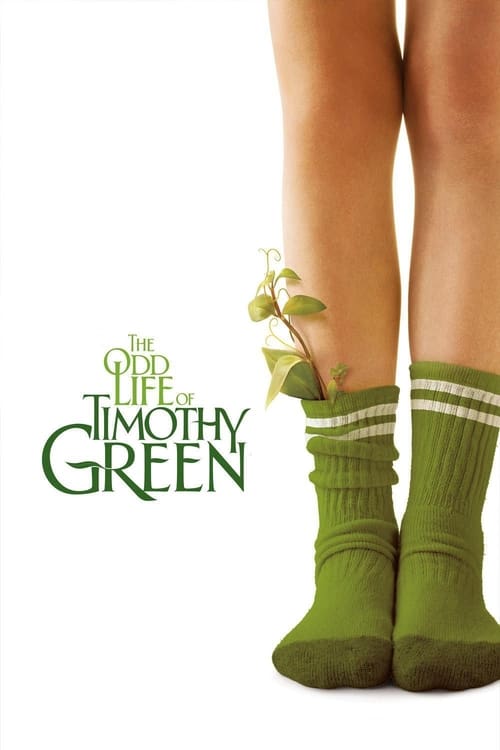
The Odd Life of Timothy Green
A childless couple bury a box in their backyard, containing all of their wishes for an infant. Soon, a child is born, though Timothy Green is not all that he appears.
Despite a moderate budget of $25.0M, The Odd Life of Timothy Green became a box office success, earning $56.0M worldwide—a 124% return.
1 win & 8 nominations


Plot Structure
Story beats plotted across runtime


Narrative Arc
Emotional journey through the story's key moments
Story Circle
Blueprint 15-beat structure
Arcplot Score Breakdown
Weighted: Precision (70%) + Arc (15%) + Theme (15%)
The Odd Life of Timothy Green (2012) exhibits deliberately positioned narrative architecture, characteristic of Peter Hedges's storytelling approach. This structural analysis examines how the film's 15-point plot structure maps to proven narrative frameworks across 1 hour and 45 minutes. With an Arcplot score of 7.0, the film balances conventional beats with creative variation.
Structural Analysis
The Status Quo at 1 minutes (1% through the runtime) establishes Cindy and Jim Green sit nervously in an adoption agency office, desperate and vulnerable, about to tell their story of why they'd be good parents despite their childless past.. The analysis reveals that this early placement immediately immerses viewers in the story world.
The inciting incident occurs at 12 minutes when After learning they cannot have children, Cindy and Jim spend a cathartic night writing down all the qualities their dream child would have, bury the notes in the garden, and grieve their lost future.. At 12% through the film, this Disruption aligns precisely with traditional story structure. This beat shifts the emotional landscape, launching the protagonist into the central conflict.
The First Threshold at 26 minutes marks the transition into Act II, occurring at 24% of the runtime. This reveals the protagonist's commitment to After initial shock, Cindy and Jim make the active choice to embrace Timothy as their son, deciding to tell everyone he's a relative who's come to stay, and begin their new life as parents., moving from reaction to action.
At 53 minutes, the Midpoint arrives at 50% of the runtime—precisely centered, creating perfect narrative symmetry. Structural examination shows that this crucial beat At the big soccer game, Timothy scores a seemingly impossible goal that saves the day and makes the town celebrate him as a hero, representing a false victory as his leaves begin to fall., fundamentally raising what's at risk. The emotional intensity shifts, dividing the narrative into clear before-and-after phases.
The Collapse moment at 78 minutes (74% through) represents the emotional nadir. Here, Timothy's last leaf falls during a family moment, and he quietly tells Cindy and Jim that he has to leave now, bringing the devastating reality that they must say goodbye to their miracle child., shows the protagonist at their lowest point. This beat's placement in the final quarter sets up the climactic reversal.
The Second Threshold at 84 minutes initiates the final act resolution at 80% of the runtime. Timothy tells Cindy and Jim that his purpose was to help them become the parents they were meant to be, giving them the realization that they are now ready and worthy to adopt and love another child., demonstrating the transformation achieved throughout the journey.
Emotional Journey
The Odd Life of Timothy Green's emotional architecture traces a deliberate progression across 15 carefully calibrated beats.
Narrative Framework
This structural analysis employs proven narrative structure principles that track dramatic progression. By mapping The Odd Life of Timothy Green against these established plot points, we can identify how Peter Hedges utilizes or subverts traditional narrative conventions. The plot point approach reveals not only adherence to structural principles but also creative choices that distinguish The Odd Life of Timothy Green within the fantasy genre.
Peter Hedges's Structural Approach
Among the 3 Peter Hedges films analyzed on Arcplot, the average structural score is 7.4, reflecting strong command of classical structure. The Odd Life of Timothy Green takes a more unconventional approach compared to the director's typical style. For comparative analysis, explore the complete Peter Hedges filmography.
Comparative Analysis
Additional fantasy films include Thinner, Ella Enchanted and Conan the Barbarian. For more Peter Hedges analyses, see Ben Is Back, Dan in Real Life.
Plot Points by Act
Act I
SetupStatus Quo
Cindy and Jim Green sit nervously in an adoption agency office, desperate and vulnerable, about to tell their story of why they'd be good parents despite their childless past.
Theme
The adoption counselor says, "Sometimes the unexpected is even better than what you'd planned," foreshadowing the film's central theme about accepting life's surprises and imperfections.
Worldbuilding
Through flashback, we see Cindy and Jim's loving marriage in the small town of Stanleyville, their repeated fertility struggles, and the final devastating news that they can never have biological children.
Disruption
After learning they cannot have children, Cindy and Jim spend a cathartic night writing down all the qualities their dream child would have, bury the notes in the garden, and grieve their lost future.
Resistance
During a magical rainstorm that night, a mysterious boy named Timothy emerges from the garden with leaves growing from his ankles, claiming to be their son and possessing all the qualities they wrote down.
Act II
ConfrontationFirst Threshold
After initial shock, Cindy and Jim make the active choice to embrace Timothy as their son, deciding to tell everyone he's a relative who's come to stay, and begin their new life as parents.
Mirror World
Timothy meets Joni, a fellow outcast who initially seems to mock him but becomes his closest friend, representing the film's theme that authentic connection requires embracing what makes us different.
Premise
Timothy charms the town and teaches Cindy and Jim how to be parents: he helps Jim stand up to his domineering father, inspires Cindy to be more confident, and shows them both that imperfection and authenticity are strengths.
Midpoint
At the big soccer game, Timothy scores a seemingly impossible goal that saves the day and makes the town celebrate him as a hero, representing a false victory as his leaves begin to fall.
Opposition
Timothy's leaves continue falling one by one as he fulfills each quality written down; the family faces mounting pressure from judgmental townspeople, a suspicious principal, and the realization that Timothy's time with them is limited.
Collapse
Timothy's last leaf falls during a family moment, and he quietly tells Cindy and Jim that he has to leave now, bringing the devastating reality that they must say goodbye to their miracle child.
Crisis
The family spends one final bittersweet day together, taking Timothy to the museum and creating last memories, while Cindy and Jim grapple with losing him and the profound grief of their dark night of the soul.
Act III
ResolutionSecond Threshold
Timothy tells Cindy and Jim that his purpose was to help them become the parents they were meant to be, giving them the realization that they are now ready and worthy to adopt and love another child.
Synthesis
Timothy walks into the forest and returns to the earth; Cindy and Jim return to the adoption office with their story complete, demonstrating through their experience with Timothy that they understand what it means to love unconditionally.
Transformation
The adoption counselor approves them and reveals a young girl is waiting to meet them; Cindy and Jim, now confident and transformed parents, walk toward their new beginning with open hearts.