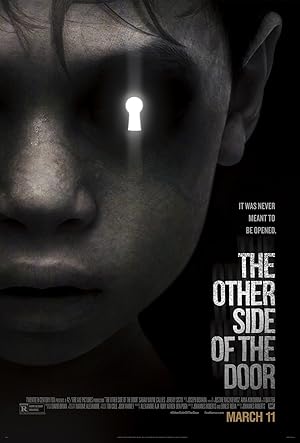
The Other Side of the Door
A family lives an idyllic existence abroad until a tragic accident takes the life of their young son. The inconsolable mother learns of an ancient ritual that will bring him back to say a final goodbye. She travels to an ancient temple, where a door serves as a mysterious portal between two worlds. But when she disobeys a sacred warning to never open that door, she upsets the balance between life and death.
Despite its small-scale budget of $5.0M, The Other Side of the Door became a financial success, earning $14.3M worldwide—a 187% return.
2 wins & 3 nominations


Plot Structure
Story beats plotted across runtime


Narrative Arc
Emotional journey through the story's key moments
Story Circle
Blueprint 15-beat structure
Arcplot Score Breakdown
Weighted: Precision (70%) + Arc (15%) + Theme (15%)
The Other Side of the Door (2016) exemplifies deliberately positioned narrative architecture, characteristic of Johannes Roberts's storytelling approach. This structural analysis examines how the film's 15-point plot structure maps to proven narrative frameworks across 1 hour and 36 minutes. With an Arcplot score of 7.6, the film showcases strong structural fundamentals.
Structural Analysis
The Status Quo at 1 minutes (1% through the runtime) establishes Maria and Michael live happily in India with their two children, Oliver and Lucy. The family appears content and well-adjusted in their expatriate life.. The analysis reveals that this early placement immediately immerses viewers in the story world.
The inciting incident occurs at 11 minutes when A car accident forces Maria to choose between saving Oliver or Lucy. She chooses Lucy, and Oliver drowns, shattering the family's world and Maria's sense of self.. At 11% through the film, this Disruption aligns precisely with traditional story structure. This beat shifts the emotional landscape, launching the protagonist into the central conflict.
The First Threshold at 24 minutes marks the transition into Act II, occurring at 25% of the runtime. This demonstrates the protagonist's commitment to Maria actively chooses to visit the abandoned temple and perform the ritual to speak with Oliver one last time, entering a supernatural world with unknown consequences., moving from reaction to action.
At 48 minutes, the Midpoint arrives at 50% of the runtime—precisely centered, creating perfect narrative symmetry. The analysis reveals that this crucial beat Maria realizes she broke the ritual's cardinal rule: she opened the door. This false victory (talking to her son) becomes a false defeat as she understands something evil has crossed over., fundamentally raising what's at risk. The emotional intensity shifts, dividing the narrative into clear before-and-after phases.
The Collapse moment at 71 minutes (74% through) represents the emotional nadir. Here, The entity kills Piki, the one person who understood the supernatural threat. Maria faces the darkest realization: her inability to let go has brought death into her home, and she may lose everything., reveals the protagonist at their lowest point. This beat's placement in the final quarter sets up the climactic reversal.
The Second Threshold at 76 minutes initiates the final act resolution at 79% of the runtime. Maria gains new understanding: she must return to the temple and undo what she's done by properly closing the door and letting Oliver go, combining her mother's love with necessary sacrifice., demonstrating the transformation achieved throughout the journey.
Emotional Journey
The Other Side of the Door's emotional architecture traces a deliberate progression across 15 carefully calibrated beats.
Narrative Framework
This structural analysis employs systematic plot point analysis that identifies crucial turning points. By mapping The Other Side of the Door against these established plot points, we can identify how Johannes Roberts utilizes or subverts traditional narrative conventions. The plot point approach reveals not only adherence to structural principles but also creative choices that distinguish The Other Side of the Door within the horror genre.
Johannes Roberts's Structural Approach
Among the 5 Johannes Roberts films analyzed on Arcplot, the average structural score is 7.1, reflecting strong command of classical structure. The Other Side of the Door represents one of the director's most structurally precise works. For comparative analysis, explore the complete Johannes Roberts filmography.
Comparative Analysis
Additional horror films include Thinner, A Nightmare on Elm Street and Mary Reilly. For more Johannes Roberts analyses, see The Strangers: Prey at Night, Resident Evil: Welcome to Raccoon City and 47 Meters Down: Uncaged.
Plot Points by Act
Act I
SetupStatus Quo
Maria and Michael live happily in India with their two children, Oliver and Lucy. The family appears content and well-adjusted in their expatriate life.
Theme
A character warns about the dangers of not letting go, foreshadowing the core theme: grief must be processed, not prolonged, and some doors should remain closed.
Worldbuilding
Establishment of the family's life in India, their relationships, daily routines, and Maria's bond with her son Oliver. The world is warm, loving, and seemingly secure.
Disruption
A car accident forces Maria to choose between saving Oliver or Lucy. She chooses Lucy, and Oliver drowns, shattering the family's world and Maria's sense of self.
Resistance
Maria spirals into suicidal grief. Her housekeeper Piki reveals the existence of an ancient temple where the dead can be contacted. Maria resists, debates, and grieves before considering this supernatural option.
Act II
ConfrontationFirst Threshold
Maria actively chooses to visit the abandoned temple and perform the ritual to speak with Oliver one last time, entering a supernatural world with unknown consequences.
Mirror World
Maria communicates with Oliver through the door at the temple. This supernatural connection becomes the mirror relationship that will test the theme about letting go and accepting death.
Premise
Maria finds comfort in the ritual communication with Oliver. She experiences temporary relief from her grief, but strange supernatural occurrences begin at home, hinting at consequences.
Midpoint
Maria realizes she broke the ritual's cardinal rule: she opened the door. This false victory (talking to her son) becomes a false defeat as she understands something evil has crossed over.
Opposition
The supernatural entity masquerading as Oliver becomes increasingly malevolent. It terrorizes the family, threatens Lucy, and Maria realizes her grief-driven choice has endangered everyone she loves.
Collapse
The entity kills Piki, the one person who understood the supernatural threat. Maria faces the darkest realization: her inability to let go has brought death into her home, and she may lose everything.
Crisis
Maria confronts her guilt and grief. She must accept that Oliver is truly gone and that her desperation to hold on has only created more death and suffering.
Act III
ResolutionSecond Threshold
Maria gains new understanding: she must return to the temple and undo what she's done by properly closing the door and letting Oliver go, combining her mother's love with necessary sacrifice.
Synthesis
Maria returns to the temple for a final confrontation with the entity. She faces the supernatural horror, protects her daughter Lucy, and attempts to seal the doorway she opened through her grief.
Transformation
The film ends ambiguously or tragically, suggesting that some doors, once opened, cannot be fully closed. Maria's transformation comes at a devastating cost, learning that grief has its own process that cannot be circumvented.