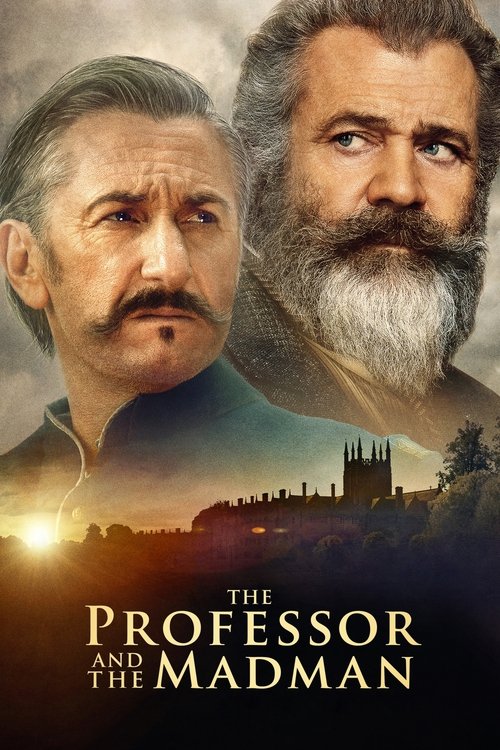
The Professor and the Madman
Professor James Murray begins work compiling words for the first edition of the Oxford English Dictionary in the mid 19th century, and receives over 10,000 entries from a patient at Broadmoor Criminal Lunatic Asylum, Dr. William Minor.
The film box office disappointment against its moderate budget of $25.0M, earning $5.0M globally (-80% loss). While initial box office returns were modest, the film has gained appreciation for its unconventional structure within the history genre.


Plot Structure
Story beats plotted across runtime


Narrative Arc
Emotional journey through the story's key moments
Story Circle
Blueprint 15-beat structure
Arcplot Score Breakdown
Weighted: Precision (70%) + Arc (15%) + Theme (15%)
The Professor and the Madman (2019) demonstrates precise plot construction, characteristic of Farhad Safinia's storytelling approach. This structural analysis examines how the film's 15-point plot structure maps to proven narrative frameworks across 2 hours and 4 minutes. With an Arcplot score of 7.2, the film balances conventional beats with creative variation.
Structural Analysis
The Status Quo at 1 minutes (1% through the runtime) establishes Dr. W.C. Minor, haunted by Civil War trauma, murders George Merrett in a delusional episode in London, 1872. Establishes Minor's fractured mental state and the tragedy that defines his life.. Of particular interest, this early placement immediately immerses viewers in the story world.
The inciting incident occurs at 16 minutes when Murray is offered the editorship of the Oxford English Dictionary by the Delegates. An opportunity to prove himself despite having no university degree, but the task is daunting - tracking the history of every word in English.. At 13% through the film, this Disruption is delayed, allowing extended setup of the story world. This beat shifts the emotional landscape, launching the protagonist into the central conflict.
The First Threshold at 30 minutes marks the transition into Act II, occurring at 24% of the runtime. This illustrates the protagonist's commitment to Murray launches his public appeal for volunteer readers to submit word quotations from literature. He sends out thousands of requests. This active choice commits him to the collaborative method that will define the project., moving from reaction to action.
At 63 minutes, the Midpoint arrives at 50% of the runtime—precisely centered, creating perfect narrative symmetry. Of particular interest, this crucial beat Murray visits "Dr. Minor" at his address, discovering the truth: his greatest contributor is an inmate at a criminal lunatic asylum. False victory inverted to revelation - the celebration of their collaboration is undercut by the stark reality of Minor's imprisonment and madness., fundamentally raising what's at risk. The emotional intensity shifts, dividing the narrative into clear before-and-after phases.
The Collapse moment at 93 minutes (75% through) represents the emotional nadir. Here, Minor, in a psychotic break and believing his delusions about sexual sin, performs self-mutilation (auto-amputation). This act of desperation represents the death of hope - Minor can no longer work, and Murray faces losing both his friend and the dictionary project. Literal "whiff of death" as Minor nearly dies., reveals the protagonist at their lowest point. This beat's placement in the final quarter sets up the climactic reversal.
The Second Threshold at 99 minutes initiates the final act resolution at 80% of the runtime. Murray refuses to abandon Minor. He petitions for Minor's release and repatriation to America, synthesizing his role as editor with his role as friend. He realizes the dictionary was never just about words - it was about human connection and dignity. He uses his growing reputation to advocate for Minor., demonstrating the transformation achieved throughout the journey.
Emotional Journey
The Professor and the Madman's emotional architecture traces a deliberate progression across 15 carefully calibrated beats.
Narrative Framework
This structural analysis employs structural analysis methodology used to understand storytelling architecture. By mapping The Professor and the Madman against these established plot points, we can identify how Farhad Safinia utilizes or subverts traditional narrative conventions. The plot point approach reveals not only adherence to structural principles but also creative choices that distinguish The Professor and the Madman within the history genre.
Comparative Analysis
Additional history films include The Attacks Of 26/11, Joyeux Noel and Rob Roy.
Plot Points by Act
Act I
SetupStatus Quo
Dr. W.C. Minor, haunted by Civil War trauma, murders George Merrett in a delusional episode in London, 1872. Establishes Minor's fractured mental state and the tragedy that defines his life.
Theme
Murray tells his children that words have power to preserve truth and memory. "The words we use define who we are." Theme of language as redemption and connection stated early.
Worldbuilding
Parallel establishment of both protagonists: Minor confined to Broadmoor Criminal Lunatic Asylum, tormented by guilt and hallucinations; Murray, a self-taught philologist, struggling with poverty in Scotland, teaching his children despite lack of formal credentials. The Oxford Dictionary project is introduced as an impossible task.
Disruption
Murray is offered the editorship of the Oxford English Dictionary by the Delegates. An opportunity to prove himself despite having no university degree, but the task is daunting - tracking the history of every word in English.
Resistance
Murray debates accepting, fearing failure and inadequacy. He visits Oxford, confronts academic snobbery, and faces resistance from the Delegates who doubt him. Meanwhile, Minor discovers books in the asylum and begins reading obsessively. Murray ultimately accepts, moving his family to Oxford.
Act II
ConfrontationFirst Threshold
Murray launches his public appeal for volunteer readers to submit word quotations from literature. He sends out thousands of requests. This active choice commits him to the collaborative method that will define the project.
Mirror World
Dr. Minor responds to Murray's appeal and begins submitting meticulously researched quotations from Broadmoor. This begins their epistolary relationship - two isolated men finding connection through words. Minor also develops a relationship with Eliza Merrett, widow of the man he killed.
Premise
The "fun and games" of dictionary-making: Murray and his team process thousands of submissions; Minor becomes the most prolific contributor, his work giving him purpose; Murray navigates academic politics; the two men correspond, neither knowing the other's true circumstances. Minor finds solace in his work and his friendship with Eliza.
Midpoint
Murray visits "Dr. Minor" at his address, discovering the truth: his greatest contributor is an inmate at a criminal lunatic asylum. False victory inverted to revelation - the celebration of their collaboration is undercut by the stark reality of Minor's imprisonment and madness.
Opposition
Despite the revelation, Murray and Minor's friendship deepens through visits. However, pressure mounts: Oxford Delegates demand faster progress and question Murray's methods; Minor's mental state deteriorates, hallucinations worsen; institutional resistance grows. Minor's relationship with Eliza becomes complicated, blurring lines between penance and attachment.
Collapse
Minor, in a psychotic break and believing his delusions about sexual sin, performs self-mutilation (auto-amputation). This act of desperation represents the death of hope - Minor can no longer work, and Murray faces losing both his friend and the dictionary project. Literal "whiff of death" as Minor nearly dies.
Crisis
Murray is devastated, feeling responsible. Minor survives but is catatonic. Murray confronts the darkness of institutional indifference and his own powerlessness. The dictionary work stalls. Murray's dark night as he contemplates the cost of ambition and the limits of what words can heal.
Act III
ResolutionSecond Threshold
Murray refuses to abandon Minor. He petitions for Minor's release and repatriation to America, synthesizing his role as editor with his role as friend. He realizes the dictionary was never just about words - it was about human connection and dignity. He uses his growing reputation to advocate for Minor.
Synthesis
Murray battles the Delegates and the Home Office for Minor's release. The dictionary nears completion. Murray presents volumes to Oxford, defending his collaborative method. Minor is finally granted release and deportation to America. Murray visits Minor one final time before his departure - a farewell between unlikely friends whose work will outlive them.
Transformation
Title cards reveal the dictionary's completion in 1928 and its enduring legacy. Murray at his desk, surrounded by the completed work, contrasted with Minor finding peace in America. Both men transformed through their collaboration - Murray validated, Minor redeemed. The power of words to connect and heal realized.