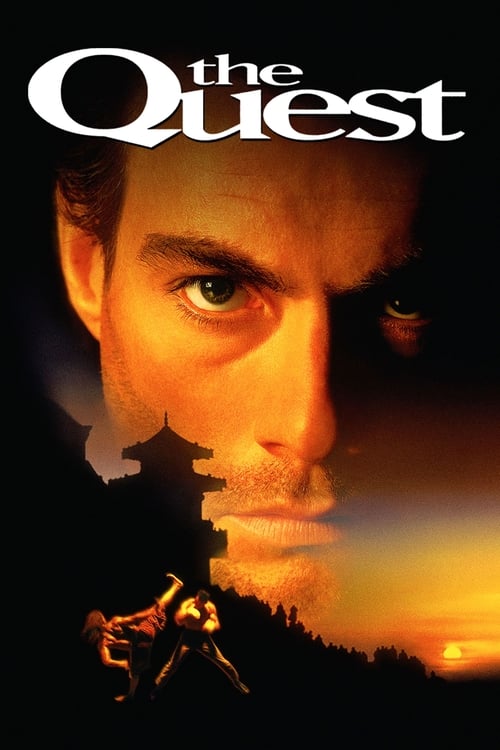
The Quest
Ghang-gheng, the ancient winner-take-all competition in which the deadliest fighters from around the world employ the most spectacular feats of martial arts skills ever displayed in order to win the prized Golden Dragon. But fighting prowess alone will not be enough for Chris to triumph over such daunting foes.
Working with a respectable budget of $30.0M, the film achieved a respectable showing with $57.4M in global revenue (+91% profit margin).


Plot Structure
Story beats plotted across runtime


Narrative Arc
Emotional journey through the story's key moments
Story Circle
Blueprint 15-beat structure
Arcplot Score Breakdown
Weighted: Precision (70%) + Arc (15%) + Theme (15%)
The Quest (1996) exemplifies strategically placed narrative architecture, characteristic of Jean-Claude Van Damme's storytelling approach. This structural analysis examines how the film's 15-point plot structure maps to proven narrative frameworks across 1 hour and 35 minutes. With an Arcplot score of 7.4, the film balances conventional beats with creative variation.
Structural Analysis
The Status Quo at 1 minutes (1% through the runtime) establishes Chris Dubois fights as a clown in the streets of 1920s New York, protecting orphaned children from gangsters. He lives a rough but noble life as their protector and provider.. Significantly, this early placement immediately immerses viewers in the story world.
The inciting incident occurs at 11 minutes when After a violent confrontation with gangsters where he protects the children, Chris is forced to flee New York by jumping onto a departing boat, unwillingly leaving the orphans behind and his world forever.. At 12% through the film, this Disruption aligns precisely with traditional story structure. This beat shifts the emotional landscape, launching the protagonist into the central conflict.
The First Threshold at 23 minutes marks the transition into Act II, occurring at 25% of the runtime. This indicates the protagonist's commitment to Chris chooses to pursue entry into the Ghang-gheng tournament, committing himself to the path of becoming a true martial artist. He actively decides to transform from street fighter to disciplined warrior., moving from reaction to action.
At 47 minutes, the Midpoint arrives at 49% of the runtime—precisely centered, creating perfect narrative symmetry. Notably, this crucial beat The Ghang-gheng tournament begins. Chris wins his first official match, proving he belongs among the world's elite fighters. False victory: he seems on the path to glory, but the real challenges and deeper conspiracies are just beginning., fundamentally raising what's at risk. The emotional intensity shifts, dividing the narrative into clear before-and-after phases.
The Collapse moment at 70 minutes (74% through) represents the emotional nadir. Here, Khan is killed by treachery, providing the "whiff of death." Chris loses his mentor and spiritual guide just before the final match. The betrayal by Dobbs is fully revealed, threatening everything Chris has fought for., shows the protagonist at their lowest point. This beat's placement in the final quarter sets up the climactic reversal.
The Second Threshold at 76 minutes initiates the final act resolution at 80% of the runtime. Chris realizes that he must fight not for glory or revenge, but to honor Khan's memory and prove that the discipline and spirit he learned has transformed him. He synthesizes his street fighting survival instincts with Khan's teachings about honor., demonstrating the transformation achieved throughout the journey.
Emotional Journey
The Quest's emotional architecture traces a deliberate progression across 15 carefully calibrated beats.
Narrative Framework
This structural analysis employs a 15-point narrative structure framework that maps key story moments. By mapping The Quest against these established plot points, we can identify how Jean-Claude Van Damme utilizes or subverts traditional narrative conventions. The plot point approach reveals not only adherence to structural principles but also creative choices that distinguish The Quest within the action genre.
Comparative Analysis
Additional action films include The Bad Guys, Puss in Boots and Venom: The Last Dance.
Plot Points by Act
Act I
SetupStatus Quo
Chris Dubois fights as a clown in the streets of 1920s New York, protecting orphaned children from gangsters. He lives a rough but noble life as their protector and provider.
Theme
An elder tells Chris that true strength comes from discipline and honor, not just survival. This introduces the theme of finding one's true warrior spirit through legitimate combat rather than street fighting.
Worldbuilding
Establishment of Chris's world: his relationship with the street orphans, his clown fighting persona, the threat from local gangsters, and the harsh reality of 1920s New York slums. Shows his fighting skills but also his lack of formal training.
Disruption
After a violent confrontation with gangsters where he protects the children, Chris is forced to flee New York by jumping onto a departing boat, unwillingly leaving the orphans behind and his world forever.
Resistance
Chris is shanghaied and sold into slavery in Asia. He meets Lord Dobbs and his companion Harry, who eventually rescue him. During this period, Chris learns about the legendary Ghang-gheng tournament where the world's greatest fighters compete.
Act II
ConfrontationFirst Threshold
Chris chooses to pursue entry into the Ghang-gheng tournament, committing himself to the path of becoming a true martial artist. He actively decides to transform from street fighter to disciplined warrior.
Mirror World
Chris meets Khan, a Muay Thai master who becomes his mentor and trainer. Khan represents the discipline, honor, and traditional warrior code that Chris must internalize to succeed.
Premise
Chris undergoes rigorous training in Muay Thai under Khan's guidance. The promise of the premise: watching a street brawler transform into a disciplined martial artist, learning forms, techniques, and the spiritual aspects of fighting. Journey to the Lost City where the tournament is held.
Midpoint
The Ghang-gheng tournament begins. Chris wins his first official match, proving he belongs among the world's elite fighters. False victory: he seems on the path to glory, but the real challenges and deeper conspiracies are just beginning.
Opposition
Chris advances through increasingly difficult tournament rounds. He discovers that Dobbs and Harry have ulterior motives regarding the tournament's golden dragon prize. The opposition intensifies as Chris faces more dangerous opponents while navigating betrayal and conspiracy.
Collapse
Khan is killed by treachery, providing the "whiff of death." Chris loses his mentor and spiritual guide just before the final match. The betrayal by Dobbs is fully revealed, threatening everything Chris has fought for.
Crisis
Chris mourns Khan and faces his dark night of the soul. He must decide whether to continue fighting for honor or abandon the tournament. He processes the loss and contemplates the true meaning of what Khan taught him.
Act III
ResolutionSecond Threshold
Chris realizes that he must fight not for glory or revenge, but to honor Khan's memory and prove that the discipline and spirit he learned has transformed him. He synthesizes his street fighting survival instincts with Khan's teachings about honor.
Synthesis
The final tournament match where Chris faces the Mongolian champion. He fights with both his natural abilities and his learned discipline. Resolution of the conspiracy plot. Chris demonstrates complete mastery and wins the tournament, proving his transformation is complete.
Transformation
Chris returns to New York as a changed man, reuniting with the orphans he left behind. The final image mirrors the opening but shows transformation: he is no longer a desperate street fighter but a true warrior with honor and purpose, now able to properly protect and guide the children.