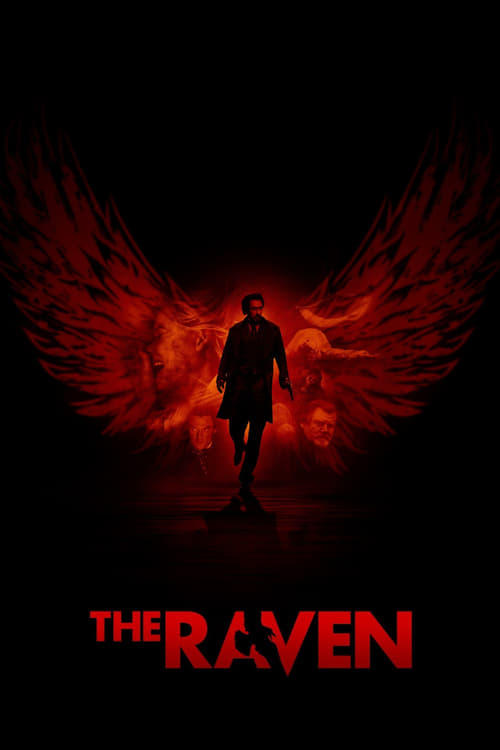
The Raven poster
6.6
Arcplot Score
Unverified

The Raven

2012111 minR
Director: James McTeigue

A fictionalized account of the last days of Edgar Allan Poe's life, in which the poet is in pursuit of a serial killer whose murders mirror those in the writer's stories.

Revenue$29.7M
Budget$26.0M
Profit
+3.7M
+14%

Working with a moderate budget of $26.0M, the film achieved a steady performer with $29.7M in global revenue (+14% profit margin).

TMDb6.3
Popularity6.1
Where to Watch
Apple TVGoogle Play MoviesYouTubeFandango At HomeAmazon Prime VideoAmazon Prime Video with AdsAmazon Video

Plot Structure

Story beats plotted across runtime

Act ISetupAct IIConfrontationAct IIIResolutionWorldbuilding3Resistance5Premise8Opposition10Crisis12Synthesis14124679111315
Color Timeline
Color timeline
Sound Timeline
Sound timeline
Threshold
Section
Plot Point

Narrative Arc

Emotional journey through the story's key moments

0-3-6
0m27m54m82m109m
Plot Point
Act Threshold
Emotional Arc

Story Circle

Blueprint 15-beat structure

Loading Story Circle...

Arcplot Score Breakdown

Structural Adherence: Flexible
8.3/10
3/10
2/10
Overall Score6.6/10

Weighted: Precision (70%) + Arc (15%) + Theme (15%)

The Raven (2012) exhibits deliberately positioned dramatic framework, characteristic of James McTeigue's storytelling approach. This structural analysis examines how the film's 13-point plot structure maps to proven narrative frameworks across 1 hour and 51 minutes. With an Arcplot score of 6.6, the film balances conventional beats with creative variation.

Structural Analysis

The Status Quo at 2 minutes (2% through the runtime) establishes Poe is a washed-up alcoholic writer in 1849 Baltimore, broke and desperate, trying to get free drinks at a tavern. His glory days are behind him and he's reduced to begging editors to publish his work.. The analysis reveals that this early placement immediately immerses viewers in the story world.

The inciting incident occurs at 13 minutes when A brutal double murder is discovered - a mother and daughter killed in a locked room. Detective Fields recognizes the crime scene matches Poe's story "The Murders in the Rue Morgue" exactly. A serial killer is using Poe's tales as blueprints for murder.. At 12% through the film, this Disruption aligns precisely with traditional story structure. This beat shifts the emotional landscape, launching the protagonist into the central conflict.

The First Threshold at 28 minutes marks the transition into Act II, occurring at 25% of the runtime. This demonstrates the protagonist's commitment to Emily Hamilton is kidnapped at a masquerade ball during a recreation of "The Masque of the Red Death." Poe finds her blood-stained clothing and a note from the killer: help solve the murders and write about it, or Emily dies. Poe fully commits to the hunt., moving from reaction to action.

The Collapse moment at 84 minutes (76% through) represents the emotional nadir. Here, All is lost: They realize the killer is literary rival Henry Maddox, but he commits suicide before revealing Emily's location. Captain Hamilton is dead. Emily has only hours of air left. Poe has no clues and no hope of finding her in time. The "death" of hope and the imminent literal death of Emily., illustrates the protagonist at their lowest point. This beat's placement in the final quarter sets up the climactic reversal.

The Synthesis at 89 minutes initiates the final act resolution at 80% of the runtime. The finale: Poe and Fields race to the location - a cemetery where Emily is buried alive in a coffin. They dig frantically and rescue her with seconds of air remaining. However, Poe has been poisoned by Maddox during their last encounter. Poe uses his final moments to ensure Emily lives and sees justice done., demonstrating the transformation achieved throughout the journey.

Emotional Journey

The Raven's emotional architecture traces a deliberate progression across 13 carefully calibrated beats.

Narrative Framework

This structural analysis employs a 15-point narrative structure framework that maps key story moments. By mapping The Raven against these established plot points, we can identify how James McTeigue utilizes or subverts traditional narrative conventions. The plot point approach reveals not only adherence to structural principles but also creative choices that distinguish The Raven within the crime genre.

James McTeigue's Structural Approach

Among the 4 James McTeigue films analyzed on Arcplot, the average structural score is 6.1, demonstrating varied approaches to story architecture. The Raven represents one of the director's most structurally precise works. For comparative analysis, explore the complete James McTeigue filmography.

Comparative Analysis

Additional crime films include The Bad Guys, Batman Forever and 12 Rounds. For more James McTeigue analyses, see V for Vendetta, Ninja Assassin and Breaking In.

Plot Points by Act

Act I

Setup
1

Status Quo

2 min1.9%-1 tone

Poe is a washed-up alcoholic writer in 1849 Baltimore, broke and desperate, trying to get free drinks at a tavern. His glory days are behind him and he's reduced to begging editors to publish his work.

2

Theme

6 min5.6%-1 tone

Detective Fields questions whether Poe's dark stories inspire real evil: "Your stories are morbid and distasteful. Did you ever think they might inspire someone to do terrible things?" This establishes the central question about art's responsibility.

3

Worldbuilding

2 min1.9%-1 tone

Introduction to 1849 Baltimore, Poe's failed literary career, his contentious relationship with newspaper editor Henry Maddox, and his secret romance with Emily Hamilton whose father Captain Hamilton disapproves of the match. Poe is established as brilliant but self-destructive.

4

Disruption

13 min12.2%-2 tone

A brutal double murder is discovered - a mother and daughter killed in a locked room. Detective Fields recognizes the crime scene matches Poe's story "The Murders in the Rue Morgue" exactly. A serial killer is using Poe's tales as blueprints for murder.

5

Resistance

13 min12.2%-2 tone

Fields brings Poe in for questioning as a suspect, then as a consultant. Poe initially resists involvement, but another murder occurs matching "The Mystery of Marie Rogêt." Poe debates whether to help, fearing his work has inspired evil. The killer is clearly targeting him personally.

Act II

Confrontation
6

First Threshold

28 min25.2%-3 tone

Emily Hamilton is kidnapped at a masquerade ball during a recreation of "The Masque of the Red Death." Poe finds her blood-stained clothing and a note from the killer: help solve the murders and write about it, or Emily dies. Poe fully commits to the hunt.

7

Mirror World

34 min30.8%-3 tone

Poe and Fields form an unlikely partnership. Fields represents order and justice; Poe represents chaos and creativity. Their developing mutual respect mirrors the theme - they need both logic and imagination to catch the killer. Fields becomes the voice of reason to Poe's passion.

8

Premise

28 min25.2%-3 tone

The "fun and games" of a literary detective story: Poe and Fields race to decipher clues hidden in Poe's own works, investigating suspects from Poe's past, following breadcrumbs through literary puzzles. Poe writes serial articles about the hunt as demanded, each revealing new clues. The game of cat and mouse with the killer.

10

Opposition

56 min50.5%-3 tone

Reynolds is revealed as a red herring. More murders occur following "The Pit and the Pendulum." Time is running out for Emily who is running out of air in her buried prison. Every lead turns cold. Captain Hamilton dies trying to help. Poe's own weaknesses - drinking, ego - hinder the investigation. The killer tightens the noose.

11

Collapse

84 min75.7%-4 tone

All is lost: They realize the killer is literary rival Henry Maddox, but he commits suicide before revealing Emily's location. Captain Hamilton is dead. Emily has only hours of air left. Poe has no clues and no hope of finding her in time. The "death" of hope and the imminent literal death of Emily.

12

Crisis

84 min75.7%-4 tone

Poe descends into despair and rage. He reviews everything - all the clues, all his stories, all Maddox's words. The dark night where Poe must face that his own creations have caused Emily's death. He contemplates that perhaps his critics were right about his work inspiring evil.

Act III

Resolution
14

Synthesis

89 min80.4%-4 tone

The finale: Poe and Fields race to the location - a cemetery where Emily is buried alive in a coffin. They dig frantically and rescue her with seconds of air remaining. However, Poe has been poisoned by Maddox during their last encounter. Poe uses his final moments to ensure Emily lives and sees justice done.

15

Transformation

109 min98.1%-5 tone

Poe dies on a park bench, found delirious days later (matching his real historical death). His final words cryptic. Emily survives to remember him. The closing image mirrors the opening: Poe alone, but transformed from a forgotten drunk into a tragic hero who sacrificed himself for love. His art was deadly, but so was his redemption.