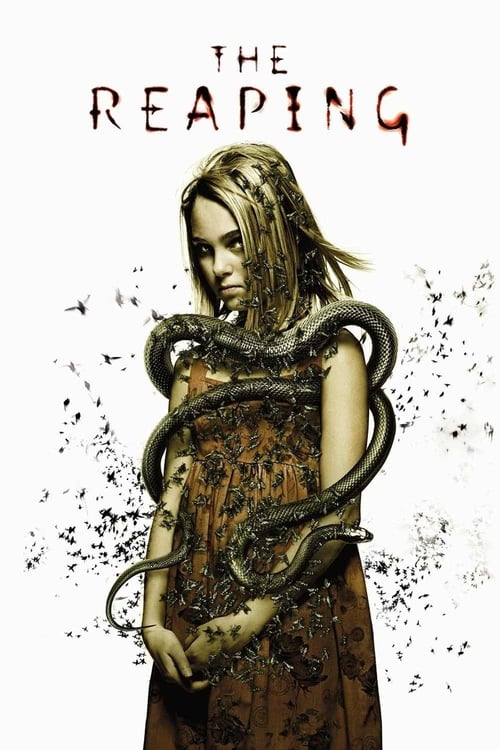
The Reaping
Katherine Morrissey, a former Christian missionary, lost her faith after the tragic deaths of her family. Now she applies her expertise to debunking religious phenomena. When a series of biblical plagues overrun a small town, Katherine arrives to prove that a supernatural force is not behind the occurrences, but soon finds that science cannot explain what is happening. Instead, she must regain her faith to combat the evil that waits in a Louisiana swamp.
Working with a moderate budget of $40.0M, the film achieved a modest success with $62.8M in global revenue (+57% profit margin).


Plot Structure
Story beats plotted across runtime


Narrative Arc
Emotional journey through the story's key moments
Story Circle
Blueprint 15-beat structure
Arcplot Score Breakdown
Weighted: Precision (70%) + Arc (15%) + Theme (15%)
The Reaping (2007) exhibits precise plot construction, characteristic of Stephen Hopkins's storytelling approach. This structural analysis examines how the film's 15-point plot structure maps to proven narrative frameworks across 1 hour and 39 minutes. With an Arcplot score of 7.6, the film showcases strong structural fundamentals.
Structural Analysis
The Status Quo at 1 minutes (1% through the runtime) establishes Katherine Winter lectures at a university, debunking a so-called miracle in Chile, establishing her role as a professional skeptic who has lost her religious faith.. Notably, this early placement immediately immerses viewers in the story world.
The inciting incident occurs at 13 minutes when Doug, a science teacher from Haven, Louisiana, arrives at Katherine's university asking her to investigate a river that has turned to blood—the first of what appears to be biblical plagues afflicting the town.. At 13% through the film, this Disruption is delayed, allowing extended setup of the story world. This beat shifts the emotional landscape, launching the protagonist into the central conflict.
The First Threshold at 26 minutes marks the transition into Act II, occurring at 26% of the runtime. This reveals the protagonist's commitment to Katherine and Ben arrive in Haven, Louisiana, crossing into the strange isolated town. Katherine commits to the investigation when she sees the blood-red river firsthand and cannot immediately explain it., moving from reaction to action.
At 50 minutes, the Midpoint arrives at 51% of the runtime—precisely centered, creating perfect narrative symmetry. Of particular interest, this crucial beat Katherine discovers evidence that her family's murder in Sudan may be connected to a larger conspiracy. Father Costigan contacts her with warnings about a satanic cult seeking to create a demonic child—the investigation takes a darker turn., fundamentally raising what's at risk. The emotional intensity shifts, dividing the narrative into clear before-and-after phases.
The Collapse moment at 75 minutes (75% through) represents the emotional nadir. Here, Ben is killed during the plague of the firstborn. Katherine discovers she is pregnant—and realizes the cult has been manipulating her all along. Doug is revealed to be part of the satanic conspiracy targeting her., indicates the protagonist at their lowest point. This beat's placement in the final quarter sets up the climactic reversal.
The Second Threshold at 81 minutes initiates the final act resolution at 82% of the runtime. Katherine realizes Loren is not evil but was sent by God to destroy the cult. She chooses to protect Loren and reclaims her faith, understanding the plagues were divine judgment on Haven's satanists, not Loren's doing., demonstrating the transformation achieved throughout the journey.
Emotional Journey
The Reaping's emotional architecture traces a deliberate progression across 15 carefully calibrated beats.
Narrative Framework
This structural analysis employs proven narrative structure principles that track dramatic progression. By mapping The Reaping against these established plot points, we can identify how Stephen Hopkins utilizes or subverts traditional narrative conventions. The plot point approach reveals not only adherence to structural principles but also creative choices that distinguish The Reaping within the horror genre.
Stephen Hopkins's Structural Approach
Among the 8 Stephen Hopkins films analyzed on Arcplot, the average structural score is 7.3, reflecting strong command of classical structure. The Reaping represents one of the director's most structurally precise works. For comparative analysis, explore the complete Stephen Hopkins filmography.
Comparative Analysis
Additional horror films include Thinner, A Nightmare on Elm Street and Mary Reilly. For more Stephen Hopkins analyses, see Blown Away, Judgment Night and A Nightmare on Elm Street: The Dream Child.
Plot Points by Act
Act I
SetupStatus Quo
Katherine Winter lectures at a university, debunking a so-called miracle in Chile, establishing her role as a professional skeptic who has lost her religious faith.
Theme
Katherine's colleague Ben remarks on the danger of losing one's faith completely, suggesting that some mysteries cannot be explained by science alone—foreshadowing Katherine's journey back to belief.
Worldbuilding
We learn Katherine is a former ordained minister whose husband and daughter were killed by villagers in Sudan, causing her to abandon faith. She now scientifically debunks religious phenomena with her assistant Ben.
Disruption
Doug, a science teacher from Haven, Louisiana, arrives at Katherine's university asking her to investigate a river that has turned to blood—the first of what appears to be biblical plagues afflicting the town.
Resistance
Katherine debates whether to investigate. Doug explains that townspeople blame a young girl named Loren McConnell for the plague after her brother died mysteriously. Katherine's scientific curiosity overcomes her reluctance.
Act II
ConfrontationFirst Threshold
Katherine and Ben arrive in Haven, Louisiana, crossing into the strange isolated town. Katherine commits to the investigation when she sees the blood-red river firsthand and cannot immediately explain it.
Mirror World
Katherine first encounters Loren McConnell in the swamp—the mysterious girl blamed for the plagues. Despite the town's fear, Katherine senses Loren may be a victim rather than the cause, mirroring Katherine's own lost innocence.
Premise
Katherine investigates the plagues as they escalate—frogs, lice, flies, livestock death—attempting scientific explanations while the townspeople's hysteria grows. She develops an attraction to Doug while uncovering Haven's dark secrets.
Midpoint
Katherine discovers evidence that her family's murder in Sudan may be connected to a larger conspiracy. Father Costigan contacts her with warnings about a satanic cult seeking to create a demonic child—the investigation takes a darker turn.
Opposition
More plagues strike Haven—boils, hail, locusts, darkness. Katherine begins having disturbing visions and nightmares. The townspeople form a mob to kill Loren. Katherine's rational worldview crumbles as events defy scientific explanation.
Collapse
Ben is killed during the plague of the firstborn. Katherine discovers she is pregnant—and realizes the cult has been manipulating her all along. Doug is revealed to be part of the satanic conspiracy targeting her.
Crisis
Katherine reels from Ben's death and the revelation of the cult's true plan. She realizes the townspeople of Haven are all cultists, and she has been chosen to bear the Antichrist. Her world collapses as she grasps the horrific truth.
Act III
ResolutionSecond Threshold
Katherine realizes Loren is not evil but was sent by God to destroy the cult. She chooses to protect Loren and reclaims her faith, understanding the plagues were divine judgment on Haven's satanists, not Loren's doing.
Synthesis
Katherine fights to save Loren from the cult. A massive fire—the final plague—consumes Haven, killing the cultists. Katherine protects Loren as divine judgment destroys the town. She terminates her pregnancy, rejecting the cult's plan.
Transformation
Katherine has regained her faith and adopted Loren, finding redemption and a new family. However, a final shot suggests another cultist child may be born elsewhere—the battle between good and evil continues.