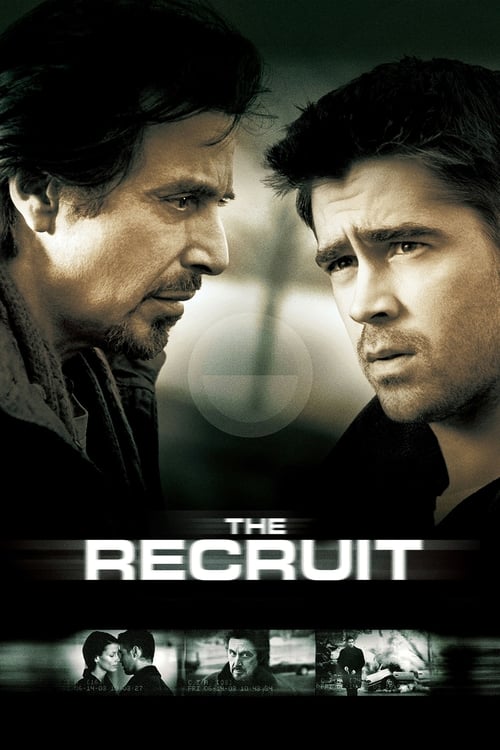
The Recruit
A brilliant CIA trainee must prove his worth at the Farm, the agency's secret training grounds, where he learns to watch his back and trust no one.
Despite a moderate budget of $46.0M, The Recruit became a financial success, earning $101.2M worldwide—a 120% return.


Plot Structure
Story beats plotted across runtime


Narrative Arc
Emotional journey through the story's key moments
Story Circle
Blueprint 15-beat structure
Arcplot Score Breakdown
Weighted: Precision (70%) + Arc (15%) + Theme (15%)
The Recruit (2003) showcases precise narrative design, characteristic of Roger Donaldson's storytelling approach. This structural analysis examines how the film's 15-point plot structure maps to proven narrative frameworks across 1 hour and 55 minutes. With an Arcplot score of 6.9, the film balances conventional beats with creative variation.
Structural Analysis
The Status Quo at 1 minutes (1% through the runtime) establishes James Clayton drinks at a bar with MIT friends, demonstrating his brilliance through computer algorithm discussions. Establishes him as cocky, intelligent, and searching for purpose after his father's mysterious death.. Structural examination shows that this early placement immediately immerses viewers in the story world.
The inciting incident occurs at 14 minutes when Burke officially recruits James to CIA training at The Farm, offering him the chance to learn the truth about his father's death. James is intrigued despite his skepticism.. At 12% through the film, this Disruption aligns precisely with traditional story structure. This beat shifts the emotional landscape, launching the protagonist into the central conflict.
The First Threshold at 28 minutes marks the transition into Act II, occurring at 25% of the runtime. This illustrates the protagonist's commitment to James makes the active choice to enter The Farm, the CIA training facility. He commits to becoming a NOC (non-official cover operative), crossing into the secret world of espionage., moving from reaction to action.
At 56 minutes, the Midpoint arrives at 49% of the runtime—precisely centered, creating perfect narrative symmetry. Structural examination shows that this crucial beat False defeat: James and Layla are both dismissed from The Farm for their relationship and performance issues. Stakes raise as James believes his CIA dream is over. In reality, this is the beginning of his real test., fundamentally raising what's at risk. The emotional intensity shifts, dividing the narrative into clear before-and-after phases.
The Collapse moment at 86 minutes (75% through) represents the emotional nadir. Here, James discovers Layla is innocent and he's been manipulated. The "whiff of death": his trust in Burke dies, his innocence dies. He realizes he's been the target all along—Burke is the real traitor trying to obtain ICE., demonstrates the protagonist at their lowest point. This beat's placement in the final quarter sets up the climactic reversal.
The Second Threshold at 92 minutes initiates the final act resolution at 80% of the runtime. James synthesizes his training with his new understanding: he can out-manipulate Burke using the very techniques he learned. He formulates a plan to expose Burke and protect Layla and himself., demonstrating the transformation achieved throughout the journey.
Emotional Journey
The Recruit's emotional architecture traces a deliberate progression across 15 carefully calibrated beats.
Narrative Framework
This structural analysis employs structural analysis methodology used to understand storytelling architecture. By mapping The Recruit against these established plot points, we can identify how Roger Donaldson utilizes or subverts traditional narrative conventions. The plot point approach reveals not only adherence to structural principles but also creative choices that distinguish The Recruit within the action genre.
Roger Donaldson's Structural Approach
Among the 13 Roger Donaldson films analyzed on Arcplot, the average structural score is 7.2, reflecting strong command of classical structure. The Recruit takes a more unconventional approach compared to the director's typical style. For comparative analysis, explore the complete Roger Donaldson filmography.
Comparative Analysis
Additional action films include The Bad Guys, Puss in Boots and Venom: The Last Dance. For more Roger Donaldson analyses, see Species, Dante's Peak and Seeking Justice.
Plot Points by Act
Act I
SetupStatus Quo
James Clayton drinks at a bar with MIT friends, demonstrating his brilliance through computer algorithm discussions. Establishes him as cocky, intelligent, and searching for purpose after his father's mysterious death.
Theme
Walter Burke tells James: "Nothing is what it seems." This thematic statement encapsulates the film's core premise about deception, surveillance, and the impossibility of trust in the intelligence world.
Worldbuilding
Burke recruits James at the bar, hinting at CIA involvement. James' background is revealed: dead father (possibly CIA), brilliant mind, need for meaning. Burke dangles information about James' father to hook him.
Disruption
Burke officially recruits James to CIA training at The Farm, offering him the chance to learn the truth about his father's death. James is intrigued despite his skepticism.
Resistance
James debates whether to trust Burke and join the CIA. He researches, questions, and ultimately begins the application process. Burke acts as mentor/recruiter, preparing James for the commitment required.
Act II
ConfrontationFirst Threshold
James makes the active choice to enter The Farm, the CIA training facility. He commits to becoming a NOC (non-official cover operative), crossing into the secret world of espionage.
Mirror World
James meets Layla Moore, a fellow trainee who becomes his romantic interest. She represents the human connection and vulnerability that contrasts with the CIA's culture of deception. Their relationship will test the "trust no one" doctrine.
Premise
Training sequences at The Farm: surveillance exercises, lie detection, recruitment scenarios, psychological manipulation. James excels while falling for Layla. Burke tests and mentors him. "Fun and games" of spy training.
Midpoint
False defeat: James and Layla are both dismissed from The Farm for their relationship and performance issues. Stakes raise as James believes his CIA dream is over. In reality, this is the beginning of his real test.
Opposition
Burke secretly recruits James for a real mission: Layla is suspected of being a mole with a program called ICE that could expose CIA assets. James must get close to her, find the program. Pressure intensifies as James spies on the woman he loves.
Collapse
James discovers Layla is innocent and he's been manipulated. The "whiff of death": his trust in Burke dies, his innocence dies. He realizes he's been the target all along—Burke is the real traitor trying to obtain ICE.
Crisis
James processes the betrayal and must decide how to act. Dark night as he realizes everything—his recruitment, training, the mission—was orchestrated to manipulate him. He's alone with this knowledge.
Act III
ResolutionSecond Threshold
James synthesizes his training with his new understanding: he can out-manipulate Burke using the very techniques he learned. He formulates a plan to expose Burke and protect Layla and himself.
Synthesis
Final confrontation: James turns the tables on Burke, revealing he knows the truth. A tense standoff where James must prove Burke's guilt while Burke tries to eliminate him. James uses his training to survive and expose the mole.
Transformation
James stands alone, having won but lost his innocence. He's become what he feared: a paranoid operative who can never fully trust again. The final image shows him isolated, transformed from naive recruit to hardened spy. Burke's lesson—"nothing is what it seems"—is complete.