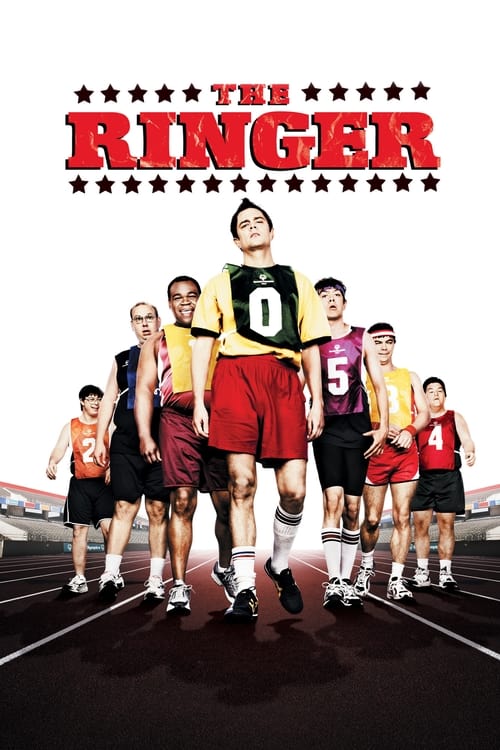
The Ringer
Pressured by a greedy uncle and a pile of debt, lovable loser Steve Barker resorts to an unthinkable, contemptible, just-crazy-enough-to-work scheme. He pretends to be mentally challenged to rig the upcoming Special Olympics and bring home the gold. But when Steve's fellow competitors get wise to the con, they inspire him to rise to the greatest challenge of all: becoming a better person.
The film earned $40.4M at the global box office.


Plot Structure
Story beats plotted across runtime


Narrative Arc
Emotional journey through the story's key moments
Story Circle
Blueprint 15-beat structure
Arcplot Score Breakdown
Weighted: Precision (70%) + Arc (15%) + Theme (15%)
The Ringer (2005) exhibits carefully calibrated narrative design, characteristic of Barry W. Blaustein's storytelling approach. This structural analysis examines how the film's 15-point plot structure maps to proven narrative frameworks across 1 hour and 34 minutes. With an Arcplot score of 6.8, the film balances conventional beats with creative variation.
Structural Analysis
The Status Quo at 1 minutes (1% through the runtime) establishes Steve Barker is a mild-mannered office worker at a company where he's overlooked for promotion despite his competence. He's shown as a nice guy who lacks confidence and assertiveness.. Notably, this early placement immediately immerses viewers in the story world.
The inciting incident occurs at 11 minutes when Stavi loses his fingers in a workplace accident while doing a task Steve assigned him. Without insurance coverage, Steve feels responsible and must find $28,000 for reconstructive surgery.. At 12% through the film, this Disruption aligns precisely with traditional story structure. This beat shifts the emotional landscape, launching the protagonist into the central conflict.
The First Threshold at 24 minutes marks the transition into Act II, occurring at 25% of the runtime. This demonstrates the protagonist's commitment to Steve makes the choice to go through with the scheme, adopting the persona of "Jeffy" and registering for the Special Olympics. He crosses an ethical line he can't easily uncross., moving from reaction to action.
At 47 minutes, the Midpoint arrives at 50% of the runtime—precisely centered, creating perfect narrative symmetry. Of particular interest, this crucial beat False victory: Steve is succeeding at his plan, growing closer to Lynn, and genuinely enjoying his friendships with the athletes. He begins to question whether he can go through with throwing the race., fundamentally raising what's at risk. The emotional intensity shifts, dividing the narrative into clear before-and-after phases.
The Collapse moment at 71 minutes (75% through) represents the emotional nadir. Here, Steve's true identity is exposed to Lynn. She is devastated by his betrayal, and the athletes' trust appears shattered. Steve has lost everything he came to value through his deception., demonstrates the protagonist at their lowest point. This beat's placement in the final quarter sets up the climactic reversal.
The Second Threshold at 75 minutes initiates the final act resolution at 80% of the runtime. Steve decides to compete honestly in the final race, not to throw it or to win unfairly, but to give his genuine best effort alongside his friends who have taught him about true integrity., demonstrating the transformation achieved throughout the journey.
Emotional Journey
The Ringer's emotional architecture traces a deliberate progression across 15 carefully calibrated beats.
Narrative Framework
This structural analysis employs systematic plot point analysis that identifies crucial turning points. By mapping The Ringer against these established plot points, we can identify how Barry W. Blaustein utilizes or subverts traditional narrative conventions. The plot point approach reveals not only adherence to structural principles but also creative choices that distinguish The Ringer within the comedy genre.
Comparative Analysis
Additional comedy films include The Bad Guys, Ella Enchanted and The Evening Star.
Plot Points by Act
Act I
SetupStatus Quo
Steve Barker is a mild-mannered office worker at a company where he's overlooked for promotion despite his competence. He's shown as a nice guy who lacks confidence and assertiveness.
Theme
Steve's Uncle Gary tells him that sometimes you have to take risks and be willing to do whatever it takes to get ahead in life, setting up the moral question of how far one should go.
Worldbuilding
Steve's ordinary world is established: his dead-end job, his kind nature toward his gardener Stavi, his scheming Uncle Gary who is deep in gambling debt, and his inability to stand up for himself.
Disruption
Stavi loses his fingers in a workplace accident while doing a task Steve assigned him. Without insurance coverage, Steve feels responsible and must find $28,000 for reconstructive surgery.
Resistance
Uncle Gary proposes his scheme: Steve should pretend to be intellectually disabled, enter the Special Olympics, and throw the race so Gary can win his bets. Steve reluctantly debates the morally questionable plan.
Act II
ConfrontationFirst Threshold
Steve makes the choice to go through with the scheme, adopting the persona of "Jeffy" and registering for the Special Olympics. He crosses an ethical line he can't easily uncross.
Mirror World
Steve meets Lynn, a kind volunteer coordinator, and begins interacting with the actual Special Olympics athletes who immediately see through his act but decide to help him anyway.
Premise
The "fun and games" of the premise play out as Steve trains with the athletes, bonds with them, develops feelings for Lynn, and discovers the athletes are far more capable and perceptive than he assumed.
Midpoint
False victory: Steve is succeeding at his plan, growing closer to Lynn, and genuinely enjoying his friendships with the athletes. He begins to question whether he can go through with throwing the race.
Opposition
The pressure mounts: Uncle Gary reminds Steve of his obligation, the defending champion Jimmy becomes suspicious, and Steve's growing attachment to Lynn and the athletes makes the deception increasingly painful.
Collapse
Steve's true identity is exposed to Lynn. She is devastated by his betrayal, and the athletes' trust appears shattered. Steve has lost everything he came to value through his deception.
Crisis
Steve wallows in guilt and shame. He must confront who he really is and what he values. The athletes surprise him by offering forgiveness and revealing they knew all along.
Act III
ResolutionSecond Threshold
Steve decides to compete honestly in the final race, not to throw it or to win unfairly, but to give his genuine best effort alongside his friends who have taught him about true integrity.
Synthesis
The final race unfolds. Steve competes fairly, Jimmy wins legitimately, and Steve loses both the race and Uncle Gary's scheme. But he wins back Lynn's respect and finds redemption through honesty.
Transformation
Steve, now transformed, is shown having found honest work, maintained friendships with the athletes, and begun a real relationship with Lynn. He's become a man of integrity rather than a pushover.