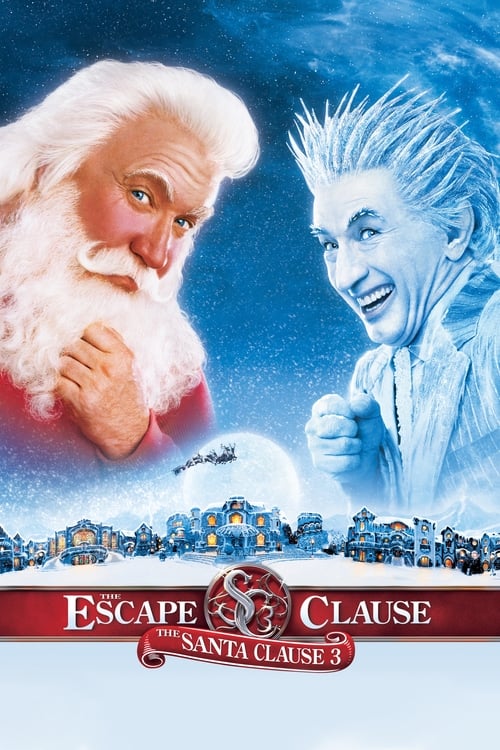
The Santa Clause 3: The Escape Clause
Now that Santa and Mrs. Claus have the North Pole running smoothly, the Counsel of Legendary Figures has called an emergency meeting on Christmas Eve! The evil Jack Frost has been making trouble, looking to take over the holiday! So he launches a plan to sabotage the toy factory and compel Scott to invoke the little-known Escape Clause and wish he'd never become Santa.
Despite its tight budget of $12.0M, The Santa Clause 3: The Escape Clause became a box office phenomenon, earning $84.5M worldwide—a remarkable 604% return. The film's unconventional structure engaged audiences, proving that strong storytelling can transcend budget limitations.
4 wins & 9 nominations


Plot Structure
Story beats plotted across runtime


Narrative Arc
Emotional journey through the story's key moments
Story Circle
Blueprint 15-beat structure
Arcplot Score Breakdown
Weighted: Precision (70%) + Arc (15%) + Theme (15%)
The Santa Clause 3: The Escape Clause (2006) exhibits carefully calibrated plot construction, characteristic of Michael Lembeck's storytelling approach. This structural analysis examines how the film's 15-point plot structure maps to proven narrative frameworks across 1 hour and 32 minutes. With an Arcplot score of 6.8, the film balances conventional beats with creative variation.
Structural Analysis
The Status Quo at 1 minutes (1% through the runtime) establishes Scott Calvin/Santa Claus is shown living his dual life at the North Pole with his pregnant wife Carol, managing his Santa duties while preparing for the arrival of his baby and the in-laws' visit.. The analysis reveals that this early placement immediately immerses viewers in the story world.
The inciting incident occurs at 12 minutes when Jack Frost arrives at the North Pole, bitter about being overlooked and unappreciated. His presence introduces conflict and tension, as he clearly has an agenda and resentment toward Santa's prominence.. At 13% through the film, this Disruption is delayed, allowing extended setup of the story world. This beat shifts the emotional landscape, launching the protagonist into the central conflict.
The First Threshold at 22 minutes marks the transition into Act II, occurring at 24% of the runtime. This demonstrates the protagonist's commitment to Jack Frost tricks Scott into invoking the Escape Clause by making him believe his family would be better off without him as Santa. Scott touches the snow globe, activating the clause and erasing his time as Santa Claus., moving from reaction to action.
At 47 minutes, the Midpoint arrives at 51% of the runtime—precisely centered, creating perfect narrative symmetry. Of particular interest, this crucial beat Scott realizes the full extent of what he's lost - his marriage to Carol, his relationship with Charlie, his purpose as Santa - while Jack Frost's commercialized Christmas grows increasingly destructive. The stakes crystallize: Scott must become Santa again or lose everything permanently., fundamentally raising what's at risk. The emotional intensity shifts, dividing the narrative into clear before-and-after phases.
The Collapse moment at 68 minutes (74% through) represents the emotional nadir. Here, Scott hits his lowest point as Jack Frost's Christmas nightmare fully manifests. The commercialization reaches its peak, the true spirit of Christmas is nearly dead, and Scott seems powerless to stop it or restore his former life., demonstrates the protagonist at their lowest point. This beat's placement in the final quarter sets up the climactic reversal.
The Second Threshold at 72 minutes initiates the final act resolution at 78% of the runtime. Scott gains the knowledge and support needed to challenge Jack Frost. He realizes that the love of his family and belief in the true meaning of Christmas give him the power to reclaim his role as Santa and undo the Escape Clause., demonstrating the transformation achieved throughout the journey.
Emotional Journey
The Santa Clause 3: The Escape Clause's emotional architecture traces a deliberate progression across 15 carefully calibrated beats.
Narrative Framework
This structural analysis employs proven narrative structure principles that track dramatic progression. By mapping The Santa Clause 3: The Escape Clause against these established plot points, we can identify how Michael Lembeck utilizes or subverts traditional narrative conventions. The plot point approach reveals not only adherence to structural principles but also creative choices that distinguish The Santa Clause 3: The Escape Clause within the comedy genre.
Michael Lembeck's Structural Approach
Among the 3 Michael Lembeck films analyzed on Arcplot, the average structural score is 7.4, reflecting strong command of classical structure. The Santa Clause 3: The Escape Clause takes a more unconventional approach compared to the director's typical style. For comparative analysis, explore the complete Michael Lembeck filmography.
Comparative Analysis
Additional comedy films include The Bad Guys, Ella Enchanted and The Evening Star. For more Michael Lembeck analyses, see Tooth Fairy, The Santa Clause 2.
Plot Points by Act
Act I
SetupStatus Quo
Scott Calvin/Santa Claus is shown living his dual life at the North Pole with his pregnant wife Carol, managing his Santa duties while preparing for the arrival of his baby and the in-laws' visit.
Theme
Curtis mentions the importance of family and keeping loved ones close during the holidays, foreshadowing Scott's struggle to balance his Santa responsibilities with his need to be present for his family.
Worldbuilding
Establishment of the North Pole operations, Scott's relationships with Carol, Curtis, Bernard, and the elves, the impending birth, and the strict secrecy of the North Pole. Carol's parents Sylvia and Bud are introduced as they arrive, needing to be deceived about the true nature of the North Pole.
Disruption
Jack Frost arrives at the North Pole, bitter about being overlooked and unappreciated. His presence introduces conflict and tension, as he clearly has an agenda and resentment toward Santa's prominence.
Resistance
Jack Frost ingratiates himself with the family while secretly plotting. Scott struggles to maintain the Canada charade with Carol's parents. Jack manipulates situations and discovers the Escape Clause in the Hall of Snow Globes, learning he can undo Scott's Santa status.
Act II
ConfrontationFirst Threshold
Jack Frost tricks Scott into invoking the Escape Clause by making him believe his family would be better off without him as Santa. Scott touches the snow globe, activating the clause and erasing his time as Santa Claus.
Mirror World
Scott finds himself back in 1994 on the night he became Santa, but this time he doesn't put on the suit. Jack Frost takes the suit instead, becoming the new Santa and creating an alternate reality where Scott never was Santa.
Premise
Scott experiences the alternate reality where he's a failed toy executive, divorced from Laura, estranged from Charlie, and never met Carol. Meanwhile, Jack Frost turns the North Pole into a gaudy tourist attraction and corrupts Christmas. Scott must navigate this wrong world and figure out how to fix what he's lost.
Midpoint
Scott realizes the full extent of what he's lost - his marriage to Carol, his relationship with Charlie, his purpose as Santa - while Jack Frost's commercialized Christmas grows increasingly destructive. The stakes crystallize: Scott must become Santa again or lose everything permanently.
Opposition
Scott attempts to convince others of the truth and find a way back to the North Pole. Jack Frost's version of Christmas becomes a disaster with unsafe toys and corrupted holiday spirit. Scott struggles against disbelief from his family and the ticking clock as Christmas approaches with the wrong Santa.
Collapse
Scott hits his lowest point as Jack Frost's Christmas nightmare fully manifests. The commercialization reaches its peak, the true spirit of Christmas is nearly dead, and Scott seems powerless to stop it or restore his former life.
Crisis
Scott faces his darkest moment of doubt and despair. He must confront what being Santa truly means and find the strength to fight for his family and Christmas itself, even when everything seems lost.
Act III
ResolutionSecond Threshold
Scott gains the knowledge and support needed to challenge Jack Frost. He realizes that the love of his family and belief in the true meaning of Christmas give him the power to reclaim his role as Santa and undo the Escape Clause.
Synthesis
Scott confronts Jack Frost at the North Pole, exposing his schemes and making Jack invoke the Escape Clause himself, which restores the proper timeline. Scott reclaims his role as Santa, the true spirit of Christmas is restored, and the North Pole returns to normal. Carol gives birth to their baby.
Transformation
Scott is shown fully embracing both his role as Santa and his role as a husband and father. He has learned to appreciate what he has and no longer takes his family or position for granted. Christmas is celebrated properly with his complete family together.