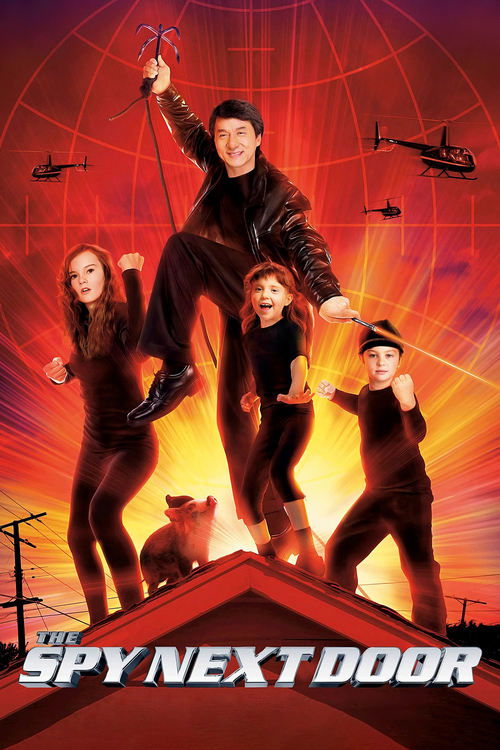
The Spy Next Door
Former CIA spy Bob Ho takes on his toughest assignment to date: looking after his girlfriend's three kids, who haven't exactly warmed to their mom's beau. And when one of the youngsters accidentally downloads a top-secret formula, Bob's longtime nemesis, a Russian terrorist, pays a visit to the family.
Despite a respectable budget of $28.0M, The Spy Next Door became a financial success, earning $66.2M worldwide—a 136% return.


Plot Structure
Story beats plotted across runtime


Narrative Arc
Emotional journey through the story's key moments
Story Circle
Blueprint 15-beat structure
Arcplot Score Breakdown
Weighted: Precision (70%) + Arc (15%) + Theme (15%)
The Spy Next Door (2010) reveals strategically placed story structure, characteristic of Brian Levant's storytelling approach. This structural analysis examines how the film's 15-point plot structure maps to proven narrative frameworks across 1 hour and 34 minutes. With an Arcplot score of 6.7, the film balances conventional beats with creative variation.
Characters
Cast & narrative archetypes

Bob Ho
Gillian
Farren
Ian
Nora
Poldark
Colton James
Glaze
Main Cast & Characters
Bob Ho
Played by Jackie Chan
A Chinese CIA operative working undercover as a pen importer who must protect his girlfriend's children when a Russian terrorist targets them.
Gillian
Played by Amber Valletta
Bob's girlfriend and single mother of three children who is unaware of his secret life as a spy.
Farren
Played by Madeline Carroll
Gillian's rebellious teenage stepdaughter who initially resents Bob but comes to respect him.
Ian
Played by Will Shadley
Gillian's young son who is nerdy, curious, and accidentally downloads the secret Russian oil file.
Nora
Played by Alina Foley
Gillian's youngest daughter, a precocious little girl who eventually warms up to Bob.
Poldark
Played by Magnus Scheving
A ruthless Russian terrorist who escapes custody and seeks to recover a stolen file containing plans to control the world's oil supply.
Colton James
Played by Billy Ray Cyrus
Bob's CIA partner and friend who provides backup and intel during the mission.
Glaze
Played by George Lopez
Bob's CIA colleague and partner who assists in tracking down Poldark.
Structural Analysis
The Status Quo at 1 minutes (1% through the runtime) establishes Bob Ho successfully completes a spy mission, living his double life as a CIA operative while secretly dating his neighbor Gillian and trying to bond with her three kids who dislike him.. Notably, this early placement immediately immerses viewers in the story world.
The inciting incident occurs at 11 minutes when Gillian must leave town for a family emergency, and Bob volunteers to watch the kids alone for the weekend - his chance to prove himself, but he's terrified since the kids hate him.. At 12% through the film, this Disruption aligns precisely with traditional story structure. This beat shifts the emotional landscape, launching the protagonist into the central conflict.
The First Threshold at 24 minutes marks the transition into Act II, occurring at 26% of the runtime. This illustrates the protagonist's commitment to Russian terrorists led by Poldark track the downloaded file to Bob's house and begin their pursuit. Bob realizes he must protect the kids while keeping his spy life secret, fully entering the world of balancing both identities., moving from reaction to action.
At 47 minutes, the Midpoint arrives at 50% of the runtime—precisely centered, creating perfect narrative symmetry. Notably, this crucial beat The kids discover Bob's secret spy identity when they find his hidden equipment. False defeat: they feel betrayed by his lies, and the terrorists close in on their location, raising the stakes significantly., fundamentally raising what's at risk. The emotional intensity shifts, dividing the narrative into clear before-and-after phases.
The Collapse moment at 71 minutes (75% through) represents the emotional nadir. Here, The terrorists kidnap the kids. Bob's worst fear is realized - his spy life has endangered the children he's come to love. He feels he's failed both as a spy and as a father figure., illustrates the protagonist at their lowest point. This beat's placement in the final quarter sets up the climactic reversal.
The Second Threshold at 75 minutes initiates the final act resolution at 80% of the runtime. Bob gets intelligence on the kids' location and makes the choice to go after them alone. He synthesizes his spy skills with his newfound parental love - he'll be both the protector and the father they need., demonstrating the transformation achieved throughout the journey.
Emotional Journey
The Spy Next Door's emotional architecture traces a deliberate progression across 15 carefully calibrated beats.
Narrative Framework
This structural analysis employs proven narrative structure principles that track dramatic progression. By mapping The Spy Next Door against these established plot points, we can identify how Brian Levant utilizes or subverts traditional narrative conventions. The plot point approach reveals not only adherence to structural principles but also creative choices that distinguish The Spy Next Door within the action genre.
Brian Levant's Structural Approach
Among the 9 Brian Levant films analyzed on Arcplot, the average structural score is 7.2, reflecting strong command of classical structure. The Spy Next Door takes a more unconventional approach compared to the director's typical style. For comparative analysis, explore the complete Brian Levant filmography.
Comparative Analysis
Additional action films include The Bad Guys, Puss in Boots and Venom: The Last Dance. For more Brian Levant analyses, see The Flintstones, Problem Child 2 and The Flintstones in Viva Rock Vegas.
Plot Points by Act
Act I
SetupStatus Quo
Bob Ho successfully completes a spy mission, living his double life as a CIA operative while secretly dating his neighbor Gillian and trying to bond with her three kids who dislike him.
Theme
Gillian tells Bob that being a parent isn't about being perfect or having all the answers - it's about showing up and being there, even when it's hard.
Worldbuilding
Bob's world as a spy and his attempts to integrate into Gillian's family are established. Her kids - rebellious Ian, sneaky Farren, and young Nora - all reject Bob. He decides to retire from espionage to focus on family life.
Disruption
Gillian must leave town for a family emergency, and Bob volunteers to watch the kids alone for the weekend - his chance to prove himself, but he's terrified since the kids hate him.
Resistance
Bob awkwardly tries to connect with the kids using his spy skills and gadgets. Ian downloads a secret file onto Bob's computer by mistake, unknowingly alerting dangerous terrorists to Bob's location. Bob debates whether to reveal his spy identity.
Act II
ConfrontationFirst Threshold
Russian terrorists led by Poldark track the downloaded file to Bob's house and begin their pursuit. Bob realizes he must protect the kids while keeping his spy life secret, fully entering the world of balancing both identities.
Mirror World
Bob begins bonding with the kids through his unique "parenting" methods - using spy tactics to discipline Ian, helping Farren with her problems, and protecting Nora. They start to see him differently as he shows up for them.
Premise
The fun spy-comedy premise plays out: Bob juggles protecting the kids from terrorists, keeping his identity secret, handling domestic chaos, and winning the kids over. Action sequences blend with family sitcom moments.
Midpoint
The kids discover Bob's secret spy identity when they find his hidden equipment. False defeat: they feel betrayed by his lies, and the terrorists close in on their location, raising the stakes significantly.
Opposition
The terrorists intensify their hunt. Bob's CIA colleagues want to extract him and put the kids in protective custody. The kids are angry about the deception. Bob must fight enemies on all sides while trying to maintain the trust he's built.
Collapse
The terrorists kidnap the kids. Bob's worst fear is realized - his spy life has endangered the children he's come to love. He feels he's failed both as a spy and as a father figure.
Crisis
Bob faces his dark night alone, believing he's lost the kids and Gillian forever. He processes his failure and realizes that real family means fighting for those you love, even when everything seems lost.
Act III
ResolutionSecond Threshold
Bob gets intelligence on the kids' location and makes the choice to go after them alone. He synthesizes his spy skills with his newfound parental love - he'll be both the protector and the father they need.
Synthesis
Bob infiltrates the terrorist base and rescues the kids. The kids use lessons Bob taught them to help in the escape. Together as a family unit, they defeat Poldark and his men. Bob proves he can protect them and be there for them.
Transformation
Bob is fully accepted into the family. The kids call him and embrace him as a father figure. Gillian returns to find them bonded. Bob has transformed from an isolated spy into a family man who showed up when it mattered most.