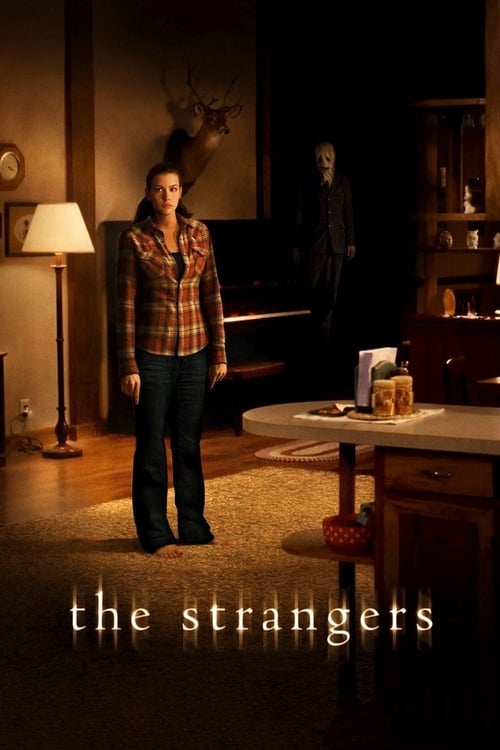
The Strangers
After a 4 a.m. knock at the door and haunting voices, Kristen McKay and James Hoyt’s remote getaway becomes a psychological night of terror as three masked strangers invade. Now they must go far beyond what they thought themselves capable of if they hope to survive.
Despite its limited budget of $9.0M, The Strangers became a box office phenomenon, earning $83.1M worldwide—a remarkable 823% return. The film's distinctive approach found its audience, confirming that strong storytelling can transcend budget limitations.
1 win & 15 nominations


Plot Structure
Story beats plotted across runtime


Narrative Arc
Emotional journey through the story's key moments
Story Circle
Blueprint 15-beat structure
Arcplot Score Breakdown
Weighted: Precision (70%) + Arc (15%) + Theme (15%)
The Strangers (2008) exhibits deliberately positioned narrative architecture, characteristic of Bryan Bertino's storytelling approach. This structural analysis examines how the film's 15-point plot structure maps to proven narrative frameworks across 1 hour and 26 minutes. With an Arcplot score of 7.5, the film showcases strong structural fundamentals.
Characters
Cast & narrative archetypes

Kristen McKay
James Hoyt
Dollface
Pin-Up Girl
Man in the Mask
Main Cast & Characters
Kristen McKay
Played by Liv Tyler
A young woman reeling from rejecting her boyfriend's marriage proposal, who must fight for survival when masked strangers terrorize their isolated vacation home.
James Hoyt
Played by Scott Speedman
Kristen's devoted boyfriend whose marriage proposal was rejected, leaving him emotionally vulnerable before the home invasion begins.
Dollface
Played by Gemma Ward
One of three masked strangers who terrorizes the couple, wearing a porcelain doll mask and speaking in an eerily calm voice.
Pin-Up Girl
Played by Laura Margolis
A masked stranger wearing a pin-up girl mask who silently stalks and torments the victims throughout the night.
Man in the Mask
Played by Kip Weeks
The male stranger wearing a burlap sack mask who leads the home invasion with methodical cruelty and no discernible motive.
Structural Analysis
The Status Quo at 1 minutes (1% through the runtime) establishes James and Kristen arrive at isolated family vacation home after a wedding, their relationship clearly strained. Opening 911 call frames the horror to come.. Of particular interest, this early placement immediately immerses viewers in the story world.
The inciting incident occurs at 10 minutes when First knock at 4 AM. A young woman asks for "Tamara." The disruption of their fragile peace begins. The old world of relationship drama ends; survival begins.. At 12% through the film, this Disruption aligns precisely with traditional story structure. This beat shifts the emotional landscape, launching the protagonist into the central conflict.
The First Threshold at 21 minutes marks the transition into Act II, occurring at 24% of the runtime. This indicates the protagonist's commitment to James leaves Kristen alone to get his friend Mike. Kristen actively chooses to stay and lock herself in, entering the nightmare alone. The terror becomes real and unavoidable., moving from reaction to action.
At 42 minutes, the Midpoint arrives at 49% of the runtime—precisely centered, creating perfect narrative symmetry. Significantly, this crucial beat The strangers fully invade the house. Masks revealed. The couple realizes this is orchestrated, methodical terror. False hope of safety in their home is shattered. Stakes raised., fundamentally raising what's at risk. The emotional intensity shifts, dividing the narrative into clear before-and-after phases.
The Collapse moment at 63 minutes (73% through) represents the emotional nadir. Here, James accidentally shoots and kills his friend Mike, thinking he's an intruder. Whiff of death - an innocent dies, hope dies, James's guilt crushes him. Their darkest moment., shows the protagonist at their lowest point. This beat's placement in the final quarter sets up the climactic reversal.
The Second Threshold at 68 minutes initiates the final act resolution at 79% of the runtime. Kristen asks "Why us?" Dollface answers: "Because you were home." The revelation that there is no reason, no escape, no meaning. They accept their fate., demonstrating the transformation achieved throughout the journey.
Emotional Journey
The Strangers's emotional architecture traces a deliberate progression across 15 carefully calibrated beats.
Narrative Framework
This structural analysis employs systematic plot point analysis that identifies crucial turning points. By mapping The Strangers against these established plot points, we can identify how Bryan Bertino utilizes or subverts traditional narrative conventions. The plot point approach reveals not only adherence to structural principles but also creative choices that distinguish The Strangers within the horror genre.
Comparative Analysis
Additional horror films include Thinner, A Nightmare on Elm Street and Mary Reilly.
Plot Points by Act
Act I
SetupStatus Quo
James and Kristen arrive at isolated family vacation home after a wedding, their relationship clearly strained. Opening 911 call frames the horror to come.
Theme
Kristen to James about the failed proposal: "It'll be easier in the morning." Theme of false security and the illusion that things will get better.
Worldbuilding
Establish the couple's broken relationship after James's rejected marriage proposal. Show the isolated house, their vulnerability, awkward tension. James leaves briefly for cigarettes.
Disruption
First knock at 4 AM. A young woman asks for "Tamara." The disruption of their fragile peace begins. The old world of relationship drama ends; survival begins.
Resistance
Escalating strange events: repeated knocking, phone calls, moved objects. Kristen and James debate what's happening. Is it kids? Pranks? They resist accepting the danger.
Act II
ConfrontationFirst Threshold
James leaves Kristen alone to get his friend Mike. Kristen actively chooses to stay and lock herself in, entering the nightmare alone. The terror becomes real and unavoidable.
Mirror World
Kristen sees Dollface standing silently in the house. The "mirror" of civilization vs. savagery. What should be safe (home) reflects only menace.
Premise
Cat and mouse terror. The strangers toy with Kristen. She tries to escape, hide, survive. James returns. They barricade themselves, try the phone, attempt to understand their attackers.
Midpoint
The strangers fully invade the house. Masks revealed. The couple realizes this is orchestrated, methodical terror. False hope of safety in their home is shattered. Stakes raised.
Opposition
The strangers control everything. They sabotage escape attempts, destroy the phone, cut the power, terrorize relentlessly. James and Kristen's attempts to fight back fail repeatedly.
Collapse
James accidentally shoots and kills his friend Mike, thinking he's an intruder. Whiff of death - an innocent dies, hope dies, James's guilt crushes him. Their darkest moment.
Crisis
James and Kristen are separated, beaten down emotionally and physically. They process the horror of Mike's death while the strangers close in for the finale.
Act III
ResolutionSecond Threshold
Kristen asks "Why us?" Dollface answers: "Because you were home." The revelation that there is no reason, no escape, no meaning. They accept their fate.
Synthesis
The strangers bind and unmask themselves to their victims. Methodical final ritual. James and Kristen are stabbed. The strangers leave. Two boys discover the scene, one stranger takes off her mask.
Transformation
Kristen's bloody hand moves slightly in the back of the truck - she may still be alive, but transformed into a victim of senseless evil. The final image of broken innocence.