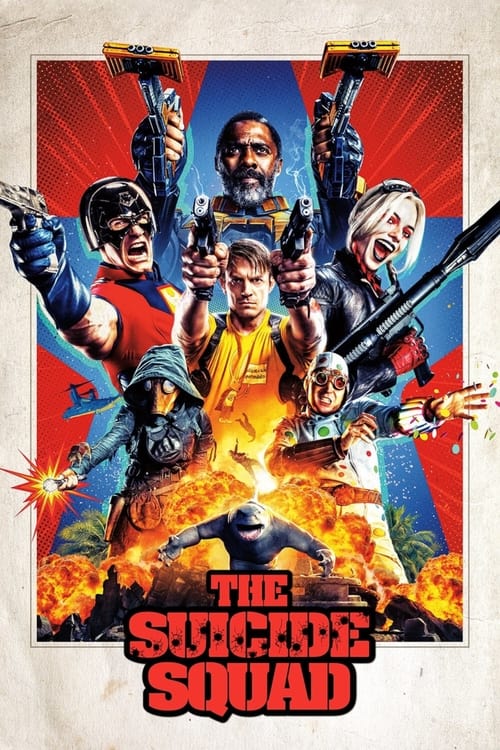
The Suicide Squad
Supervillains Harley Quinn, Bloodsport, Peacemaker and a collection of nutty cons at Belle Reve prison join the super-secret, super-shady Task Force X as they are dropped off at the remote, enemy-infused island of Corto Maltese.
The film underperformed commercially against its blockbuster budget of $185.0M, earning $168.7M globally (-9% loss).


Plot Structure
Story beats plotted across runtime


Narrative Arc
Emotional journey through the story's key moments
Story Circle
Blueprint 15-beat structure
Arcplot Score Breakdown
Weighted: Precision (70%) + Arc (15%) + Theme (15%)
The Suicide Squad (2021) exhibits deliberately positioned plot construction, characteristic of James Gunn's storytelling approach. This structural analysis examines how the film's 15-point plot structure maps to proven narrative frameworks across 2 hours and 12 minutes. With an Arcplot score of 6.4, the film takes an unconventional approach to traditional narrative frameworks.
Characters
Cast & narrative archetypes

Robert DuBois / Bloodsport
Harley Quinn
Christopher Smith / Peacemaker
Cleo Cazo / Ratcatcher 2
Abner Krill / Polka-Dot Man
Nanaue / King Shark
Rick Flag
Amanda Waller
The Thinker
Sol Soria
Main Cast & Characters
Robert DuBois / Bloodsport
Played by Idris Elba
An elite mercenary and marksman imprisoned for shooting Superman with a kryptonite bullet, coerced into Task Force X to save his daughter from prison.
Harley Quinn
Played by Margot Robbie
The unpredictable former psychiatrist and Joker's ex-girlfriend, a skilled fighter with a chaotic approach to violence and romance.
Christopher Smith / Peacemaker
Played by John Cena
A jingoistic vigilante who believes in peace at any cost, no matter how many people he has to kill to achieve it.
Cleo Cazo / Ratcatcher 2
Played by Daniela Melchior
A gentle-souled young woman who inherited her father's ability to control rats, serving as the heart of the team.
Abner Krill / Polka-Dot Man
Played by David Dastmalchian
A traumatized metahuman who expels deadly interdimensional polka dots from his body, haunted by visions of his abusive mother.
Nanaue / King Shark
Played by Sylvester Stallone
A humanoid shark demigod with childlike intelligence, immense strength, and an appetite for human flesh.
Rick Flag
Played by Joel Kinnaman
An honorable military colonel who leads Task Force X in the field, torn between following orders and doing what's right.
Amanda Waller
Played by Viola Davis
The ruthless government official who runs Task Force X, willing to sacrifice anyone to protect American interests.
The Thinker
Played by Peter Capaldi
A megalomaniacal scientist with cybernetic enhancements who oversees Project Starfish for the Corto Maltese regime.
Sol Soria
Played by Alice Braga
A Corto Maltese freedom fighter and resistance leader who aids Task Force X in their mission.
Structural Analysis
The Status Quo at 2 minutes (1% through the runtime) establishes Belle Reve penitentiary establishes the brutal world of imprisoned supervillains. Savant sits alone in his cell, representing the disposable nature of these criminals.. Of particular interest, this early placement immediately immerses viewers in the story world.
The inciting incident occurs at 16 minutes when The beach assault turns into a massacre. Nearly the entire first team is killed in shocking fashion, establishing the deadly stakes and that no one is safe.. At 12% through the film, this Disruption aligns precisely with traditional story structure. This beat shifts the emotional landscape, launching the protagonist into the central conflict.
The First Threshold at 32 minutes marks the transition into Act II, occurring at 25% of the runtime. This demonstrates the protagonist's commitment to Bloodsport chooses to lead the team into Corto Maltese despite his fears. They successfully infiltrate the island and begin working together as a unit., moving from reaction to action.
At 66 minutes, the Midpoint arrives at 50% of the runtime—precisely centered, creating perfect narrative symmetry. Of particular interest, this crucial beat The team discovers Starro in Jotunheim—not a weapon to destroy, but a victim imprisoned and experimented on for decades. Their mission becomes morally complicated. Stakes raise dramatically., fundamentally raising what's at risk. The emotional intensity shifts, dividing the narrative into clear before-and-after phases.
The Collapse moment at 97 minutes (74% through) represents the emotional nadir. Here, Peacemaker shoots Rick Flag dead to protect the mission, killing the team's moral center. Bloodsport arrives too late. The team fragments in grief and rage. All seems lost., shows the protagonist at their lowest point. This beat's placement in the final quarter sets up the climactic reversal.
The Second Threshold at 106 minutes initiates the final act resolution at 80% of the runtime. Bloodsport chooses to fight Starro and save the city, defying Waller. He leverages Flag's evidence to force her compliance. The Squad unites to be heroes on their own terms., demonstrating the transformation achieved throughout the journey.
Emotional Journey
The Suicide Squad's emotional architecture traces a deliberate progression across 15 carefully calibrated beats.
Narrative Framework
This structural analysis employs structural analysis methodology used to understand storytelling architecture. By mapping The Suicide Squad against these established plot points, we can identify how James Gunn utilizes or subverts traditional narrative conventions. The plot point approach reveals not only adherence to structural principles but also creative choices that distinguish The Suicide Squad within the action genre.
James Gunn's Structural Approach
Among the 5 James Gunn films analyzed on Arcplot, the average structural score is 6.9, demonstrating varied approaches to story architecture. The Suicide Squad takes a more unconventional approach compared to the director's typical style. For comparative analysis, explore the complete James Gunn filmography.
Comparative Analysis
Additional action films include The Bad Guys, Puss in Boots and Venom: The Last Dance. For more James Gunn analyses, see Guardians of the Galaxy Vol. 3, Guardians of the Galaxy Vol. 2 and Guardians of the Galaxy.
Plot Points by Act
Act I
SetupStatus Quo
Belle Reve penitentiary establishes the brutal world of imprisoned supervillains. Savant sits alone in his cell, representing the disposable nature of these criminals.
Theme
Waller states "They're the worst of the worst" and treats the Squad as expendable tools. Theme: finding worth and redemption when society sees you as disposable.
Worldbuilding
Introduction to Task Force X, the explosive neck implants, and the first team (decoys). Establishes the brutal rules: follow orders or die, complete the mission or die, try to escape or die.
Disruption
The beach assault turns into a massacre. Nearly the entire first team is killed in shocking fashion, establishing the deadly stakes and that no one is safe.
Resistance
Bloodsport is blackmailed into joining the real Squad. The team assembles (Peacemaker, Ratcatcher 2, King Shark, Polka-Dot Man) and debates whether they can trust each other or survive this mission.
Act II
ConfrontationFirst Threshold
Bloodsport chooses to lead the team into Corto Maltese despite his fears. They successfully infiltrate the island and begin working together as a unit.
Mirror World
Ratcatcher 2 shares her backstory with Bloodsport, revealing her father's belief that even rats have purpose. She represents the heart of the team and the possibility of found family.
Premise
The Squad executes their mission: recruiting Sol Soria's rebels, capturing Thinker, and infiltrating Jotunheim. The fun of watching misfit villains work together with creative powers and dark humor.
Midpoint
The team discovers Starro in Jotunheim—not a weapon to destroy, but a victim imprisoned and experimented on for decades. Their mission becomes morally complicated. Stakes raise dramatically.
Opposition
Waller orders them to destroy evidence and leave. The team's bonds deepen but pressure mounts. Peacemaker's extremism escalates. The military closes in. Starro escapes and begins destroying the city.
Collapse
Peacemaker shoots Rick Flag dead to protect the mission, killing the team's moral center. Bloodsport arrives too late. The team fragments in grief and rage. All seems lost.
Crisis
Bloodsport confronts Peacemaker. The team processes Flag's death. As Starro ravages the city, they face a choice: save themselves or save innocent people, becoming heroes instead of villains.
Act III
ResolutionSecond Threshold
Bloodsport chooses to fight Starro and save the city, defying Waller. He leverages Flag's evidence to force her compliance. The Squad unites to be heroes on their own terms.
Synthesis
The Squad battles Starro through Corto Maltese. Ratcatcher 2 summons millions of rats. Polka-Dot Man confronts his trauma. King Shark finds friendship. They defeat Starro and save the city as a family.
Transformation
The surviving Squad members recuperate together. Bloodsport has become a leader and father figure. The disposable villains found purpose and family. They're still criminals, but now they're heroes too.