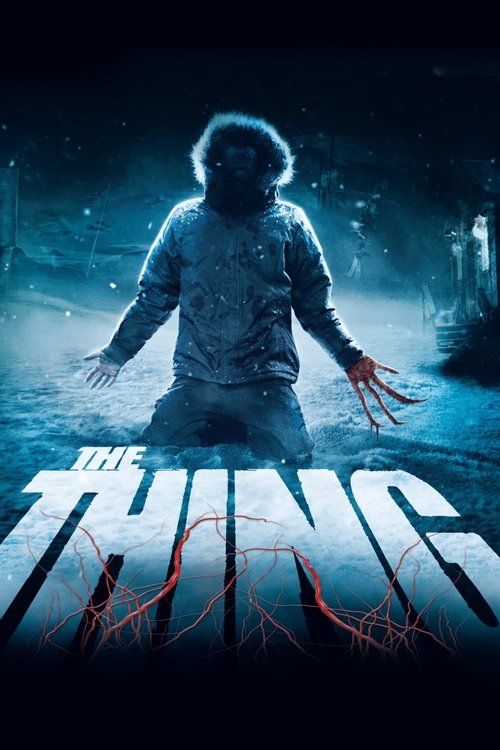
The Thing
When paleontologist Kate Lloyd travels to an isolated outpost in Antarctica for the expedition of a lifetime, she joins an international team that unearths a remarkable discovery. Their elation quickly turns to fear as they realize that their experiment has freed a mysterious being from its frozen prison. Paranoia spreads like an epidemic as a creature that can mimic anything it touches will pit human against human as it tries to survive and flourish in this spine-tingling thriller.
The film underperformed commercially against its respectable budget of $35.0M, earning $31.5M globally (-10% loss).


Plot Structure
Story beats plotted across runtime


Narrative Arc
Emotional journey through the story's key moments
Story Circle
Blueprint 15-beat structure
Arcplot Score Breakdown
Weighted: Precision (70%) + Arc (15%) + Theme (15%)
The Thing (2011) showcases strategically placed narrative architecture, characteristic of Matthijs van Heijningen Jr.'s storytelling approach. This structural analysis examines how the film's 15-point plot structure maps to proven narrative frameworks across 1 hour and 43 minutes. With an Arcplot score of 7.3, the film balances conventional beats with creative variation.
Characters
Cast & narrative archetypes

Kate Lloyd
Dr. Sander Halvorson
Sam Carter
Derek Jameson
Adam Finch
Edvard Wolner
Lars
Main Cast & Characters
Kate Lloyd
Played by Mary Elizabeth Winstead
American paleontologist recruited to examine an alien organism discovered in Antarctica. Resourceful and scientifically minded, she becomes the de facto leader during the crisis.
Dr. Sander Halvorson
Played by Ulrich Thomsen
Norwegian scientist leading the expedition. Ambitious and driven by scientific discovery, he initially dismisses safety concerns in favor of research.
Sam Carter
Played by Joel Edgerton
American helicopter pilot stationed at the Norwegian base. Pragmatic and level-headed, he supports Kate's survival efforts.
Derek Jameson
Played by Adewale Akinnuoye-Agbaje
American helicopter pilot and Carter's partner. Loyal and competent, he assists with transportation and evacuation attempts.
Adam Finch
Played by Eric Christian Olsen
American assistant to Dr. Halvorson. Young and enthusiastic about the scientific discovery, though increasingly terrified as events unfold.
Edvard Wolner
Played by Trond Espen Seim
Norwegian base commander. Attempts to maintain order and protect his crew as paranoia spreads through the station.
Lars
Played by Jørgen Langhelle
Norwegian member of the research team. Survives the initial outbreak and becomes one of the few to escape the base.
Structural Analysis
The Status Quo at 1 minutes (1% through the runtime) establishes Kate Lloyd, a young paleontologist, works in her university lab examining ancient specimens, establishing her scientific expertise and methodical nature before being recruited for an extraordinary discovery.. The analysis reveals that this early placement immediately immerses viewers in the story world.
The inciting incident occurs at 12 minutes when Against Kate's advice, Dr. Sander orders a tissue sample extracted from the frozen alien. That night, the creature breaks free from the ice block and escapes into the station, killing a sled dog.. At 12% through the film, this Disruption aligns precisely with traditional story structure. This beat shifts the emotional landscape, launching the protagonist into the central conflict.
The First Threshold at 26 minutes marks the transition into Act II, occurring at 25% of the runtime. This demonstrates the protagonist's commitment to Kate warns the group about the imitation ability and insists no one can leave the station. When she discovers the creature cannot replicate inorganic material and finds bloody dental fillings in the bathroom, she commits to exposing and fighting the hidden Things among them., moving from reaction to action.
At 52 minutes, the Midpoint arrives at 50% of the runtime—precisely centered, creating perfect narrative symmetry. Of particular interest, this crucial beat The Thing reveals its full horrific power by absorbing and combining multiple crew members into a massive merged creature. The survivors barely escape, but realize the helicopter has been sabotaged and all vehicles are disabled—they are trapped with the enemy among them., fundamentally raising what's at risk. The emotional intensity shifts, dividing the narrative into clear before-and-after phases.
The Collapse moment at 77 minutes (75% through) represents the emotional nadir. Here, Kate finds herself nearly alone—most of the crew is dead or assimilated. The Sander-Thing escapes toward the alien spacecraft. With the station burning and her allies gone or suspect, Kate faces the possibility that humanity's extinction could begin here if the Thing reaches civilization., indicates the protagonist at their lowest point. This beat's placement in the final quarter sets up the climactic reversal.
The Second Threshold at 82 minutes initiates the final act resolution at 80% of the runtime. Kate enters the buried alien spacecraft to hunt down the Sander-Thing. She chooses to confront the threat at its source rather than flee, accepting that destroying this creature is more important than her own survival., demonstrating the transformation achieved throughout the journey.
Emotional Journey
The Thing's emotional architecture traces a deliberate progression across 15 carefully calibrated beats.
Narrative Framework
This structural analysis employs proven narrative structure principles that track dramatic progression. By mapping The Thing against these established plot points, we can identify how Matthijs van Heijningen Jr. utilizes or subverts traditional narrative conventions. The plot point approach reveals not only adherence to structural principles but also creative choices that distinguish The Thing within the horror genre.
Comparative Analysis
Additional horror films include Thinner, A Nightmare on Elm Street and Mary Reilly.
Plot Points by Act
Act I
SetupStatus Quo
Kate Lloyd, a young paleontologist, works in her university lab examining ancient specimens, establishing her scientific expertise and methodical nature before being recruited for an extraordinary discovery.
Theme
Dr. Sander Halvorson tells Kate about the Antarctic discovery, emphasizing secrecy and the importance of scientific validation—foreshadowing the theme that blind trust in authority and appearances can be fatal.
Worldbuilding
Kate is recruited by Dr. Sander and his assistant Adam to join a Norwegian Antarctic research team. They arrive at Thule Station where the team has discovered a crashed alien spacecraft buried in the ice for 100,000 years, along with a frozen extraterrestrial creature.
Disruption
Against Kate's advice, Dr. Sander orders a tissue sample extracted from the frozen alien. That night, the creature breaks free from the ice block and escapes into the station, killing a sled dog.
Resistance
The team hunts and apparently kills the escaped creature with flamethrowers. During the autopsy, Kate discovers the alien was absorbing and imitating Henrik from the inside out. She realizes anyone could be infected and begins to understand the true nature of the threat.
Act II
ConfrontationFirst Threshold
Kate warns the group about the imitation ability and insists no one can leave the station. When she discovers the creature cannot replicate inorganic material and finds bloody dental fillings in the bathroom, she commits to exposing and fighting the hidden Things among them.
Mirror World
Carter, the American helicopter pilot, emerges as Kate's ally and potential love interest. Their developing trust becomes central to the theme—in a world where anyone could be an imitation, genuine human connection becomes both precious and suspect.
Premise
Kate devises a test using dental fillings to identify who might be human. The group fragments as paranoia spreads—some comply with testing while others resist. Multiple Thing attacks reveal infected team members, and the survivors struggle to determine who can be trusted.
Midpoint
The Thing reveals its full horrific power by absorbing and combining multiple crew members into a massive merged creature. The survivors barely escape, but realize the helicopter has been sabotaged and all vehicles are disabled—they are trapped with the enemy among them.
Opposition
The remaining survivors are picked off one by one as Things reveal themselves in increasingly horrific transformations. Dr. Sander is exposed as infected. Kate and a dwindling group fight for survival as the station descends into chaos and flames.
Collapse
Kate finds herself nearly alone—most of the crew is dead or assimilated. The Sander-Thing escapes toward the alien spacecraft. With the station burning and her allies gone or suspect, Kate faces the possibility that humanity's extinction could begin here if the Thing reaches civilization.
Crisis
Kate must decide whether to trust Carter, the last apparent survivor with her. She realizes that to stop the Thing, she must pursue it into the alien ship—a likely suicide mission—rather than escape and risk letting it reach the outside world.
Act III
ResolutionSecond Threshold
Kate enters the buried alien spacecraft to hunt down the Sander-Thing. She chooses to confront the threat at its source rather than flee, accepting that destroying this creature is more important than her own survival.
Synthesis
Kate navigates the alien spacecraft's nightmare corridors and confronts the Sander-Thing in a final battle. She destroys it with a grenade. Outside, Carter arrives in a vehicle, but Kate notices his earring is missing—proof he's been assimilated. She kills the Carter-Thing, choosing isolation over false companionship.
Transformation
Kate sits alone in the snow cat as the station burns. Unlike her hopeful arrival as a scientist seeking discovery, she is now a hardened survivor who trusts no one. The film ends with the Norwegian helicopter pursuing the infected dog toward the American base—connecting directly to the 1982 film's opening.