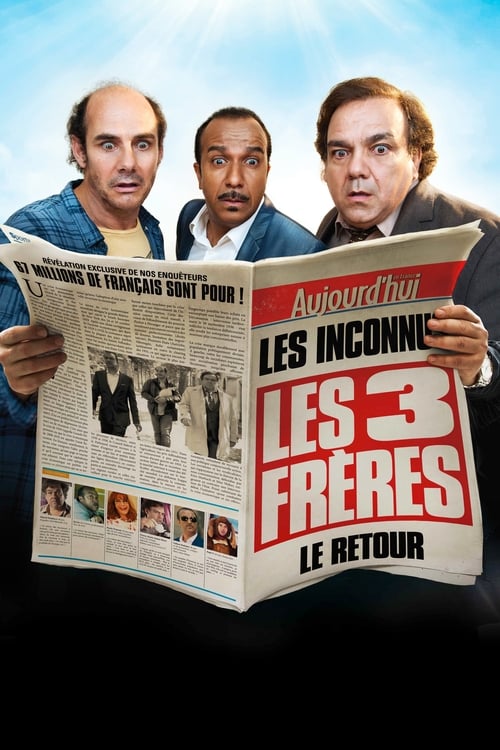
The Three Brothers: The Return
Three brothers are reunited on the occasion of the death of his mother. The three are in a difficult stage of their lives due to economic difficulties: Bernard is a failed actor, Didier pretends to be a professor of philosophy when, in fact, is selling sex toys and Pascal lives off a rich sexagenarian. Accompanied by Sara, the teenage daughter of Bernard, they live surprising encounters while new problems appear.
Working with a small-scale budget of $13.6M, the film achieved a respectable showing with $20.2M in global revenue (+48% profit margin).
Plot Structure
Story beats plotted across runtime


Narrative Arc
Emotional journey through the story's key moments
Story Circle
Blueprint 15-beat structure
Arcplot Score Breakdown
Weighted: Precision (70%) + Arc (15%) + Theme (15%)
The Three Brothers: The Return (2014) exemplifies deliberately positioned story structure, characteristic of Didier Bourdon's storytelling approach. This structural analysis examines how the film's 15-point plot structure maps to proven narrative frameworks across 1 hour and 46 minutes. With an Arcplot score of 7.4, the film balances conventional beats with creative variation.
Structural Analysis
The Status Quo at 1 minutes (1% through the runtime) establishes The three brothers are shown living separate, dysfunctional lives - each struggling in their own way, echoing their previous misadventures but now older and more set in their ways.. Structural examination shows that this early placement immediately immerses viewers in the story world.
The inciting incident occurs at 13 minutes when The brothers receive news of their mother's illness or a family crisis that forces them to reunite, disrupting their separate lives and bringing old conflicts to the surface.. At 12% through the film, this Disruption aligns precisely with traditional story structure. This beat shifts the emotional landscape, launching the protagonist into the central conflict.
The First Threshold at 27 minutes marks the transition into Act II, occurring at 25% of the runtime. This shows the protagonist's commitment to The brothers make the conscious decision to work together and embark on a mission or plan to solve the family crisis, committing to putting aside their differences., moving from reaction to action.
At 53 minutes, the Midpoint arrives at 50% of the runtime—precisely centered, creating perfect narrative symmetry. Structural examination shows that this crucial beat A false victory - the brothers appear to have succeeded in their mission or made significant progress, celebrating their teamwork and seeming reconciliation., fundamentally raising what's at risk. The emotional intensity shifts, dividing the narrative into clear before-and-after phases.
The Collapse moment at 80 minutes (75% through) represents the emotional nadir. Here, The brothers' plan completely falls apart. They have a major falling out, with hurtful truths spoken. The family situation worsens, and it seems their reunion has only made things worse. The brotherhood appears dead., indicates the protagonist at their lowest point. This beat's placement in the final quarter sets up the climactic reversal.
The Second Threshold at 85 minutes initiates the final act resolution at 80% of the runtime. A revelation or moment of clarity where the brothers realize that their bond as brothers is more important than their differences. They understand what they truly need to do., demonstrating the transformation achieved throughout the journey.
Emotional Journey
The Three Brothers: The Return's emotional architecture traces a deliberate progression across 15 carefully calibrated beats.
Narrative Framework
This structural analysis employs a 15-point narrative structure framework that maps key story moments. By mapping The Three Brothers: The Return against these established plot points, we can identify how Didier Bourdon utilizes or subverts traditional narrative conventions. The plot point approach reveals not only adherence to structural principles but also creative choices that distinguish The Three Brothers: The Return within the comedy genre.
Comparative Analysis
Additional comedy films include The Ministry of Ungentlemanly Warfare, The Bad Guys and Lake Placid.
Plot Points by Act
Act I
SetupStatus Quo
The three brothers are shown living separate, dysfunctional lives - each struggling in their own way, echoing their previous misadventures but now older and more set in their ways.
Theme
A character remarks that "family is the only thing that matters in the end," foreshadowing the brothers' need to reconnect despite their differences.
Worldbuilding
Establishment of each brother's current situation: their failed relationships, career struggles, and the distance that has grown between them over the years since their last adventure.
Disruption
The brothers receive news of their mother's illness or a family crisis that forces them to reunite, disrupting their separate lives and bringing old conflicts to the surface.
Resistance
The brothers reluctantly come together, debating whether they can even stand to be in the same room. Old grudges resurface as they argue about who will take responsibility for the family situation.
Act II
ConfrontationFirst Threshold
The brothers make the conscious decision to work together and embark on a mission or plan to solve the family crisis, committing to putting aside their differences.
Mirror World
Introduction of a supporting character or renewed relationship (possibly with family members, love interests, or friends from the past) who represents the importance of connection and loyalty.
Premise
The brothers navigate their mission with escalating comic mishaps and misadventures, showcasing their incompetence but also their unique bond. The premise of "three idiots trying to fix things" delivers the comedy.
Midpoint
A false victory - the brothers appear to have succeeded in their mission or made significant progress, celebrating their teamwork and seeming reconciliation.
Opposition
The celebration is short-lived as complications arise. External antagonists or circumstances turn against them, and their old patterns of blame and conflict resurface, threatening to destroy their progress.
Collapse
The brothers' plan completely falls apart. They have a major falling out, with hurtful truths spoken. The family situation worsens, and it seems their reunion has only made things worse. The brotherhood appears dead.
Crisis
Each brother separately reflects on what they've lost - both in the immediate crisis and in their years of estrangement. They process the pain of their broken family bond.
Act III
ResolutionSecond Threshold
A revelation or moment of clarity where the brothers realize that their bond as brothers is more important than their differences. They understand what they truly need to do.
Synthesis
The brothers reunite with renewed purpose, combining their individual strengths and accepting their weaknesses. They execute a final plan that resolves the family crisis through genuine cooperation and sacrifice.
Transformation
Final image mirrors the opening but shows transformation: the three brothers together, still flawed and ridiculous, but genuinely connected. They've become a real family again.