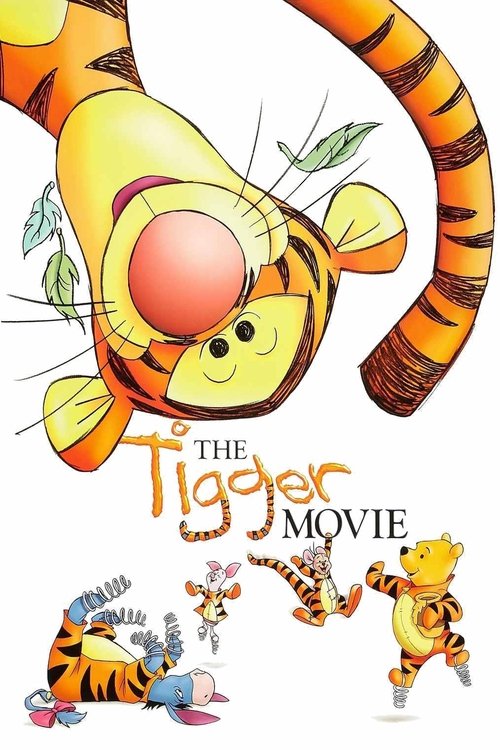
The Tigger Movie
Winnie the Pooh, Piglet, Owl, Kanga, Roo, and Rabbit are preparing a suitable winter home for Eeyore, the perennially dejected donkey, but Tigger's continual bouncing interrupts their efforts. Rabbit suggests that Tigger go find others of his kind to bounce with, but Tigger thinks "the most wonderful thing about tiggers is" he's "the only one!" Just in case though, the joyously jouncy feline sets out to see if he can find relatives.
Working with a mid-range budget of $30.0M, the film achieved a steady performer with $45.6M in global revenue (+52% profit margin).


Plot Structure
Story beats plotted across runtime


Narrative Arc
Emotional journey through the story's key moments
Story Circle
Blueprint 15-beat structure
Arcplot Score Breakdown
Weighted: Precision (70%) + Arc (15%) + Theme (15%)
The Tigger Movie (2000) exhibits strategically placed story structure, characteristic of Jun Falkenstein's storytelling approach. This structural analysis examines how the film's 15-point plot structure maps to proven narrative frameworks across 1 hour and 17 minutes. With an Arcplot score of 7.4, the film balances conventional beats with creative variation.
Characters
Cast & narrative archetypes

Tigger
Roo
Winnie the Pooh
Piglet
Eeyore
Rabbit
Kanga
Main Cast & Characters
Tigger
Played by Jim Cummings
An exuberant, bouncing tiger who searches for his family throughout the Hundred Acre Wood.
Roo
Played by Nikita Hopkins
A young kangaroo who serves as Tigger's enthusiastic companion and emotional anchor.
Winnie the Pooh
Played by Jim Cummings
A gentle, thoughtful bear who tries to help Tigger find what he's looking for.
Piglet
Played by John Fiedler
A timid, loyal friend who participates in the attempts to help Tigger.
Eeyore
Played by Peter Cullen
A melancholic donkey who provides pessimistic but caring perspectives.
Rabbit
Played by Ken Sansom
An organized, practical rabbit who initially resists Tigger's exuberance but ultimately shows compassion.
Kanga
Played by Kath Soucie
A nurturing mother kangaroo who provides wisdom and emotional support.
Structural Analysis
The Status Quo at 1 minutes (2% through the runtime) establishes Tigger bounces through the Hundred Acre Wood on a snowy winter morning, playing with his friends but always bouncing alone. His exuberant energy defines him, but hints at underlying loneliness.. Notably, this early placement immediately immerses viewers in the story world.
The inciting incident occurs at 9 minutes when After being excluded from the group's winter preparations, Tigger realizes he is alone and different. He wonders aloud if there are other tiggers like him, transforming his loneliness into a quest.. At 11% through the film, this Disruption aligns precisely with traditional story structure. This beat shifts the emotional landscape, launching the protagonist into the central conflict.
The First Threshold at 19 minutes marks the transition into Act II, occurring at 25% of the runtime. This reveals the protagonist's commitment to Tigger writes a letter to his family and attaches it to a tree, actively choosing to believe they exist and will find him. He commits to the search despite uncertainty., moving from reaction to action.
At 39 minutes, the Midpoint arrives at 50% of the runtime—precisely centered, creating perfect narrative symmetry. Of particular interest, this crucial beat Tigger receives what appears to be a letter from his family, claiming they exist and will come for him. This false victory raises stakes—he now expects them to arrive, setting up deeper disappointment., fundamentally raising what's at risk. The emotional intensity shifts, dividing the narrative into clear before-and-after phases.
The Collapse moment at 56 minutes (73% through) represents the emotional nadir. Here, Tigger discovers his friends disguised as his family—the letter was a lie. His dream dies. Heartbroken and humiliated, he rejects his friends and runs into the snowy night alone, declaring he'll find his real family himself., indicates the protagonist at their lowest point. This beat's placement in the final quarter sets up the climactic reversal.
The Second Threshold at 61 minutes initiates the final act resolution at 79% of the runtime. Stranded in the tree during a storm, Tigger sees his friends risking themselves to save him. He realizes family isn't who you're born to—it's who shows up for you. He chooses to accept their love., demonstrating the transformation achieved throughout the journey.
Emotional Journey
The Tigger Movie's emotional architecture traces a deliberate progression across 15 carefully calibrated beats.
Narrative Framework
This structural analysis employs a 15-point narrative structure framework that maps key story moments. By mapping The Tigger Movie against these established plot points, we can identify how Jun Falkenstein utilizes or subverts traditional narrative conventions. The plot point approach reveals not only adherence to structural principles but also creative choices that distinguish The Tigger Movie within the animation genre.
Comparative Analysis
Additional animation films include The Bad Guys, Puss in Boots and Violet Evergarden: Eternity and the Auto Memory Doll.
Plot Points by Act
Act I
SetupStatus Quo
Tigger bounces through the Hundred Acre Wood on a snowy winter morning, playing with his friends but always bouncing alone. His exuberant energy defines him, but hints at underlying loneliness.
Theme
Roo asks Tigger about his family. Tigger deflects with bravado, claiming tiggers don't need anyone else, but the question plants a seed about what family means.
Worldbuilding
Tigger attempts to play with each friend (Pooh, Piglet, Eeyore, Rabbit, Roo) but his bouncing is too much for their activities. Each rejection is gentle but cumulative, establishing his isolation despite being surrounded by friends.
Disruption
After being excluded from the group's winter preparations, Tigger realizes he is alone and different. He wonders aloud if there are other tiggers like him, transforming his loneliness into a quest.
Resistance
Roo becomes Tigger's companion in searching for his family. They look through Owl's books and explore the idea of a family tree. Tigger debates whether to hope for something he's never had.
Act II
ConfrontationFirst Threshold
Tigger writes a letter to his family and attaches it to a tree, actively choosing to believe they exist and will find him. He commits to the search despite uncertainty.
Mirror World
Roo pledges to help Tigger find his family, representing the found family that already exists. His unconditional loyalty embodies the theme: family is about connection, not biology.
Premise
Tigger and Roo search the wood for tigger family members. They imagine what his family might be like, building hope and fantasy. Other friends worry but let Tigger pursue his dream.
Midpoint
Tigger receives what appears to be a letter from his family, claiming they exist and will come for him. This false victory raises stakes—he now expects them to arrive, setting up deeper disappointment.
Opposition
Tigger prepares eagerly for his family's arrival while his friends (who wrote the fake letter) try to maintain the deception. The truth becomes harder to hide. Tigger's fantasy grows more elaborate, making reality more painful.
Collapse
Tigger discovers his friends disguised as his family—the letter was a lie. His dream dies. Heartbroken and humiliated, he rejects his friends and runs into the snowy night alone, declaring he'll find his real family himself.
Crisis
Tigger ventures into the dangerous winter forest alone, climbing a high tree to search for tiggers. His friends realize their mistake and search for him, fearing for his safety. Both face the consequences of their actions.
Act III
ResolutionSecond Threshold
Stranded in the tree during a storm, Tigger sees his friends risking themselves to save him. He realizes family isn't who you're born to—it's who shows up for you. He chooses to accept their love.
Synthesis
Friends work together to rescue Tigger from the tree using teamwork and ingenuity. Tigger lets go of his fantasy and embraces the family he already has. They return home together, bonds strengthened through crisis.
Transformation
Tigger creates a family portrait including all his friends, drawing himself in the center surrounded by those who love him. He bounces with the same joy as the opening, but now rooted in belonging rather than loneliness.