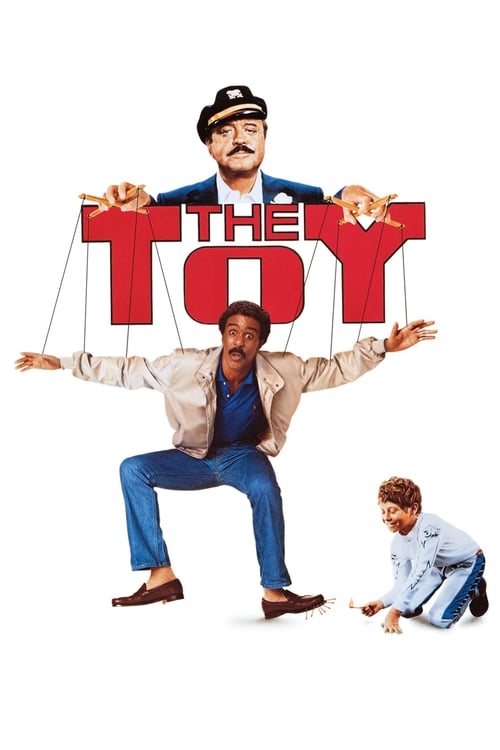
The Toy
On one of his bratty son Eric's annual visits, the plutocrat U.S. Bates takes him to his department store and offers him anything in it as a gift. Eric chooses a black janitor who has made him laugh with his antics. At first the man suffers many indignities as Eric's "toy", but gradually teaches the lonely boy what it is like to have and to be a friend.
Working with a respectable budget of $28.0M, the film achieved a respectable showing with $47.1M in global revenue (+68% profit margin).


Plot Structure
Story beats plotted across runtime


Narrative Arc
Emotional journey through the story's key moments
Story Circle
Blueprint 15-beat structure
Arcplot Score Breakdown
Weighted: Precision (70%) + Arc (15%) + Theme (15%)
The Toy (1982) exhibits carefully calibrated narrative design, characteristic of Richard Donner's storytelling approach. This structural analysis examines how the film's 15-point plot structure maps to proven narrative frameworks across 1 hour and 42 minutes. With an Arcplot score of 6.7, the film balances conventional beats with creative variation.
Characters
Cast & narrative archetypes

Jack Brown
Eric Bates
U.S. Bates
Fancy Bates
Sydney Morehouse
Main Cast & Characters
Jack Brown
Played by Richard Pryor
An unemployed journalist who accepts a humiliating job as a rich child's "toy" to pay his bills.
Eric Bates
Played by Scott Schwartz
A spoiled, lonely millionaire's son who "purchases" Jack as a playmate and gradually learns about friendship and values.
U.S. Bates
Played by Jackie Gleason
Eric's wealthy, controlling father who built an empire but neglects his son emotionally.
Fancy Bates
Played by Nedra Volz
Eric's socialite mother who is more interested in parties and appearances than parenting.
Sydney Morehouse
Played by Ned Beatty
U.S. Bates' chief attorney and executive who oversees the family's business affairs.
Structural Analysis
The Status Quo at 1 minutes (1% through the runtime) establishes Jack Brown, an unemployed journalist, struggles to find work in Baton Rouge. He's talented but down on his luck, desperate enough to take any job to survive.. Notably, this early placement immediately immerses viewers in the story world.
The inciting incident occurs at 12 minutes when Spoiled Eric Bates visits his father's department store and, when told he can have anything he wants, points at Jack Brown and declares "I want that one" - literally choosing a human being as his toy.. At 12% through the film, this Disruption aligns precisely with traditional story structure. This beat shifts the emotional landscape, launching the protagonist into the central conflict.
The First Threshold at 26 minutes marks the transition into Act II, occurring at 25% of the runtime. This illustrates the protagonist's commitment to Jack reluctantly accepts the offer to become Eric's "toy" for a week, sacrificing his dignity for the money. He moves into the Bates mansion, crossing into a world of obscene wealth and emotional poverty., moving from reaction to action.
At 52 minutes, the Midpoint arrives at 51% of the runtime—precisely centered, creating perfect narrative symmetry. Notably, this crucial beat Jack and Eric form a genuine bond. Eric begins to change, showing empathy and questioning his father's values. Jack realizes he actually cares about this kid - this is no longer just about money. False victory: their friendship seems to transcend the ugly transaction., fundamentally raising what's at risk. The emotional intensity shifts, dividing the narrative into clear before-and-after phases.
The Collapse moment at 77 minutes (76% through) represents the emotional nadir. Here, U.S. Bates exposes the arrangement to Eric, revealing Jack was paid to be his friend. Eric feels utterly betrayed - the one person he thought genuinely cared about him was just another employee. The friendship appears destroyed., indicates the protagonist at their lowest point. This beat's placement in the final quarter sets up the climactic reversal.
The Second Threshold at 82 minutes initiates the final act resolution at 81% of the runtime. Jack realizes he must prove to Eric that his feelings are real, regardless of how the relationship started. He decides to confront U.S. Bates and fight for Eric's wellbeing, even at the cost of the money he desperately needed., demonstrating the transformation achieved throughout the journey.
Emotional Journey
The Toy's emotional architecture traces a deliberate progression across 15 carefully calibrated beats.
Narrative Framework
This structural analysis employs a 15-point narrative structure framework that maps key story moments. By mapping The Toy against these established plot points, we can identify how Richard Donner utilizes or subverts traditional narrative conventions. The plot point approach reveals not only adherence to structural principles but also creative choices that distinguish The Toy within the comedy genre.
Richard Donner's Structural Approach
Among the 16 Richard Donner films analyzed on Arcplot, the average structural score is 6.9, demonstrating varied approaches to story architecture. The Toy takes a more unconventional approach compared to the director's typical style. For comparative analysis, explore the complete Richard Donner filmography.
Comparative Analysis
Additional comedy films include The Bad Guys, Ella Enchanted and The Evening Star. For more Richard Donner analyses, see Assassins, Superman and Lethal Weapon 2.
Plot Points by Act
Act I
SetupStatus Quo
Jack Brown, an unemployed journalist, struggles to find work in Baton Rouge. He's talented but down on his luck, desperate enough to take any job to survive.
Theme
Jack's friend Fancy warns him that money can't buy everything worth having - dignity, self-respect, and genuine human connection must be earned, not purchased.
Worldbuilding
Jack's desperate financial situation is established. He applies for a job at U.S. Bates' department store and is humiliated as a cleaning man. The world of extreme wealth disparity is shown through the Bates empire.
Disruption
Spoiled Eric Bates visits his father's department store and, when told he can have anything he wants, points at Jack Brown and declares "I want that one" - literally choosing a human being as his toy.
Resistance
Jack is outraged and refuses the degrading offer. U.S. Bates offers increasingly large sums of money. Jack wrestles with his dignity versus his desperate need for money to pay his bills and keep his apartment.
Act II
ConfrontationFirst Threshold
Jack reluctantly accepts the offer to become Eric's "toy" for a week, sacrificing his dignity for the money. He moves into the Bates mansion, crossing into a world of obscene wealth and emotional poverty.
Mirror World
Jack begins to see past Eric's spoiled exterior and recognizes a lonely, neglected child starving for genuine attention. Their relationship shifts from transaction to connection as Jack treats Eric like a real person.
Premise
Jack and Eric engage in elaborate play scenarios around the mansion. Jack teaches Eric about life, creativity, and genuine fun while Eric experiences real friendship for the first time. The comedy of a grown man as a child's toy plays out.
Midpoint
Jack and Eric form a genuine bond. Eric begins to change, showing empathy and questioning his father's values. Jack realizes he actually cares about this kid - this is no longer just about money. False victory: their friendship seems to transcend the ugly transaction.
Opposition
U.S. Bates becomes suspicious of Jack's influence on Eric. Eric starts defying his father and questioning the family's treatment of others. Bates investigates Jack's background and discovers his journalism aspirations, seeing him as a threat.
Collapse
U.S. Bates exposes the arrangement to Eric, revealing Jack was paid to be his friend. Eric feels utterly betrayed - the one person he thought genuinely cared about him was just another employee. The friendship appears destroyed.
Crisis
Eric retreats in heartbroken anger. Jack must confront the shame of what he agreed to. Both characters face the consequences of the dehumanizing transaction - Eric's trust shattered, Jack's integrity compromised.
Act III
ResolutionSecond Threshold
Jack realizes he must prove to Eric that his feelings are real, regardless of how the relationship started. He decides to confront U.S. Bates and fight for Eric's wellbeing, even at the cost of the money he desperately needed.
Synthesis
Jack stands up to U.S. Bates, calling out his neglectful parenting and the damage of trying to buy love. Eric witnesses Jack risking everything. The confrontation forces Bates to recognize his failures as a father.
Transformation
U.S. Bates begins to genuinely connect with Eric. Jack and Eric's friendship is restored on honest terms. Jack has found his dignity and purpose; Eric has found genuine love. The "toy" has become family.