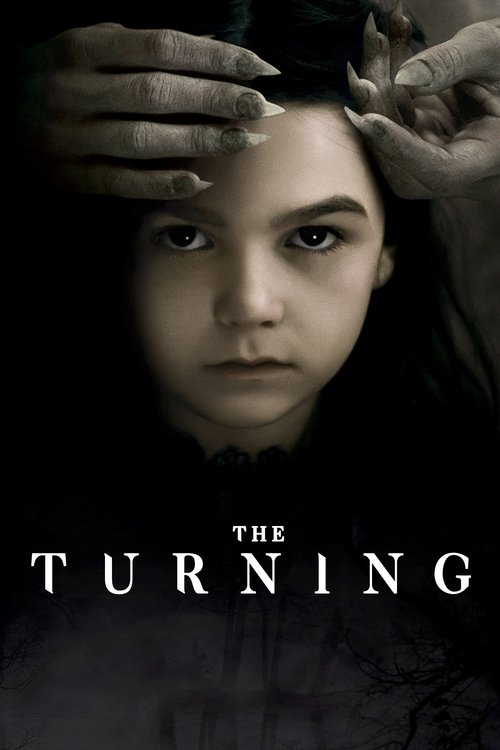
The Turning
A young woman quits her teaching job to become a private tutor and governess for two wealthy young kids, but soon starts to suspect there’s more to their house than meets the eye.
Working with a tight budget of $14.0M, the film achieved a respectable showing with $19.4M in global revenue (+39% profit margin).


Plot Structure
Story beats plotted across runtime


Narrative Arc
Emotional journey through the story's key moments
Story Circle
Blueprint 15-beat structure
Arcplot Score Breakdown
Weighted: Precision (70%) + Arc (15%) + Theme (15%)
The Turning (2020) demonstrates precise plot construction, characteristic of Floria Sigismondi's storytelling approach. This structural analysis examines how the film's 15-point plot structure maps to proven narrative frameworks across 1 hour and 34 minutes. With an Arcplot score of 7.6, the film showcases strong structural fundamentals.
Structural Analysis
The Status Quo at 1 minutes (1% through the runtime) establishes Kate Mandell teaches at a school, living a normal structured life. She receives news about her institutionalized mother, establishing her fractured family background.. Notably, this early placement immediately immerses viewers in the story world.
The inciting incident occurs at 11 minutes when Kate arrives at the isolated, decaying Fairchild estate and meets the disturbed young Flora. The mansion feels haunted and wrong, immediately unsettling Kate.. At 12% through the film, this Disruption aligns precisely with traditional story structure. This beat shifts the emotional landscape, launching the protagonist into the central conflict.
The First Threshold at 24 minutes marks the transition into Act II, occurring at 25% of the runtime. This demonstrates the protagonist's commitment to Miles returns home from boarding school after being expelled for violent behavior. Kate decides to stay and help both children despite the danger, fully committing to the role., moving from reaction to action.
At 47 minutes, the Midpoint arrives at 50% of the runtime—precisely centered, creating perfect narrative symmetry. Of particular interest, this crucial beat Kate discovers evidence that Miss Jessel was abused by Quint and may have killed herself. Miles' behavior becomes openly threatening and sexually inappropriate. Kate realizes the children may be possessed or imitating their abusers., fundamentally raising what's at risk. The emotional intensity shifts, dividing the narrative into clear before-and-after phases.
The Collapse moment at 68 minutes (73% through) represents the emotional nadir. Here, Kate is violently attacked by Miles in a terrifying confrontation. She realizes she cannot save the children and may be losing her own sanity like her mother. The cycle of trauma appears unbreakable., indicates the protagonist at their lowest point. This beat's placement in the final quarter sets up the climactic reversal.
The Second Threshold at 75 minutes initiates the final act resolution at 79% of the runtime. Kate decides to confront the supernatural forces directly and try to save the children one final time, accepting the risk to her own sanity. She chooses to face the trauma rather than run., demonstrating the transformation achieved throughout the journey.
Emotional Journey
The Turning's emotional architecture traces a deliberate progression across 15 carefully calibrated beats.
Narrative Framework
This structural analysis employs structural analysis methodology used to understand storytelling architecture. By mapping The Turning against these established plot points, we can identify how Floria Sigismondi utilizes or subverts traditional narrative conventions. The plot point approach reveals not only adherence to structural principles but also creative choices that distinguish The Turning within the horror genre.
Comparative Analysis
Additional horror films include Thinner, A Nightmare on Elm Street and Mary Reilly.
Plot Points by Act
Act I
SetupStatus Quo
Kate Mandell teaches at a school, living a normal structured life. She receives news about her institutionalized mother, establishing her fractured family background.
Theme
Mrs. Grose mentions that the children "need someone who won't abandon them" - establishing the theme of trauma, abandonment, and whether the past can be escaped.
Worldbuilding
Kate interviews for the nanny position at the remote Fairchild estate. She learns about the two orphaned children - Flora and Miles - and their tragic family history. The gothic mansion and grounds are introduced.
Disruption
Kate arrives at the isolated, decaying Fairchild estate and meets the disturbed young Flora. The mansion feels haunted and wrong, immediately unsettling Kate.
Resistance
Kate settles into the estate, bonding with Flora while learning the house rules. Mrs. Grose warns her about Miles' troubled behavior. Kate debates whether to stay as strange occurrences begin - dolls moving, eerie sounds, unsettling atmosphere.
Act II
ConfrontationFirst Threshold
Miles returns home from boarding school after being expelled for violent behavior. Kate decides to stay and help both children despite the danger, fully committing to the role.
Mirror World
Kate connects with the trauma therapist and local riding instructor who represent normalcy. They mirror Kate's own relationship with her mentally ill mother - the question of whether trauma is inherited or breaks cycles.
Premise
Kate tries to reach Miles and Flora through education and care while increasingly disturbing supernatural events occur. She investigates the history of the previous caretakers - Miss Jessel and the stable master Quint - both of whom died mysteriously.
Midpoint
Kate discovers evidence that Miss Jessel was abused by Quint and may have killed herself. Miles' behavior becomes openly threatening and sexually inappropriate. Kate realizes the children may be possessed or imitating their abusers.
Opposition
The supernatural manifestations intensify. Miles becomes increasingly violent and manipulative. Kate sees apparitions of Quint and Miss Jessel. She's trapped as Miles sabotages her car and phone. The line between reality and madness blurs.
Collapse
Kate is violently attacked by Miles in a terrifying confrontation. She realizes she cannot save the children and may be losing her own sanity like her mother. The cycle of trauma appears unbreakable.
Crisis
Kate barricades herself, spiraling into paranoia and fear. She questions whether the ghosts are real or if she's having a mental breakdown like her mother. She processes whether to flee or fight.
Act III
ResolutionSecond Threshold
Kate decides to confront the supernatural forces directly and try to save the children one final time, accepting the risk to her own sanity. She chooses to face the trauma rather than run.
Synthesis
Kate confronts Miles in a final showdown. The film's reality fractures - revealing the ambiguous ending where Kate may have escaped, may have died, or may be institutionalized like her mother. The narrative loops back to the beginning.
Transformation
The closing image mirrors the opening but reveals Kate has not escaped the cycle - she is either dead, insane, or trapped in the mansion's curse. The trauma has consumed her like it consumed those before her.