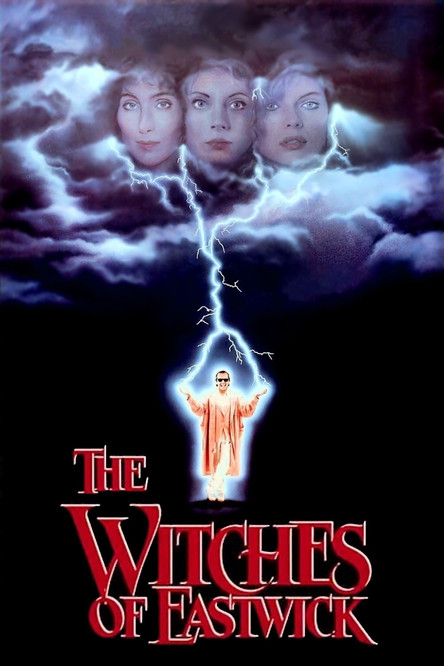
The Witches of Eastwick
Three single women in a picturesque Rhode Island village have their wishes granted - at a cost - when a mysterious and flamboyant man arrives in their lives.
Despite a mid-range budget of $22.0M, The Witches of Eastwick became a financial success, earning $63.8M worldwide—a 190% return.
Nominated for 2 Oscars. 5 wins & 13 nominations


Plot Structure
Story beats plotted across runtime


Narrative Arc
Emotional journey through the story's key moments
Story Circle
Blueprint 15-beat structure
Arcplot Score Breakdown
Weighted: Precision (70%) + Arc (15%) + Theme (15%)
The Witches of Eastwick (1987) exemplifies strategically placed story structure, characteristic of George Miller's storytelling approach. This structural analysis examines how the film's 15-point plot structure maps to proven narrative frameworks across 1 hour and 58 minutes. With an Arcplot score of 7.2, the film balances conventional beats with creative variation.
Characters
Cast & narrative archetypes

Alexandra Medford
Jane Spofford
Sukie Ridgemont
Daryl Van Horne
Felicia Alden
Main Cast & Characters
Alexandra Medford
Played by Cher
A widowed sculptor and mother who discovers her magical powers when Daryl arrives in town.
Jane Spofford
Played by Susan Sarandon
A repressed music teacher longing for passion and romance, the most timid of the three witches.
Sukie Ridgemont
Played by Michelle Pfeiffer
A reporter and single mother of six who writes for the local newspaper, the most grounded of the trio.
Daryl Van Horne
Played by Jack Nicholson
A mysterious, wealthy, and devilish stranger who seduces the three women and awakens their supernatural abilities.
Felicia Alden
Played by Veronica Cartwright
The uptight, judgmental wife of newspaper editor Clyde, who becomes possessed and tormented.
Structural Analysis
The Status Quo at 1 minutes (1% through the runtime) establishes Three lonely women (Alexandra, Jane, and Sukie) live mundane lives in the small town of Eastwick, Rhode Island. They gather weekly, yearning for something more than their provincial existence.. Notably, this early placement immediately immerses viewers in the story world.
The inciting incident occurs at 13 minutes when Daryl Van Horne arrives in Eastwick, buying the mysterious Lenox Mansion. His appearance is magnetic and unnatural - he seems to be the manifestation of the women's collective wish.. At 11% through the film, this Disruption aligns precisely with traditional story structure. This beat shifts the emotional landscape, launching the protagonist into the central conflict.
The First Threshold at 30 minutes marks the transition into Act II, occurring at 25% of the runtime. This illustrates the protagonist's commitment to Alexandra accepts Daryl's invitation to visit the Lenox Mansion. This active choice to enter his world begins the transformation. Soon all three women are drawn into his orbit, awakening their latent powers., moving from reaction to action.
At 60 minutes, the Midpoint arrives at 50% of the runtime—precisely centered, creating perfect narrative symmetry. The analysis reveals that this crucial beat False victory turns to false defeat: Felicia Van Tassle, the town's moral guardian, publicly confronts the women and Daryl, condemning their behavior. The fun is over. The women begin to see the dark side of their arrangement as Daryl's true nature emerges., fundamentally raising what's at risk. The emotional intensity shifts, dividing the narrative into clear before-and-after phases.
The Collapse moment at 89 minutes (76% through) represents the emotional nadir. Here, The women realize they've become complicit in evil through Felicia's death. Daryl's demonic nature is fully revealed. They are trapped, pregnant with his children, and have lost themselves completely. The "whiff of death" - their innocence and autonomy have died., reveals the protagonist at their lowest point. This beat's placement in the final quarter sets up the climactic reversal.
The Second Threshold at 95 minutes initiates the final act resolution at 81% of the runtime. The women realize they can combine their powers - not for selfish desire but to protect themselves and banish Daryl. They synthesize what they learned about magic with their core goodness and friendship. United, they are stronger than him., demonstrating the transformation achieved throughout the journey.
Emotional Journey
The Witches of Eastwick's emotional architecture traces a deliberate progression across 15 carefully calibrated beats.
Narrative Framework
This structural analysis employs systematic plot point analysis that identifies crucial turning points. By mapping The Witches of Eastwick against these established plot points, we can identify how George Miller utilizes or subverts traditional narrative conventions. The plot point approach reveals not only adherence to structural principles but also creative choices that distinguish The Witches of Eastwick within the comedy genre.
George Miller's Structural Approach
Among the 10 George Miller films analyzed on Arcplot, the average structural score is 6.8, demonstrating varied approaches to story architecture. The Witches of Eastwick represents one of the director's most structurally precise works. For comparative analysis, explore the complete George Miller filmography.
Comparative Analysis
Additional comedy films include The Bad Guys, Ella Enchanted and The Evening Star. For more George Miller analyses, see Mad Max 2, Furiosa: A Mad Max Saga and Happy Feet Two.
Plot Points by Act
Act I
SetupStatus Quo
Three lonely women (Alexandra, Jane, and Sukie) live mundane lives in the small town of Eastwick, Rhode Island. They gather weekly, yearning for something more than their provincial existence.
Theme
During their gathering, the women drunkenly wish for their ideal man, discussing power, desire, and liberation. The theme: women discovering and claiming their own power versus being controlled by it.
Worldbuilding
Establishment of Eastwick as a repressive small town. The three women are introduced with their unique talents and frustrations. Alexandra sculpts, Jane plays cello, Sukie writes for the local paper. All are constrained by social expectations and loneliness.
Disruption
Daryl Van Horne arrives in Eastwick, buying the mysterious Lenox Mansion. His appearance is magnetic and unnatural - he seems to be the manifestation of the women's collective wish.
Resistance
The women are both drawn to and suspicious of Daryl. He pursues them individually, promising to unlock their potential. They debate whether to engage with this mysterious stranger who seems too good to be true.
Act II
ConfrontationFirst Threshold
Alexandra accepts Daryl's invitation to visit the Lenox Mansion. This active choice to enter his world begins the transformation. Soon all three women are drawn into his orbit, awakening their latent powers.
Mirror World
Daryl becomes the dark mirror reflecting the women's desires and power. He represents what they could become - liberated but potentially corrupt. The relationship subplot carries the theme of power and its price.
Premise
The "fun and games" of discovering their powers. The women revel in their newfound abilities, sexual liberation, and freedom from small-town judgment. Wild parties at the mansion, telekinesis, wish fulfillment. The promise of the premise: witches unleashed.
Midpoint
False victory turns to false defeat: Felicia Van Tassle, the town's moral guardian, publicly confronts the women and Daryl, condemning their behavior. The fun is over. The women begin to see the dark side of their arrangement as Daryl's true nature emerges.
Opposition
Daryl becomes possessive and cruel. The women try to break free but he won't let them go. They use their powers against Felicia (causing her death), which horrifies them. Daryl's control intensifies. Their liberation has become a new form of imprisonment.
Collapse
The women realize they've become complicit in evil through Felicia's death. Daryl's demonic nature is fully revealed. They are trapped, pregnant with his children, and have lost themselves completely. The "whiff of death" - their innocence and autonomy have died.
Crisis
Dark night of the soul: the women retreat, terrified and ashamed. They must confront what they've become and decide who they really want to be. Daryl torments them, but they begin to find resolve in their friendship.
Act III
ResolutionSecond Threshold
The women realize they can combine their powers - not for selfish desire but to protect themselves and banish Daryl. They synthesize what they learned about magic with their core goodness and friendship. United, they are stronger than him.
Synthesis
The finale: a magical confrontation where the three women perform a ritual to banish Daryl. He fights back viciously, but their combined will overpowers him. They reclaim their autonomy and cast him out of their lives.
Transformation
Final image mirrors opening: the three women together, now with their daughters. But transformed - they're no longer lonely or powerless. They've kept their magic but learned to use it wisely. They're complete without needing a man to define them.